


The Commission on Higher Education (CHED) held a public hearing on May 5 to present its proposal to reframe the general education (GE) curriculum—cutting units in half, from 36 to 18, in six core courses:
Professional Communication
Global Trends and Emerging Technologies
Data, Evidence, and Ethics in a Knowledge-Driven Society
Rizal and Philippine Studies
Labor Education
Institutional Course
The proposal drew criticism from academic groups nationwide, and now CHED has delayed implementation to 2028 to review the proposal and incorporate public feedback.
The University of Asia and the Pacific (UA&P), one of the few schools in the country that has built its curriculum around liberal education, stands to lose this distinguishing mark of its education.
To understand the difference between general education and liberal education, what this difference means for UA&P, and the broader case for liberal education, I spoke with Prof. Paul Dumol, UA&P Professor Emeritus.
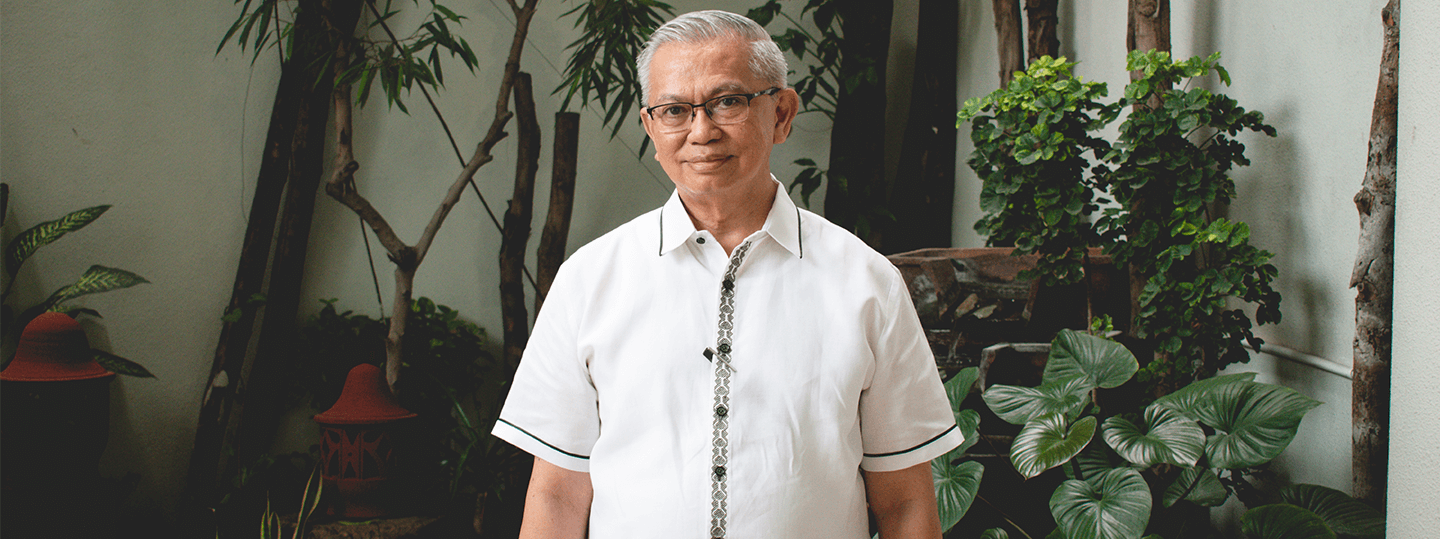
Pio Pantaleon: How does UA&P distinguish general education from liberal education?
Prof. Paul Dumol: General education literally means education that will prove beneficial to or practical for the student. The emphasis is on the profit the student will derive from it. But in the case of liberal education, the emphasis is on a philosophy of the person behind the core curriculum.
Pio: There’s an anthropological aim?
Prof. Dumol: Yes. If you look at the First World, they’ve produced technologies like AI, and yet they’re blind to their anthropological dimension. The same thing goes for all of their hedonistic philosophies: drugs and sex, and so on.
Or maybe we should talk, not so much of an aim as of a backing, a framework. Our view of liberal education has always been humanistic. In contrast, if you look at the reframed GE of CHED, it’s clearly focusing on knowledge or skills which would prove profitable for students in the Philippines today.
For example, that course on labor laws. It makes sense to propose it because I think the “audience” of CHED is university students who are in the middle class, more specifically, the lower middle class.
Now the Rizal course, strictly speaking, is not GE, of course. But in the Philippine context, the course is really excellent for civics. One other course teaches trends or “technology.” Its companion course, if you examine it, really has to do with how to do research to discover what to do with respect to those trends. It mentions ethics because it is interested in the ethics of research.
I think what CHED has in mind is the Philippines as a technologically savvy country, savvy in the sense that we develop our own inventions. It has nothing to do with the human person.
Pio: And do you think that’s a distorted view of the aims of education? There’s nothing inherently wrong with it.
Prof. Dumol: No.
Pio: But what makes it disappointing?
Prof. Dumol: It’s disappointing only insofar as it takes the place of something richer.
Somebody wrote a paper that mentions the distinction between “education” from “training.” That’s an old distinction. Training is not education. The course on trends and so on sounds very much along the lines of “training,” including research methods.
Education, on the other hand, opens your mind, your horizons. It doesn’t trap you in the civilization of the moment. In a way, general education does that.
Pio: Now, what makes liberal education more robust as an educational philosophy?
Prof. Dumol: It’s concerned with making the human person more human. For example, literature, there’s a wealth of insights into the human person there which are not taken in any subject. Not even in philosophy. And you find this in the Greeks, Dante, Shakespeare, Dostoevsky, Tolstoy. That’s the wisdom of generations.
Pio: And it’s something that endures, that all generations agree on.
Prof. Dumol: Yes, for hundreds of years. And the thing about liberal education is that its consequences are unpredictable: the kind of ideas or insights that they can produce in the student.
You don’t know what’s going to come out of it. And it’s not necessarily good. [John Henry] Newman says, for example, that you can’t teach morality with Hamlet.
Pio: Speaking of Newman... I remember he also mentioned that one of the aims of liberal education is to form the “gentleman.” But we don’t really use the term nowadays. What do you think that means for UA&P?
Prof. Dumol: I think you have to abandon that concept because it refers to a kind of person which really no longer exists. And it’s related to class, to aristocracy. And the kind of education that they went through, which was humanistic—liberal education in the classic sense.
Pio: In that regard, would you say that liberal education in the Philippines should be different from what liberal education was originally intended to be?
Prof. Dumol: No, there should be no difference, not essentially. That’s the whole point. In liberal education, the curriculum is more or less the same. While in general education, it can change from country to country, historical period to historical period. It depends on the needs of that country as it’s developing.
Pio: This might be a bit far-fetched, but how do you think this squares with UA&P’s thrust right now as a business school?
Prof. Dumol: That’s something else. When people insist on that emphasis, they’re trying to find what we’re good at, in comparison to other universities. For a long time, what was being stressed was communications. IMC [Integrated Marketing Communications]. But I guess now our university is calling public attention to business economics.
That’s more of a selling point than the essence of what we do.
In my opinion, we’re different from other universities because of the humanistic education we offer. Philosophical anthropology, in particular, which is given in congruence with all the other subjects.
Pio: Do you think it’s possible to dilute liberal education in that way and still achieve its aim? For the past years, CHED has been trimming and trimming the subjects for the GE.
Prof. Dumol: In CHED’s CMO, it says that the units for GE beyond the subjects which are required by CHED should not be specific to a discipline. So you can’t have the nine units of religion which we have in UA&P’s current curriculum. They’ve got to be general. But what I understand by “general” is multidisciplinary or interdisciplinary.
Pio: So now, for instance, that would look like merging Ethics of Person and Morals.
Prof. Dumol: Those two subjects would both fall under philosophy. But you can throw in literature and history for case studies.
Pio: Does that mean our brand of liberal education will become more indistinguishable from that of other institutions because of this?
Prof. Dumol: No. Because if we do bring in history and literature and philosophical anthropology and so on, I don’t think others would be doing that.
Pio: So it’s not so much about the courses, but about how the teachers deliver those courses?
Prof. Dumol: It’s not so much a teaching method. It’s the content. It’s the content. Humanistic content means you always look at classics. So it has to do with the content that the teacher gives, which is different from the content that CHED prescribes.
Pio: So just to wrap this up, what should we do if things don’t turn out in our favor?
Prof. Dumol: We have to have shape like water. We have to find out exactly what the autonomous status granted us by CHED means vis-à-vis CHED requirements.
Interview by Pio Pantaleon
Executive Editor
Transcript prepared by Rachel Ayala
Universitas Staff