


We grow up believing that love arrives as an answer. Somewhere among the fairy tales, love songs, and coming-of-age films, we inherit the quiet conviction that the right person will make us whole—that if someone chooses us deeply enough, the loneliness, insecurity, and uncertainty within ourselves will finally disappear. Love becomes less of a relationship and more of a remedy for everything we cannot bear to heal within ourselves—a medicine we hope will finally make us whole.
But what if we have mistaken the relief love brings as healing itself?
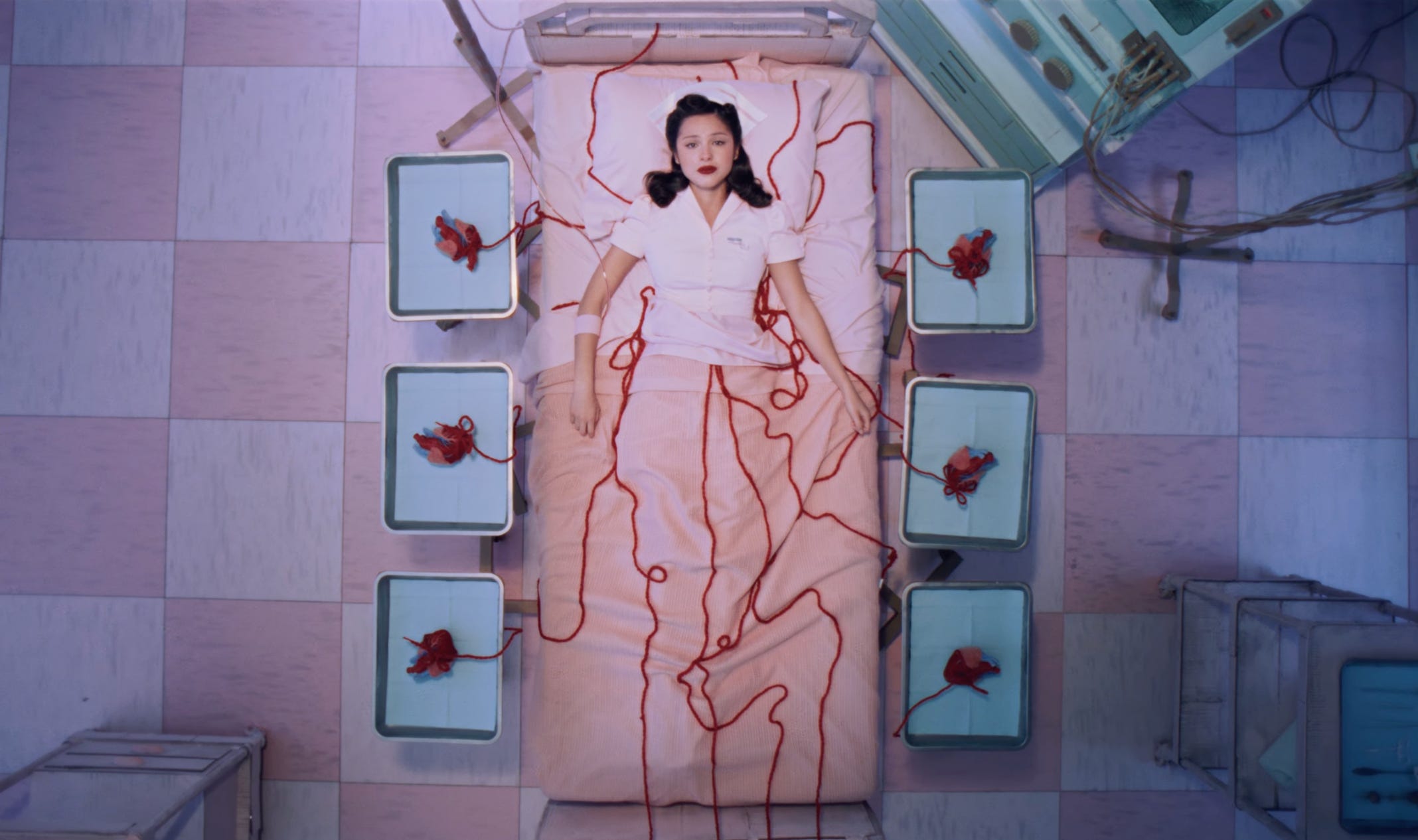
The question lingers in Olivia Rodrigo’s recently released you seem pretty sad for a girl so in love album. Rather than simply recounting the rise and fall of a relationship, the album explores how love changes not only what we feel, but how we understand our own experiences. Divided into two emotional parts—girl so in love and you seem pretty sad—it presents what seems to be two different stories of the same relationship. Yet upon closer inspection, it becomes clear that it tells the same story twice. The relationship does not fundamentally change; the narrator does.
The first half of the album, girl so in love, feels almost weightless. Songs like “drop dead,” “honeybee,” and “u + me = <3” capture the exhilaration of new love—it feels certain, permanent, and healing. In “u + me = <3,” the narrator believes that “wounds are healing” and hopes that they “don’t” change, revealing the quiet fantasy that love can preserve happiness indefinitely.
It is easy to understand why people call new love the “honeymoon phase.” Every conversation feels effortless, every coincidence feels like serendipity, and every ordinary moment suddenly carries extraordinary meaning. In “honeybee,” even the simplest moments—walking home together, sharing silence, or feeling that “everything I own just feels like ours”—become expressions of complete emotional security. Perhaps that is why new love often feels like medicine. It temporarily quiets the loneliness, self-doubt, and uncertainty we have carried for years, making us believe another person has finally healed what we could never heal on our own. Yet even within this hopeful beginning, Olivia quietly complicates that fantasy. If love is seen as a cure, the album soon begins to ask whether it can become something else entirely.
The first hint appears in “maggots for brains.” Instead of describing romance through warmth or comfort, the song drifts into imagery of obsession and withdrawal. Separated from the person she loves, the narrator becomes almost lifeless, as though affection has shifted into dependence. She describes herself as having “a zombie in my body” and being “a sad shell of a woman,” insisting that this is “just the thing that happens when my baby goes away.” The language no longer resembles healthy longing; it resembles withdrawal. Love has stopped functioning as a cure and has become a vice the narrator cannot bear to lose.
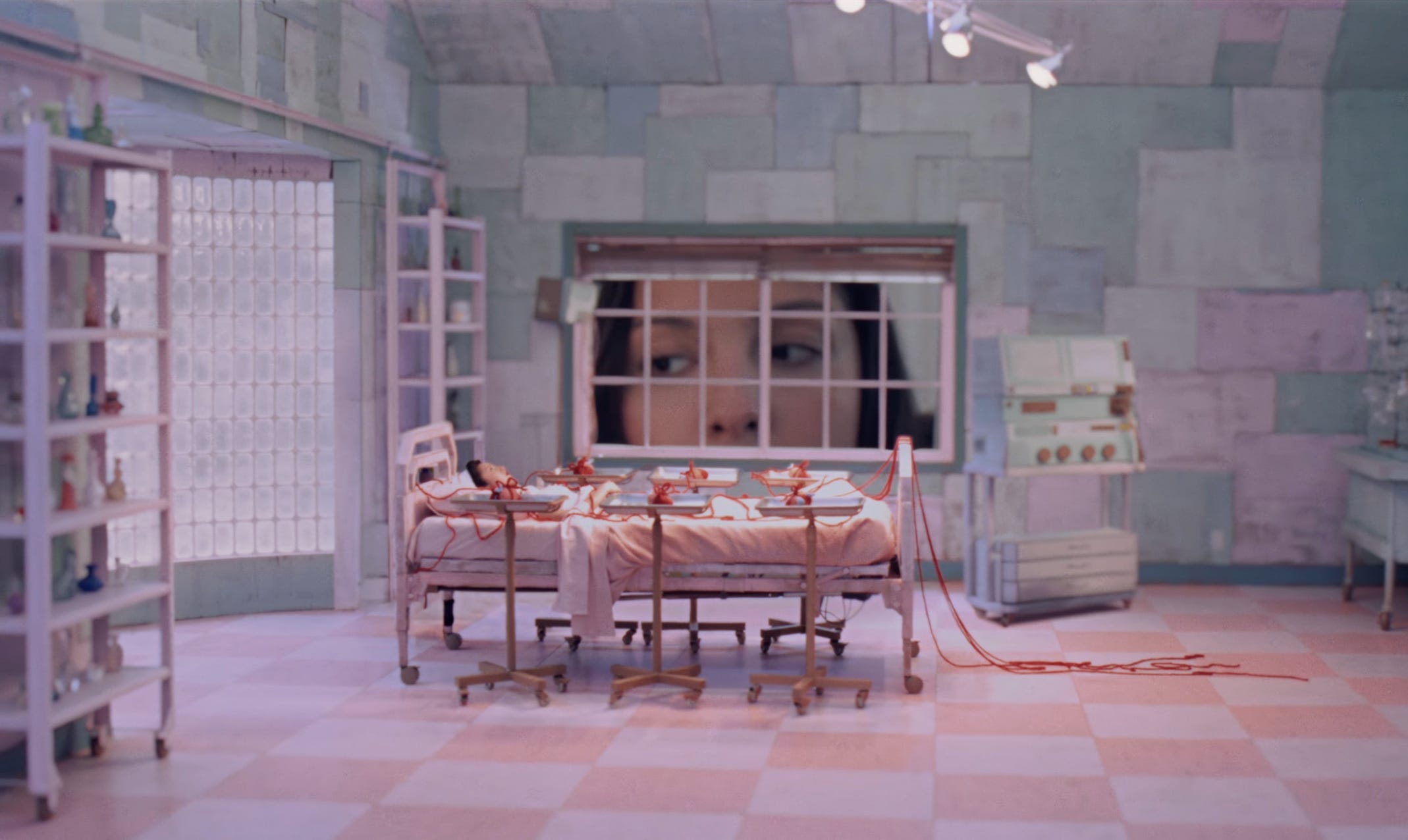
Olivia never announces this transformation outright. Instead, she lets it unfold gradually, almost imperceptibly, much like unhealthy attachment itself. The shift is not only lyrical but musical. The bright, energetic sound that defines the album’s opening eventually gives way to more restrained arrangements, allowing the emotional weight to accumulate long before the narrator recognizes it herself. Rather than dividing love and heartbreak into two separate stories, Olivia allows one to quietly dissolve into the other. That subtle progression reaches its wholeness in “purple,” the exact midpoint of the album.
Structurally, “purple” acts as more than just a bridge between the two halves; it is the album’s emotional and metaphorical center. Its symbolism begins with color. The first half of the album is red—the color of passion, warmth, excitement, and the intoxicating certainty of love. The second half is blue—the color of grief, reflection, and emotional distance. When red and blue meet, they create purple. At first glance, purple represents something beautiful: two separate colors becoming something new together. Much like love, it suggests unity without conflict. But Olivia refuses to leave the metaphor there. In the song’s outro, “I see the world in purple” gradually gives way to “Melt with you ‘til it all turns black,” revealing how closeness can become overconsumption rather than connection. By the song’s conclusion, purple is no longer simply purple. Its hues begin to darken, foreshadowing the emotional descent that follows before leading directly into the album’s second half.
This is what makes “purple” the album’s metaphorical center. When red and blue meet, they create purple. At first, purple represents something beautiful: two identities becoming something new together. Yet Olivia refuses to let the metaphor remain there. As the song’s outro unfolds, purple gives way to black, suggesting that the boundaries between the two colors—and, by extension, the two people—have become impossible to distinguish. The same is true of love.
Love is beautiful when two identities meet. It becomes destructive when neither identity remembers where one person ends and the other begins. Somewhere between intimacy and attachment, closeness begins to blur the boundaries that allow each person to remain fully themselves. What begins as connection slowly becomes the erosion of individuality, as devotion gives way to dependence. By the end of purple, the narrator no longer sees the relationship as the joyful union she once imagined, but as one in which her own identity has begun to disappear. The relationship itself has not changed; only her understanding of it has.
The second half, you seem pretty sad, is where the album’s metaphor on illness fully takes hold. No longer asking whether love exists, the album begins asking what love can actually do. The answer begins with “the cure.” Its title alone reflects one of the oldest fantasies we carry into relationships: the belief that another person will fix us.
We often imagine love as the final piece of ourselves we have been searching for. “If only we could find the right partner,” we tell ourselves, “then everything would finally make sense.” Yet the song gently dismantles that illusion. Throughout “the cure,” the narrator repeatedly believes she has finally found “the antidote,” only to realize that another person’s devotion cannot heal her wounds. Even as she admits that love “feels like medication,” she ultimately concludes that “it’ll never be the cure.” No matter how deeply another person loves us, they cannot heal wounds they did not create, nor can they reach the parts of ourselves that we refuse to confront. A relationship can become a refuge. It can become a source of strength. But it cannot become our cure.
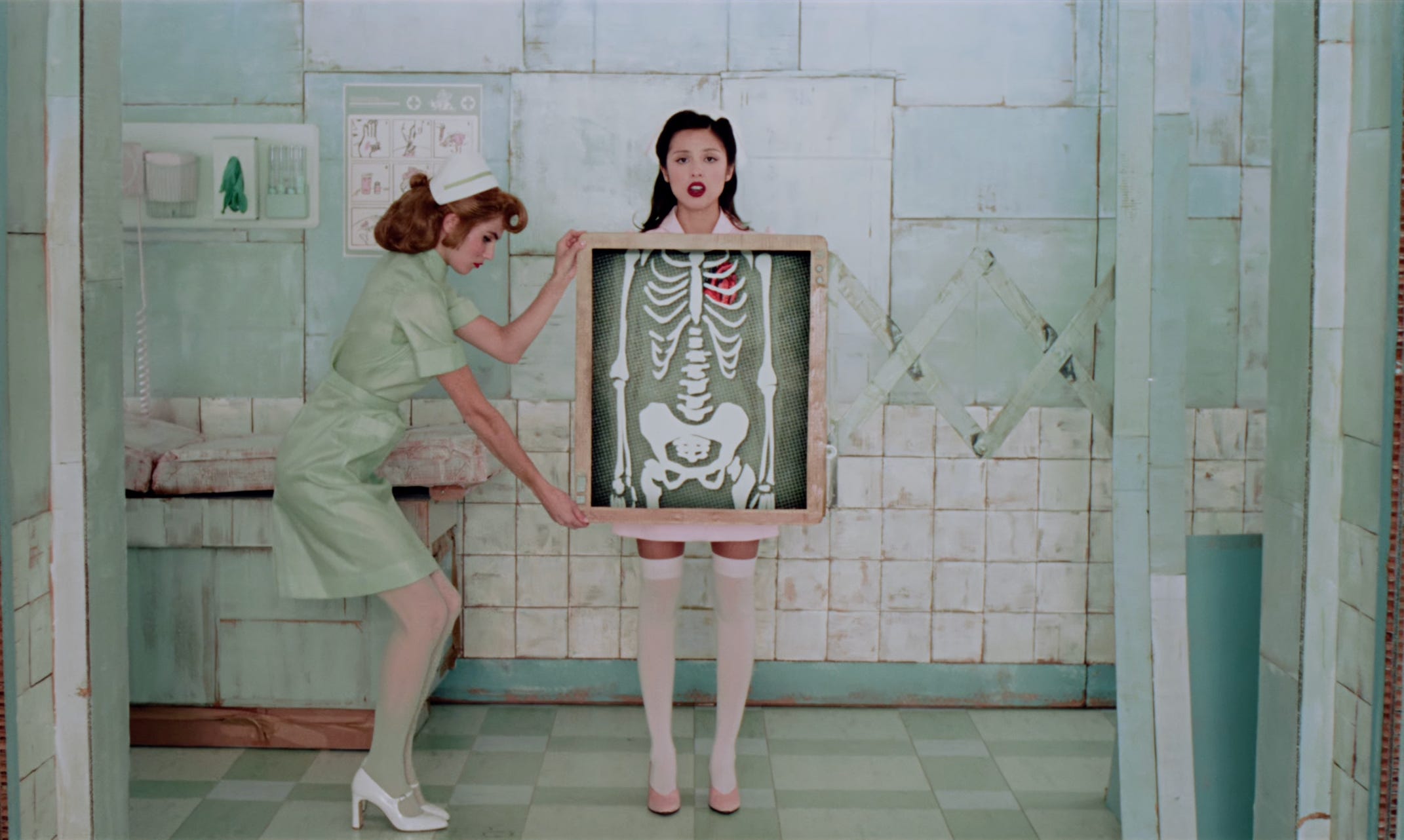
That realization reaches its emotional climax in “what’s wrong with me.” Instead of finding a cure, she discovers something far more unsettling: the relationship has become the mirror through which she finally recognizes the parts of herself that have always been hurting. The relationship was never about discovering an illness; it simply revealed one that had always existed. The album does not argue that love destroys us, but that it exposes us. It illuminates insecurities we never noticed, fears we never named, and dependencies we mistook for devotion. It reveals the uncomfortable truth that another person can accompany our healing, but they can never complete it for us.
That is why the final track, “cigarette smoke,” feels less like heartbreak and more like remembrance. Love is compared to smoke; addictive while it lasts and lingering long after it disappears. Impossible to grasp, yet impossible to ignore. Even after the relationship ends, traces remain. The callbacks to earlier songs—the unfinished beer from “drop dead,” the echoes of “honeybee,” and the darkness foreshadowed in “purple”—help the album reach full circle. Nothing has been forgotten. Everything has simply changed in color.
When Olivia sings, “Tell me something honest so the memories turn dark,” she does not ask for the memories to disappear. She asks to understand them. As the song closes with repetitions of “go dark,” the darkness no longer represents despair alone; it becomes acceptance. It becomes the quiet recognition that memories are never erased; rather, they are reinterpreted by the person remembering them.
That is why this album resonates beyond romance. Its emotional journey extends to friendships that consume our identities, families whose approval we desperately seek, careers we believe will finally validate us, and achievements we expect will silence every insecurity. Human beings constantly search for external cures for internal wounds. We tell ourselves that if only we were loved enough, admired enough, or successful enough, then we would finally feel complete. Yet life repeatedly teaches us otherwise. Completion cannot be borrowed, identity cannot be outsourced, and healing cannot be handed to us by another person, no matter how deeply they love us. What another person can offer is something quieter, and perhaps more meaningful: the opportunity to see ourselves more honestly than we ever could alone.
Ultimately, that is the truth Olivia Rodrigo’s album reveals. Not that love fails, or that heartbreak is inevitable, but that love possesses an extraordinary ability to “unravel” the parts of ourselves that remain hidden until another person brings them to light. Its goodness lies in reminding us that healing begins with recognition rather than dependence. As opposed to asking love to complete us, the album invites us to see how easily we can lose ourselves within it—and why holding onto our individuality matters. And its beauty lies in the remarkable way it tells that truth.
Through the progression from red to purple to blue and finally black, through recurring images of illness and smoke, through lyrical callbacks that allow the ending to echo the beginning, Olivia creates more than an album. She crafts a narrative that mirrors the way memory itself works. The story never changes. We do.
Perhaps that is why you seem pretty sad for a girl so in love lingers long after its final note. It understands that love is not merely something we experience. It is something that shifts our perception. Love is never meant to complete us; it is meant to reveal who we are when we are no longer pretending that it does.
