


By Dr Nick Alviar
Faculty member, School of Politics and Governance
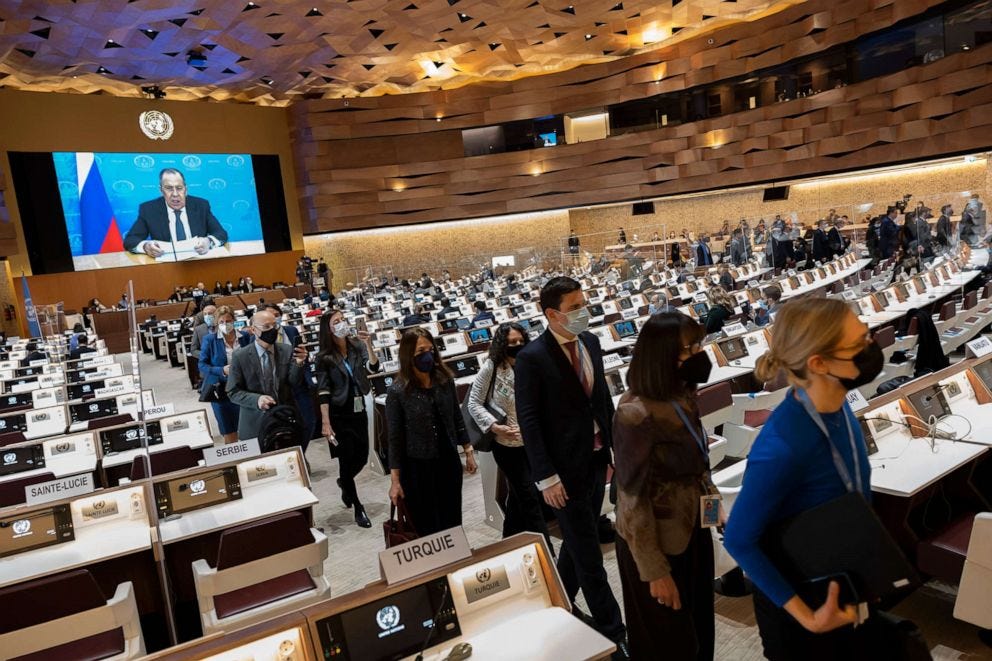
In a widely publicized global snub of Israeli Prime Minister Benjamin Netanyahu on Sept. 24, 2026, several delegations walked out of the 81st UN General Assembly—and the Philippines was among them.
The Department of Foreign Affairs (DFA) defended the action, stating: “The Philippines joined the walkout in global solidarity for peace in the Middle East and the call for all parties to desist from unilateral actions that erode the conditions of peace.” The DFA further noted deep concern over the humanitarian crisis in Gaza, Israel’s E1 settlement plan, and rising settler violence in the West Bank.
While these diplomatic concerns are valid, was a public walkout really warranted? Joining such a spectacle before the Prime Minister delivered his address was a blatant sign of disrespect toward Israel’s government and its citizens. Disagreements can easily be conveyed through traditional, quiet diplomatic channels. Instead, this dramatic exit sent an unnecessary hostile signal—one Israel is unlikely to forget. Tellingly, an Israeli diplomat was seen taking note of the empty seats left behind.
A look at the nations that remained in the chamber shows that even those critical of Israel chose diplomatic restraint. Key European players—including the United Kingdom, France, Belgium, Norway, and the European Union—stayed in their seats despite their vocal stance on Gaza. A broad coalition of nations including the United States, Germany, China, Canada, Australia, Mexico, Argentina, Ukraine, Greece, Poland, Austria, Denmark, Kazakhstan, Kenya, and key Arab states like the United Arab Emirates and Bahrain also remained. The Philippines would have been far tactful to align with this moderate approach.
The potential fallout from this move is serious. It risks irritating not only Israel but also the United States, our primary defense ally.
This posture jeopardizes deep-rooted goodwill built over decades. The bond between our nations dates back to the late 1930s, when President Manuel L. Quezon issued his historic “Open Door” policy, welcoming over 1,200 Jewish refugees fleeing Nazi persecution when much of the world turned away. In 1947, the Philippines was the only Asian nation to vote in favor of UN Resolution 181, which supported the establishment of the State of Israel. As gratitude, Israel has long honored these gestures through visa-free travel for Filipinos, strong protections for overseas Filipino workers (OFWs), and warm hospitality for Filipino pilgrims visiting the Holy Land.
In recent years, strategic cooperation has expanded significantly:
Economic and tech partnerships: In May 2026, DTI Undersecretary Ceferino Rodolfo and Israeli MFA Director General Eden Bar Tal discussed strategic cooperation on critical mineral processing and AI technology under the US-led Pax Silica initiative, leveraging Israeli expertise in mining, water, and environmental tech.
Diplomatic support: Last June, Israel backed the Philippines’ bid for a non-permanent seat in the UN Security Council.
Agriculture and defense: Israel’s MASHAV agency continues to train Filipinos in drip irrigation and modern dairy farming, while Israel remains a key partner in the Armed Forces of the Philippines (AFP) Horizon 3 modernization program.
Such cordial relationship is now needlessly exposed to friction. One wonders whether this walkout was explicitly cleared by President Marcos Jr., our chief foreign policy architect who once said that “the Philippines, a friend to all and enemy to none” is the cornerstone of our foreign policy.
The Philippine government had already clearly articulated its support for a two-state solution and a peaceful resolution in Gaza. There was no need for a glaring, performative protest that risks being misconstrued as sympathy for Hamas or an official shift in our foreign policy. Israel pays close attention to who stands by them—and this apparently rash gesture may take years to repair, and a lot of trust rebuilding.
The views expressed here are the author’s and do not necessarily reflect those of the Publication and the University.