


By Dr. Robert Z. Cortes
Assistant Professor III, School of Media & Marketing, University of the Asia and the Pacific; co-authored by Ravi Micael Ibay, Zuper Savio Galford, and Jiro Reyen Romano.
This present essay was highly edited by the author to meet the standards of Universitas and be more relevant to the UA&P community. The original, simpler version was presented in the 59th UNIV Conference in Rome in April 2026.
A generation that hesitates to speak
People born from the late 1990s up until the early 2010s are collectively referred to as Generation Z or “Gen Z.” They are a generation that has spent all their life in the age of the digital revolution accentuated by smartphones, social media, and internet from childhood. Currently, it is the largest cohort in history, accounting for about a quarter (26%) of the world’s population (Wandhe, 2024). Gen Z has shown a unique set of values and priorities, such as taking more interest in social justice, environmental sustainability, and inclusivity than the previous generation. These concerns are shaped largely by their experiences amidst rapid changes in technology and fluctuations in the economy. In addition, rising violence and social justice movements have consistently populated their social media and thus significantly defined their upbringing (Seemiller & Grace, 2017).
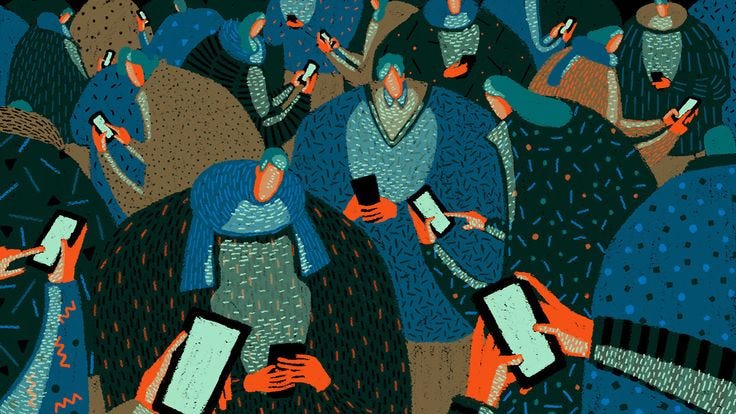
However, Gen Z’s most defining characteristic is their digital ecosystem and dependence on technology. Unlike previous generations, Gen Z does not know a world without the Internet and is constantly accompanied by their smartphones. They use social networks as their main communication tool, mainly Instagram (Martínez–Estrella et al., 2023), and define this generation by the rule of the ‘four i’s’ first coined by Vilanova and Ortega (2017). In the original Spanish, that would be internet, irreverencia, inmediatez, incertidumbre; in English: internet, irreverence, immediacy, incertitude (uncertainty).
This connection to the internet and consequent immediacy of information have given rise to a greater global awareness – and this is perhaps a good thing. Ironically, however, the upshot has not been a stronger sense of community but rather of individualism. This would have something to do with the smartphone – the main source of information – having become an extension of oneself, i.e., a very private and personal tool. The resultant phenomena are more enclosed echo chambers and greater polarization, as the digital ecosystem often filters out dissenting and diverse youth voices. As noted in the Encyclical Letter Fratelli Tutti, “Persons or situations we find unpleasant or disagreeable are simply deleted in today’s virtual networks; a virtual circle is then created, isolating us from the real world in which we are living” (Pope Francis, 2020).
This virtual isolation brought by technology, combined with a volatile and increasingly political climate, leads Gen Z to continually seek digital safety through the comfort of their screens while observing a “safe and sure” level of anonymity. Because of issues deemed unsafe, combined with the lack of readiness to confront them, they have learned to use technology to build a wall of privacy. One student in a study by Seemiller & Grace (2017) shared, “There is considerable comfort behind a computer screen ... as long as I am being very careful of the information I divulge” (p. 22).
Causes: Social climate, psychological fear, digital environment
Gen Z’s preference for digital safety and controlled self–presentation affects their approaches to communication in both the academic and social contexts. It is most probably not a big surprise that the practice of curating one’s presence online, in which one is assured of comfort and protection, has made young people more averse to the risks of speaking openly in public or face–to–face settings. These situations don’t even have to be externally adversarial, just those in which one is not in full control of everything. Research on the so–called “spiral of silence” shows that these environments encourage caution, selective expression, and a heightened awareness of potential social consequences (Noelle–Neumann, 1993). The following subsections examine three interrelated dimensions of this phenomenon.
The (Un)social climate
Recent research shows that a lot of Gen Z students hesitate to participate in discussions involving controversial topics, particularly in the university/college setting. According to the Campus Expression Survey 2022, for instance, 58.8% of students reported being reluctant to discuss at least one controversial issue presented in the survey (Zhou & Barbaro, 2023), a hesitation that appeared closely connected to their perceptions of their social environment. In that same study, 63.2% of respondents agreed that the campus climate discourages people from expressing their beliefs because others might find those views “offensive” (Zhou & Barbaro, 2023).
When asked why, students often attributed their silence to anticipated negative peer reactions. Many admitted to censoring themselves during classroom discussions for fear of negative responses or even retribution from fellow students. The most common reason was the prospect of other students criticizing (or “bashing”) their comments among each other after class (Zhou & Barbaro, 2023). The practice of speaking openly, therefore, comes to be perceived as a good that comes at such a high social cost, discouraging open and easy participation in discourse.
Interestingly, though, the data suggests that these fears may in fact be exaggerated. Findings have shown that students tend to overestimate their peers’ negative reactions by approximately three times, which means that more than the actual hostility, it is the perceived social risk that plays a greater role in students holding themselves back (Zhou & Barbaro, 2023). Nevertheless, the climate is set: one in which students anticipate criticism and therefore limit their participation in difficult conversations.
These communication patterns spill over beyond the university setting. Research likewise shows that even Gen Z professionals feel a pressure to conceal or modify their personal beliefs in the workplace to maintain professional relationships and career stability (Humphrey, 2024). As a result, habits of cautious communication, developed during university years, may continue into early professional life.
Psychological fear: Cancel culture and conflict avoidance
If the previous subsection talks about social factors to explain Gen Z’s hesitation to engage in contentious discussions, this subsection explores psychological reasons to explain this risk avoidance. Humphrey (2024) talks about “leery conversationalists” in her study on Gen Z communication styles. She defines these as individuals who frequently choose to be silent rather than risk being caught in controversial dialogue. The behavior reflects a mindset that Humphrey describes as “protecting, not persuading,” in which individuals prioritize safeguarding relationships and reputations (theirs and others) instead of attempting to influence others through debate.
The main driver of this mindset is the perceived risk of social cancellation or ostracism, already mentioned above. This means that when the possibility of being criticized publicly or excluded from social circles goes up, so does the perceived cost – and the consequent fear – of expressing unpopular views (Humphrey, 2024). In other words, the more socially dangerous participation in open discourse feels, the worse psychological patterns of conversational restraint get.
External factors as well contribute to these negative psychological tendencies. Perhaps because Gen Z grew up in an era characterized by social instability and global uncertainty, they have developed a heightened level of risk aversion in social interactions. Some scholars have noted that Gen Z perceives emotional discomfort as comparable to physical harm, even as they consider adult social interactions even more threatening. Such an attitude explains, at least partially, why this generation prefers to avoid situations that could provoke confrontation (Moscrip, 2019).
The response of not a few universities has been to design “safe spaces,” supposedly to provide environments where students can express themselves without judgment (Moscrip, 2019). Critics of this approach, however, have argued that while such spaces may offer psychological support for the short term, they may inadvertently harm students in the long run since they reduce students’ exposure to the challenging exchanges necessary for robust intellectual discourse in the university that in turn prepares them for responsible interaction in the outside world (Lukianoff & Haidt, 2018).
The screenvironment
Lastly, what may be considered Gen Z’s “reluctance for dialogue” also has an “environmental” explanation. Being the first generation raised with smartphones and social media as constant features of daily life, Gen Z is the generation that grew up in a “screenvironment,” a portmanteau term that we are proposing to mean a setting that privileges digitally mediated communication in place of face–to–face interaction (Gawda & Kosacka, 2025; Kuss & Griffiths, 2017).
One consequence and/or manifestation of having been brought up in this digitally saturated environment is what has now come to be known as “phubbing,” the act of ignoring people physically present in favor of engaging with smartphones (Katta & Jain, 2025). Phubbing, in turn, is explained by yet another phenomenon connected to social media, FOMO, the fear of missing out, i.e., on what may be happening with one’s peer group behind the screen. These behaviors have been associated with reduced relationship satisfaction and increased social withdrawal (Kuss & Griffiths, 2017; Katta & Jain, 2025).
In addition, overconsumption of digital media is considered a main negative factor in cognitive engagement. Researchers have linked the declining attention spans and reduced information retention of Gen Z to short–form, high–stimulus online content (Martínez–Estrella et al., 2023), which they frequently consume. The popular term “brain rot,” later recognized as the 2024 Oxford Word of the Year, reflects concerns about the intellectual effects of excessive exposure to trivial online material (Owens, 2025).
One last concern along this environmental line is that screens are arguably not the optimum environment for human communication. Text–based exchanges lack nonverbal cues such as tone, gestures, and facial expressions, which are part and parcel of a human message. Without these, the risk of misunderstanding a message and “context collapse,” where messages are interpreted without sufficient context (Sernett et al., 2021), increases. It is true, of course, that many Gen Z individuals acknowledge the importance of face–to–face communication for building relationships, but digital interaction and the habits that follow in its train remain deeply embedded as a way of life.
Considering all that has been said above, we can see that Gen Z’s hesitation to engage in open discourse has come from a combination of social, psychological, and technological forces. A perceived climate of judgment, especially in the light of woke cancel culture, has encouraged self–censorship. As well, increased awareness of social risks and fear of confrontation have discouraged more spontaneous engagements with others in conversation. Lastly, prioritizing efficiency and convenience in a digitally mediated environment has reduced opportunities for practicing face–to–face dialogue, even if only unwittingly. The question now is what the consequences have been of having cultivated a generation that, despite being highly socially aware, is, ironically, increasingly cautious when confronted with difficult conversations.
Consequences: Silos, silence, isolation
The communication hesitation discussed in the previous section has not remained confined to individual or even small group interactions. Having been replicated across digital networks and social platforms, these patterns have contributed to broader social consequences which we are now experiencing. What we seem to be witnessing now is an increased polarization and social isolation among Gen Z amidst algorithmic media environments, identity–driven communities, and digitally mediated relationships.
Ideological silos
The digital age – and now, the age of AI – has opened the world to unprecedented access to overabundant digital information. But has that produced deeper engagement with public issues for Gen Z? The answer is “not necessarily.” A significant number of Gen Z adopt what scholars call a “news-finds-me” perception, the belief that important information will eventually reach them through social media feeds, online platforms, or word of mouth. It is a passive approach that discourages active inquiry and fosters reliance on “the algorithm” (Gil de Zúñiga et al., 2017). Although not an exclusive Gen Z phenomenon, this has a greater impact on Gen Z (and presumably the generation after it) as this negative phenomenon is affecting them while still in a vulnerable developmental stage. The upshot is fragmented and superficial knowledge.
This resulting type of knowledge, of course, is a feature rather than a bug of this dependence on social media algorithms. Considering that platform algorithms, bound as they are to commercial ends, are programmed to prioritize content aligned with a user’s past preferences and interactions and designed to maximize engagement by frequently promoting emotionally stimulating material that reinforces existing viewpoints rather than presenting diverse perspectives, typical Gen Z users then cannot help but be exposed over and over only to content that they prefer (content that they agree with and that please them). This is a process called “selective exposure.” As a result, contradictory or uncomfortable information is filtered out, producing what researchers describe as “filter bubbles,” i.e., digital environments in which users repeatedly encounter messages that validate their beliefs while rarely engaging with opposing views (Pariser, 2011).
This process naturally leads to confirmation bias, which is the tendency for individuals to seek information and sources that only support their existing beliefs while glossing over conflicting evidence. This is a process that eventually creates “echo chambers,” spaces – especially digital spaces – in which users circulate and affirm ad nauseam the same narratives. Harvard Professor Cass Sunstein (2018) affirms that the “echo chamber effect is dramatically higher on social media” (p. 116). No wonder that it is on these platforms that emotionally charged headlines, misinformation, and polarized rhetoric spread virally and erupt into the real world resulting in more intense hostility between ideological groups.
The upshot of the above phenomena is the formation of “ideological silos” in which individuals keep to themselves, further becoming insulated from alternative, possibly transforming perspectives. This phenomenon was seen clearly in the 2022 presidential election. Recent research on political communication in the Philippines highlights how TikTok’s recommendation algorithm reinforced the formation of these echo chambers and ideological silos. During the campaign, users who watched partisan political videos were increasingly shown similar content, creating distinct online communities supporting rival candidates and limiting exposure to opposing perspectives that only deepened social division in the country (Ong et al., 2022).
The spiral of silence
One of the most significant consequences of the rise of ideological silos is the sharp rise in youth’s sensitivity to social risks that accrue to non-conformity and dissenting opinions. Since users inevitably need to venture outside of their digital comfort zones to other virtual or physical environments that do not necessarily share their same opinions, ill-equipped with the needed openness or resilience to handle contradictions within these environments (Nguyen, 2020), many users adopt strategies of self-censorship to avoid stress or discomfort. For instance, approximately 63% of students report withholding their opinions online due to fear of negative reactions or social backlash (Weintraub, 2025).
Yet such dynamics can extend beyond digital spaces. For example, students whose online environment is consistently bombarded by only one ideological position are hardly prepared to voice alternative perspectives during classroom discussions. The upshot is a failed opportunity for meaningful dialogue and, ironically, an increased possibility for division despite the original intent to avoid conflict (Getreu, 2022, p. 17).
This pattern reflects the well-known “spiral of silence” (Noelle–Neumann, 1993), a phenomenon in which individuals refrain from expressing opinions they perceive as unpopular to avoid social isolation. The term is not gratuitous since the “vicious cycle” of silence does not remain on one plane, but rather directs itself inward and deeper: hence, a “spiral.” Moreover, this silence reinforces itself because when dissenting views remain unspoken, the actual extent of “dominant views” is externally exaggerated, which in turn further discourages open disagreement. In these cases, the “external majority” may not be the “real majority.”
Eventually, these patterns contribute to a broader cultural shift toward tribalism, i.e. first, virtual or digital tribalism; then, actual or socio-political tribalism, no thanks to the human being’s natural tendency (Greene, 2018). While this natural “groupish-ness” may have served the human species to progress from individualism to community (Haidt, 2013) political identities being increasingly tied to online communities and group affiliations produce ideological silos, which pose a true peril to social cohesion when they eventually make their way into actual society as they are wont to. Indeed, social media facilitates political engagement and identity formation, but they can also trap individuals within polarized communities that rarely interact constructively with opposing viewpoints, virtually or in the real world.
Connected yet isolated
The principle of double effect just mentioned, as applied to social media, brings us to what researchers call the “alone together” paradox: the same technologies that promise constant connectivity have also been associated with growing social isolation. Research by Kuss & Griffiths (2017) has shown that when individuals are continuously connected through digital platforms, they experience a declining emotional intimacy and social support. Yet the more they lose social connection, the more time they spend on the screen. In fact, the paradox is also another vicious spiral, a spiral of isolation.
How does this harmful spiral begin? Ironically, perhaps with something quite natural and otherwise benign: the tendency of the human brain to process social rejection with an intensity like physical pain, which then encourages individuals to avoid situations where they might experience criticism or exclusion (Bowler, 2020, p. 4). However, when this phenomenon is paired with the lure of online communication that allows rapid but relatively stress-free interaction as a readily accessible consolation from or, worse, a simple substitute for complex face-to-face relationships, the insidious dynamic begins. Because online connections often lack the embodied cues – tone, gesture, and shared presence – that sustain deeper interpersonal relationships, the user feels more vulnerable to rejection. The spiral then goes deeper.
Furthermore, as if handing users an extra spade to dig deeper into this tendency, digital platforms provide convenient alternatives to what otherwise could have been communal activities. For example, one can now order food online, join in online fitness sessions, or attend virtual gatherings, all of which promise to ease the loneliness of solitary living without the trouble of coordinated social interaction. While apparently harmless, over time, these conveniences encourage habits of withdrawal, and shared communal experiences are gradually replaced with solitary digital routines. They reinforce what Zaki (2025) describes as “social inertia.”
The above dynamic contributes to what some scholars describe as a “loneliness crisis.” Indeed, studies indicate that with their digital engagement often replacing time spent in face-to-face interaction, Gen Z reports higher levels of social isolation and loneliness, heightened anxiety, reduced social confidence, and greater vulnerability to depression than previous generations (Bowler, 2020, p. 1).
Solutions: Rebuilding dialogue
So, what now? Amidst the daunting psychological fear of cancellation, the “spiral of silence,” and isolating effects “ideological silos” is there a way out for Gen Z from digital alienation to authentic participation? We propose a “dynamically composite” framework that combines Karol Wojtyla’s Personalism and Aristotle’s Virtue Ethics (Cortes, 2026) since we understand that personal cognitive agency and virtues are key for young people to make that first leap in cultivating a positive counterforce that overcomes negative habits accumulated from overexposure to the “screenvironment.” However, since reversing the inertia of the “screenvironment” and reclaiming physical encounter are tasks impossible for individuals to do on their own, the framework also recognizes the necessity of interpersonal and institutional aspects.
The personal tier: subverting algorithmic agency
Because Gen Z’s hesitation to engage is deeply linked to the “curated comfort” of digital zones, any effective remedy must begin with individual awareness. Reclaiming personal agency requires transforming the passive “news-finds-me” perception mentioned above into a practice of proactive, critical media literacy (Li et al., 2025). What does it look like in practice?
To answer the question, we begin with Wojtyła’s (2008b) distinction between the “transitive” effect of an action (its external result) and the “intransitive” effect (how an action shapes the person inwardly) and draw out practical applications from the dynamic that exists between these two. For instance, when Gen Z users mindlessly consume content, the intransitive effect of this action is the reinforcement of cognitive passivity, personal biases, and tribalistic tendencies. The transitive effect is withdrawal from engaging with those who do not share one’s same ideas on the one hand, or violence against them on the other.
Subverting this algorithmic control requires exercising the classical intellectual virtues of prudence and temperance. On a practical level, we suggest the following concrete practices to cultivate these virtues:
Diversifying one’s data consumption: Deliberately seeking out reliable, opposing perspectives on controversial issues and engaging with arguments based on logic rather than emotional reaction (utilizing services like Ground News to facilitate objective balance) even if they make one feel uncomfortable.
Pausing to engage properly: Practicing temperance by reading an opponent’s online posts in full before reacting and pausing to verify if shared articles come from authoritative sources.
Reconnecting with nature: Setting strict daily phone limits and actively replacing “doomscrolling” - spending excessive amounts of time watching short-form content or watching large quantities of user-generated content or news (Leskin, 2022) – with 30-minute walks alone or with a friend to “touch grass” and commune directly with physical reality.
Reclaiming personal cognitive agency is a prerequisite for dialogue, but human fulfillment cannot be achieved in isolation. The individual must step outward, applying these cultivated virtues to direct, face-to-face relational encounters.
The interpersonal tier: Face-to-face workshops and interpersonal communio
Once the person commits to dismantling the “screenvironment,” the second step is to engage in direct human relationships, already alluded to in the last practical suggestion above. As Stanford researcher Jamil Zaki (2025) proposes, this requires an intentional “leap of faith” back into face-to-face connections. In the Nicomachean Ethics, Aristotle suggests that the truest form of friendship requires “living together and rational converse,” as the virtuous person relates to his friend as “another self”.
To facilitate this practice, communities and organizations can organize structured dialogue workshops in which participants turn off the “inner debater” and learn to see opponents not as “morally flawed adversaries,” but as persons with valid underlying concerns. A highly effective tool, used by some organizations, is the L.A.P.P. (Listen, Acknowledge, Pivot, Perspective), which actively reduces affective polarization by teaching participants how to navigate tense verbal disagreements constructively (Forde, 2024).
A perfect complement to the principles above is Karol Wojtyła’s personalism, which views dialogue as a communio personarum (community of persons) – a mode of acting where individuals mutually affirm each other’s dignity (Wojtyła, 2008c). Thus, to enhance the effectiveness of these workshops, we suggest prioritizing “breaking bread” before discussing contentious issues. We thus create a relational context where the “other” is experienced as a person rather than a representative of an opposing ideology (Wojtyła, 2008a).
Beyond formal structures, simple, practical gestures are a powerful way of reinstating face-to-face interpersonal connections that remain the “gold standard” of human relationships. One example is inviting one’s classmates for coffee after class – especially those with whom one is not particularly familiar.
The institutional tier: The UA&P setting as exemplar
While resisting the screenvironment begins with personal and inter-personal remedies, institutional support is vital to sustain these efforts. By designing physical environments that decisively privilege face-to-face interaction over screens, schools and universities offer a solution to the problem that address a massive portion of a student’s day.
The policy and culture of the University of Asia and the Pacific (UA&P) serves as a compelling exemplar of this institutional approach. UA&P has strengthened structural measures that not only align closely with the personalist and virtue-ethics frameworks required to rebuild dialogue but also directly reinforce its educational philosophy of prioritizing the “formation of the whole person” and cultivating “unity of life” through a strong liberal education curriculum.
Specifically, UA&P’s “Policy on Authentic Learning in the Age of AI” serves as an objective case study in disrupting digital isolation and “social inertia.” Central to this is establishing “gadget-free learning environments” as a general classroom rule. Despite potential resistance, intentionally carving out device-free spaces is a step in the right direction as they cultivate “sustained attention, meaningful conversation, and authentic human interaction.” This prompts students to develop habits of “careful listening” and “thoughtful dialogue” (University of Asia and the Pacific, 2026) otherwise eroded by “phubbing” and social media distractions.
Furthermore, UA&P counters Gen Z’s conversational risk aversion and the “spiral of silence” by privileging “direct classroom engagement” and “authentic assessment.” Emphasizing interactive, face-to-face methods – such as oral examinations, presentations, in-class writing, case discussions, and supervised exercises – simultaneously shifts students away from passive information consumption and strengthens academic accountability.
On one hand, these back-and-forth pedagogical approaches immerse students in constructive, face-to-face academic disagreement, teaching them that perceived social risks are exaggerated and that sharing their perspectives and listening to others is an act of self-fulfillment (Wojtyła, 2008d). On the other hand, supervised, interactive settings compel students to articulate their reasoning and defend conclusions in real time, making it far more difficult to rely on mindless, AI-generated outputs.
Ultimately, UA&P does not merely regulate technology; it actively preserves the conditions for authentic learning and interpersonal communio. By requiring students to take full responsibility for their intellectual output while engaging in embodied discourse, UA&P’s institutional culture provides a practical pathway for Gen Z to subvert algorithmic passivity, reclaim personal agency, and rediscover dialogue as a meaningful and “disinterested gift of self” (St. Pope Paul VI,1965).
References
Bongco, R. T., & Ama, K. A. D. (2023). Intergenerational communication among faculty and students in higher education. The Normal Lights, 17(1), 80–107.
Bowler, A. (2020, April). Isolation among Generation Z in the United States. Ballard Brief. https://ballardbrief.byu.edu/issue_briefs/isolation–among–generation–z–in–the–united–states
Boulianne, S. (2015). Social media use and participation: A meta–analysis of current research. Information, Communication & Society, 18(5), 524–538. https://doi.org/10.1080/1369118X.2015.1008542
Cortes, R. (2026). Transcending “technique” in the age of generative AI: Reconstituting Clifford Christians’ philosophy of technology with Wojtyła’s Personalism & Aristotle’s Virtue Ethics. [Manuscript submitted for publication]
Datta, R., & Rousseau, L. (2025). A study on Gen Z’s selective exposure of news on social media. International Journal for Multidisciplinary Research, 7(1). https://www.ijfmr.com/research–paper.php?id=54053
Forde, J. (2024, October 25). Skills for disagreeing better in today’s political climate. AWIS (Association for Women in Science). https://awis.org/resource/skills–for–disagreeing–better–in–todays–political–climate/
Gawda, B., & Kosacka, A. (2025). State anxiety and positive affect among modern digital native generations compared to earlier Polish generations. Journal of Modern Science, 2(62). https://doi.org/10.13166/jms/207004
Getreu, S. (2022). The relationship between social media and political polarization among members of Generation Z (Undergraduate Distinction Paper No. 102). Otterbein University. 17. https://digitalcommons.otterbein.edu/stu_dist/102
Gil de Zúñiga, H., Weeks, B., & Ardèvol–Abreu, A. (2017). Effects of the news–finds–me perception in communication: Social media use implications for news seeking and learning about politics. Journal of Computer–Mediated Communication, 22(3), 105–123. https://doi.org/10.1111/jcc4.12185
Greene, R. (2018). The laws of human nature. Viking.
Haidt, J. (2013). The righteous mind: Why good people are divided by politics and religion. Knopf Doubleday Publishing Group. https://books.google.com.ph/books?id=U21BxGfm3RUC
Humphrey, N. A. (2024). Perspectives of Gen Z agriculture students and graduates toward engaging in controversial conversations in the classroom, in professional settings, and on social media: AQ methodology study. Oklahoma State University.
Katta, A., & Jain, R. (2025). Uncovering the connections: A correlational study on phubbing behavior, emotional intelligence and academic procrastination among Gen Z. Indian Journal of Positive Psychology, 16(4).
Kuss, D. J., & Griffiths, M. D. (2017). Social networking sites and addiction: Ten lessons learned. International Journal of Environmental Research and Public Health, 14(3), Article 311. https://doi.org/10.3390/ijerph14030311
Leskin, P. (2020, April 7). Doomscrolling: The word for staying up late reading coronavirus news on Twitter. Business Insider. https://www.businessinsider.com/doomscrolling–explainer–coronavirus–twitter–scary–news–late–night–reading–2020–4
Li, X., Shea, H., & Ma, L. (2025). Algorithm awareness and apathy: An exploratory study of generation Z’s media literacy. Media Education Research Journal, 13. https://doi.org/10.5281/zenodo.17522091
Lukianoff, G., & Haidt, J. (2018). The coddling of the American mind: How good intentions and bad ideas are setting up a generation for failure. Penguin Publishing Group.
Martínez–Estrella, E. C., Samacá–Salamanca, E., García–Rivero, A., & Cifuentes–Ambra, C. (2023). Generation Z in Chile, Colombia, México, and Panama: Interests and new digital consumption habits. Their use of Instagram and TikTok. Profesional de la Información, 32(2).
Modras, R. (1980). The moral philosophy of Pope John Paul II. Theological Studies, 41(4), 683–697. https://doi.org/10.1177/004056398004100404
Moscrip, A. N. (2019). Generation Z’s positive and negative attributes and the impact on empathy after a community–based learning experience. University of North Florida.
Nguyen, C. T. (2020). Echo chambers and epistemic bubbles. Episteme, 17(2), 141–161. Cambridge Core. https://doi.org/10.1017/epi.2018.32
Noelle–Neumann, E. (1993). The spiral of silence: Public opinion—our social skin. University of Chicago Press.
Ong, J., Fallorina, R., Lanuza, J. M., Sanchez, F. I., & Curato, N. (2022). Parallel public spheres: Influence operations in the 2022 Philippine elections (The Media Manipulation Casebook, p. 52) [Research]. Shronstein Center on Media, Politics and Public Policy at Harvard Kennedy School. http://mediamanipulation.org/research/parallel–public–spheres–influence–operations–2022–philippine–elections/
Owens, E. (2025). ‘It speaks to me in brain rot’: Theorising ‘brain rot’ as a genre of participation among teenagers. new media & society. Advance online publication. https://doi.org/10.1177/14614448251351527
Pariser, E. (2011). The filter bubble: What the internet is hiding from you. Penguin Books Limited.
Pope Francis. (2019). Christus vivit [Post–synodal apostolic exhortation]. The Holy See.
Pope Francis. (2020). Fratelli tutti [Encyclical letter]. The Holy See.
St. Pope Paul VI. (1965, December 7). Pastoral Constitution on the Church in the Modern World—Gaudium Et Spes. Vatican II. http://www.vatican.va/archive/hist_councils/ii_vatican_council/documents/vat–ii_const_19651207_gaudium–et–spes_en.html
Seemiller, C., & Grace, M. (2017). Generation Z: Educating and engaging the next generation of students. About Campus, 22(3), 21–26. https://doi.org/10.1002/abc.21293
University of Asia and the Pacific. (2026). UA&P’s Educational Response to Artificial Intelligence.
Vilanova, N., & Ortega, I. (2017). Generación Z: Todo lo que necesitas saber sobre los jóvenes que han dejado viejos a los millennials. Plataforma.
Weintraub, L. (2025). Understanding generation Z Polarization: Findings from a preliminary replication study. The Scholarship Without Borders Journal, 4(1). https://digitalcommons.pepperdine.edu/cgi/viewcontent.cgi?article=1072&context=swbj
Wojtyła, K. (2008a). Participation or alienation (T. Sandok, Trans.). In K. Wojtyła, Person and Community: Selected Essays (pp. 197–207). Peter Lang.
Wojtyła, K. (2008b). The constitution of culture through human praxis (T. Sandok, Trans.). In K. Wojtyła, Person and Community: Selected Essays (pp. 263–275). Peter Lang.
Wojtyła, K. (2008c). The family as a community of persons (T. Sandok, Trans.). In K. Wojtyła, Person and Community: Selected Essays (pp. 315–328). Peter Lang.
Wojtyła, K. (2008d). The person: Subject and community (T. Sandok, Trans.). In K. Wojtyła, Person and Community: Selected Essays (pp. 219–262). Peter Lang.
Zaki, J. (2025, March 20). Why is social connection so hard for Gen Z? Stanford Report. https://news.stanford.edu/stories/2025/03/why–social–connection–hard–gen–z