


In grade school, I used my mother’s old papers to draw floor plans. I would flip them over and fill the blank sides with rooms of all shapes and sizes, thinking about what each space could be and how they connected. I thought about where doors should go, if a hallway made sense, and whether someone could really live there. If it didn’t work, I started over. At home, I spent my free time reading or looking through architecture and home magazines. I liked the photos, but I was most interested in the layouts. They helped me imagine what daily life might look like in those spaces—where people would gather, how they’d move through the house, and where they could find a quiet corner.
I wanted to be an architect. I enjoyed the focus it took to design something useful and the idea that drawings could turn into real places for people. The summer before college, I even had the tools to make blueprints and floor plans. Teaching was never part of my plan, and I didn’t study education in university. But a few years after graduating, life took me in a new direction. I found myself preparing lessons and standing in front of students. It was an unexpected change, and what surprised me most was how much I grew to love it.
I used to picture myself designing rooms, but I never expected to become so connected to the people inside them.
A room worth returning to
I’m naturally introverted. I like quiet moments, time to think, and conversations where I can really listen rather than talk. Teaching often pulls me in many directions at once—a question here, a discussion that’s drifting, an explanation that needs to be clearer, or a student who suddenly looks confused. Even on good days, I end up tired. I usually need some quiet time afterward, but by the next morning, I’m ready to go back.
The joys of teaching are often simple. A student might tell me a long story before class starts. Someone remembers a joke from a past lesson. Sometimes a question leads us somewhere more interesting than I expected. These moments make the classroom feel familiar. I start to notice how each student joins in—who likes to think out loud and who needs more time before speaking. Students notice the quieter moments too. Who hasn’t practiced a question in their head and then decided not to ask? Who hasn’t watched the lesson move on while still thinking about the last point?
I see myself in those moments. Maybe that’s why I try to be patient, even though I don’t always get it right. Sometimes I move too fast or think a nod means someone understands. What seems clear in my notes can sound confusing when I say it out loud. Teaching makes me pay attention and rethink things. The plan is important, but I need to see if it actually works for my students.
When someone opens their world
Sometimes, students and mentees share more than just their schoolwork with me. A talk that starts about an assignment can turn into a conversation about a tough decision, a dream, or what comes next. They might feel pulled toward something but aren’t sure if they can go after it. Or they might be trying to meet someone else’s expectations without knowing if it’s right for them. When they open up like this, I picture an unfinished blueprint on a table. Some parts are clear; others have been erased and redrawn. Their own hopes mix with what others want for them, and they’re still figuring out which is which.
It takes trust to let someone see your unfinished plans. But being trusted with those plans doesn’t mean it’s my job to finish them. The person in front of me is growing and changing, and they might discover something new that neither of us expected. Their situation can change, their interests can grow, and something they set aside today might be worth trying again later. I need to listen and understand before I suggest what to do next.
Sometimes I can share information that helps someone make an informed choice. At other times, I can gently point out an assumption they may want to examine more closely. Often, simply listening gives students or mentees the space to hear their own thoughts, recognize what matters to them, and decide what they want to do next. Taking someone’s dream seriously means more than expressing enthusiasm; it also means talking candidly about the steps, resources, and effort it may take to reach it. Encouragement is most helpful when it is honest about the challenges, limitations, and responsibilities involved, while still respecting the person’s ability to choose their own path.
What we are made for
Teaching has strengthened a belief I want to share with my students: we are meant to seek truth. I see this in the questions they ask about why something works, in their frustration when things don’t add up, and in the satisfaction they feel when they find a solid explanation. Students can tell the difference between something that just sounds convincing and something backed by real reasons, especially when they have time to think it through. Dante gives the human desire to know a memorable expression:
Fatti non foste a viver come bruti,
ma per seguir virtute e canoscenza.1
In my own translation: “You were not made to live as beasts, but to pursue virtue and knowledge.”
These words are spoken by Ulysses in Inferno, whose powerful speech leads his friends into a disastrous journey. In context, they are more challenging than just a celebration of ambition. Wanting to know more takes good judgment, and even a strong invitation can lead people the wrong way. That’s important in teaching. I have to be careful with how my explanations, advice, or encouragement influence others. Just being confident doesn’t make my guidance right.
Architecture gives us a good example. A drawing has to match real dimensions, materials, weight, and intended use. No matter how convincing the presentation is, the design has to work in real life. In the same way, an explanation needs to be backed by evidence, and advice should fit the person’s situation. If I want students to care about truth, I have to welcome their tough questions and admit when I need to rethink my answers.
Figuring out what students are meant to do also takes paying attention to what’s real. What are they good at? What do they still need to learn? Which commitments truly belong to them, and what will those choices require? The answers often come slowly, but our conversations can help clarify the questions.
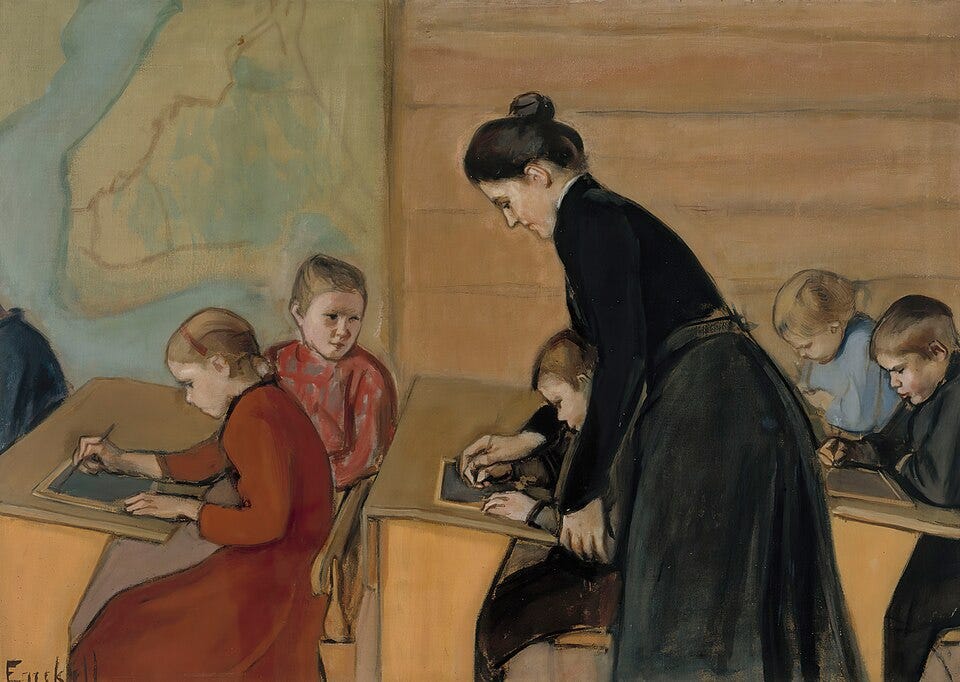
Walking alongside my mentees
My own changed plans give me sympathy for uncertainty. I once had a fairly definite picture of my future, and my life developed differently. That experience cannot tell a mentee which direction to take, but it reminds me to leave room for possibilities I have not understood. A student may be good at something without wanting to build a career around it. Another may be drawn toward work they do not yet do well. What appears sensible from my position may look different from theirs. Have I understood their reasons, or have I already begun comparing their plans with the future I would choose?
Sometimes, we move forward by just looking at the next steps—a skill to practice, a class to try, or a conversation to have. These small steps help someone make decisions without having to figure out their whole future at once. And it is always a joy when mentees come back and can explain a choice in their own words. They might still have doubts, but they’re starting to tell the difference between what they know, what they fear, and what they still need to learn.
Near the end of Purgatorio, Virgil tells Dante:
Non aspettar mio dir più né mio cenno; libero, dritto e sano è tuo arbitrio.2
Or “Do not wait any longer for my words or signals; your will is free, upright, and sound.” The poem describes a spiritual journey far beyond anything I could claim for teaching. Still, the scene offers an image of guidance I find worth considering: a guide recognizes that the person he has accompanied no longer needs to wait for every instruction. One can only hope that our work as teachers helps students and mentees develop something of that independence. Their growing ability to judge, make sense of life, and find meaning in it is part of what makes the time together worthwhile.
A vocation in daily practice
On Teachers’ Day, people often talk about educators in grand terms, but the work itself can feel much more ordinary. Teaching is mostly about preparing, grading, meeting deadlines, repeating explanations, and making decisions when you’re tired. Still, the calling shows up in these everyday tasks. Feedback helps students know what to work on. A thoughtful answer can make it easier for someone to ask a tough question. Clear and consistent expectations help students understand what’s needed. This is how I see teachers helping to shape people’s character. We help develop attention, judgment, conscience, and imagination through what we teach and how we live.
Of course, our role is just one part of the picture. Students are shaped by their families, friends, backgrounds, and beliefs. Their growth belongs to them, and we’re fortunate to be trusted with a part of their education. That trust calls for care and brings genuine joy. My students and mentees ask thoughtful questions, share ideas worth hearing, and make plans that deserve our attention. They remind me that teaching means seeing each person as a whole, with their own relationships, hopes, responsibilities, and choices. Sometimes, I get to witness something click—a challenging idea, a decision, or a new possibility someone feels ready to explore. Those moments bring a special kind of excitement I never expected from this job.
What remains of the architect
I still love architecture. I still see the child in myself who studied floor plans and wanted to create something useful for others. Teaching has become another way to do that. I plan carefully, figure out what’s needed, and change what doesn’t help. The real reward comes when someone can use what we’ve worked on together. Both architecture and teaching are ways to serve others by paying attention to the people they’re meant for. In the classroom, those people are right in front of me. They have their own voices, dreams, doubts, and the freedom to question what I suggest.
I didn’t become the architect I once pictured. Instead, I became a teacher who still thinks about plans, but who has learned to look up and see the people in front of me. There’s a special joy in watching a student or mentee find their own path and start moving forward. I might walk with them for a while, but the choice and the effort are theirs.
As a child, I pictured myself standing inside a building that began as a drawing on my paper. Now, I feel the same excitement when someone takes what we’ve worked on together and uses it to make a choice I could never have made for them. The plans I make now only matter if they leave room for freedom, so each person can discover, pursue, and take responsibility for their own life. What makes teaching worth returning to is the person before me, whose learning belongs to a larger life of relationships, hopes, responsibilities, and choices still to be made.
Dante Alighieri, Inferno, Canto XXVI, lines 119–120. Ulysses speaks these lines while urging his companions toward the voyage that ends in their deaths; they should not be treated as an uncomplicated endorsement of limitless inquiry.
Dante Alighieri, Purgatorio, Canto XXVII, lines 139-140, from Virgil’s final address to Dante. The application to mentoring is an analogy, rather than an equivalence with the poem’s spiritual journey.
