


What does it mean to be Filipino?
There are many textbook answers to this question. Filipinos are resilient and hospitable. Filipinos love their families, and they can find joy and laughter even in the most difficult situations. Yet despite how often the question is asked, there is no single moment in history that can fully explain who we are. Filipino identity was not formed overnight, nor was it shaped by a single person, culture, or tradition. It emerged through centuries of encounters, exchanges, and journeys that connected the Philippines to the rest of the world.
One of the most significant examples of this can be found in the Galleon Trade.
For 250 years, ships sailed between Manila and Acapulco, linking Asia, America, and Europe through a vast network of commerce and cultural exchange. They carried silver, spices, textiles, food, ideas, beliefs, and people across the Pacific, creating connections that reshaped societies on both sides of the ocean. Many aspects of Filipino life today, from language and cuisine to customs and traditions, bear traces of these centuries of interaction. Yet despite its profound impact, the Galleon Trade is often remembered only as a trade route, condensed into a few pages of history textbooks. Museo Del Galeón invites us to look deeper, offering an experience beyond our history books.
Around sixteen years in the making, the museum grew from a vision first discussed during a diplomatic gathering attended by ambassadors from thirty-two countries connected by the Galleon Trade. Today, that vision stands beside the IMAX cinemas at the Mall of Asia Complex, offering visitors an opportunity to explore a defining period in Philippine history through a richer and more human lens. Rather than simply presenting artifacts and historical facts, the museum tells a story of movement, connection, and transformation; a story that helps explain how the Philippines became the nation it is today, and how centuries of exchange helped shape what it means to be Filipino.
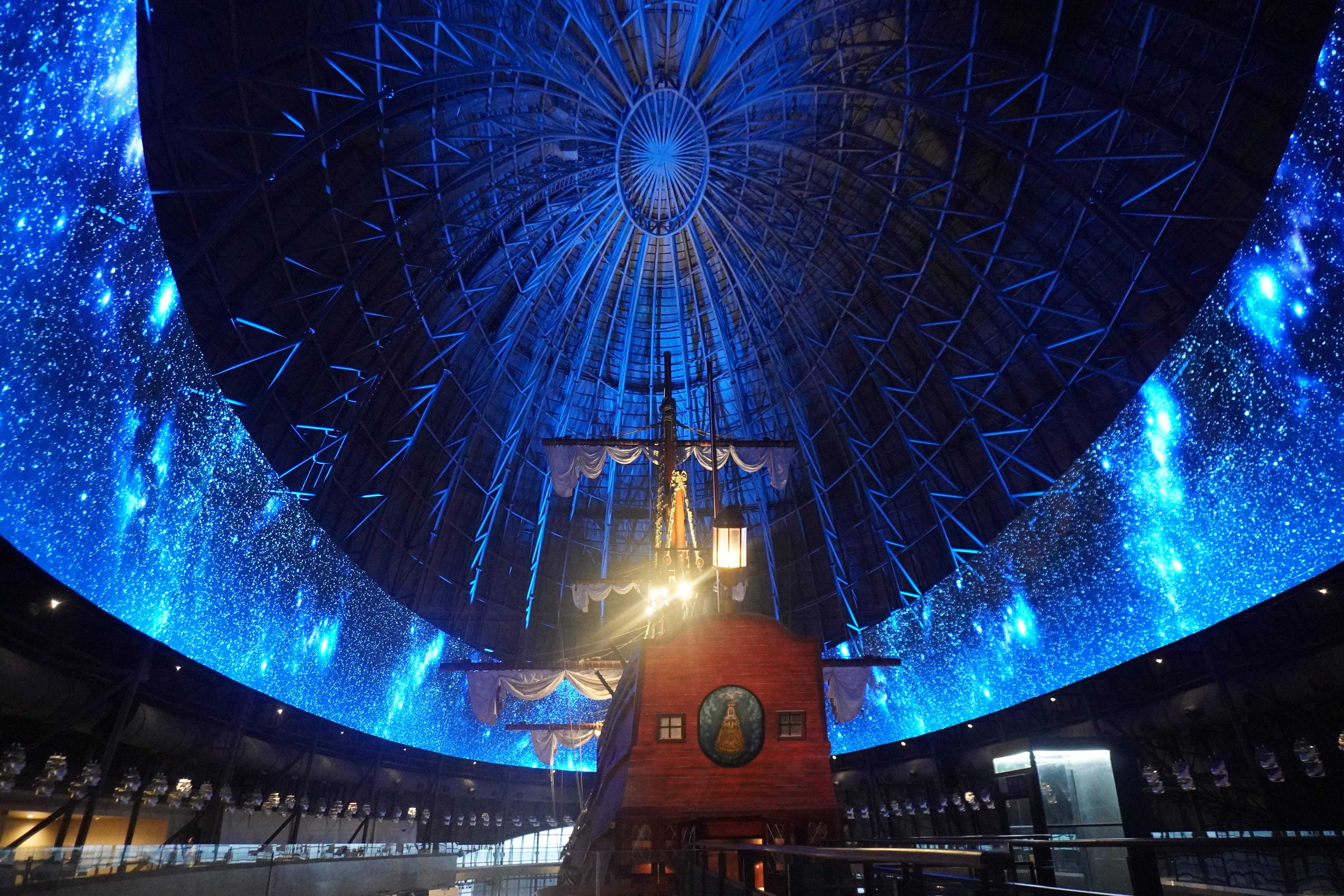
Upon entering the museum, there is a sky full of stars. Beneath it stands the Galeón Espíritu Santo.
The vessel immediately dominates the room. At forty meters long and thirty meters high, it towers over the museum floor and serves as the centerpiece of the entire experience. The original Espíritu Santo, built through forced labor in 1603, was one of 181 treasure ships that crossed the Pacific between Manila and Acapulco. Looking up at its towering frame, it becomes difficult to imagine that vessels like this carried hundreds of people across an ocean for months at a time. Historians estimate that one in three crew members died during these voyages, whether from disease, malnutrition, accidents, or the harsh realities of life at sea.
Interestingly, visitors are not immediately invited aboard. The museum instead begins by introducing the world that surrounded the galleons and made such voyages possible. The first gallery explores maritime traditions in the archipelago long before the arrival of Europeans, highlighting the ingenuity of indigenous shipbuilders through life-sized balangays and exhibits demonstrating how these vessels were constructed without nails. From there, the story expands outward into the world of trade itself through displays featuring silver, spices, pottery, textiles, religion, and the countless goods and ideas that moved across oceans during this period.
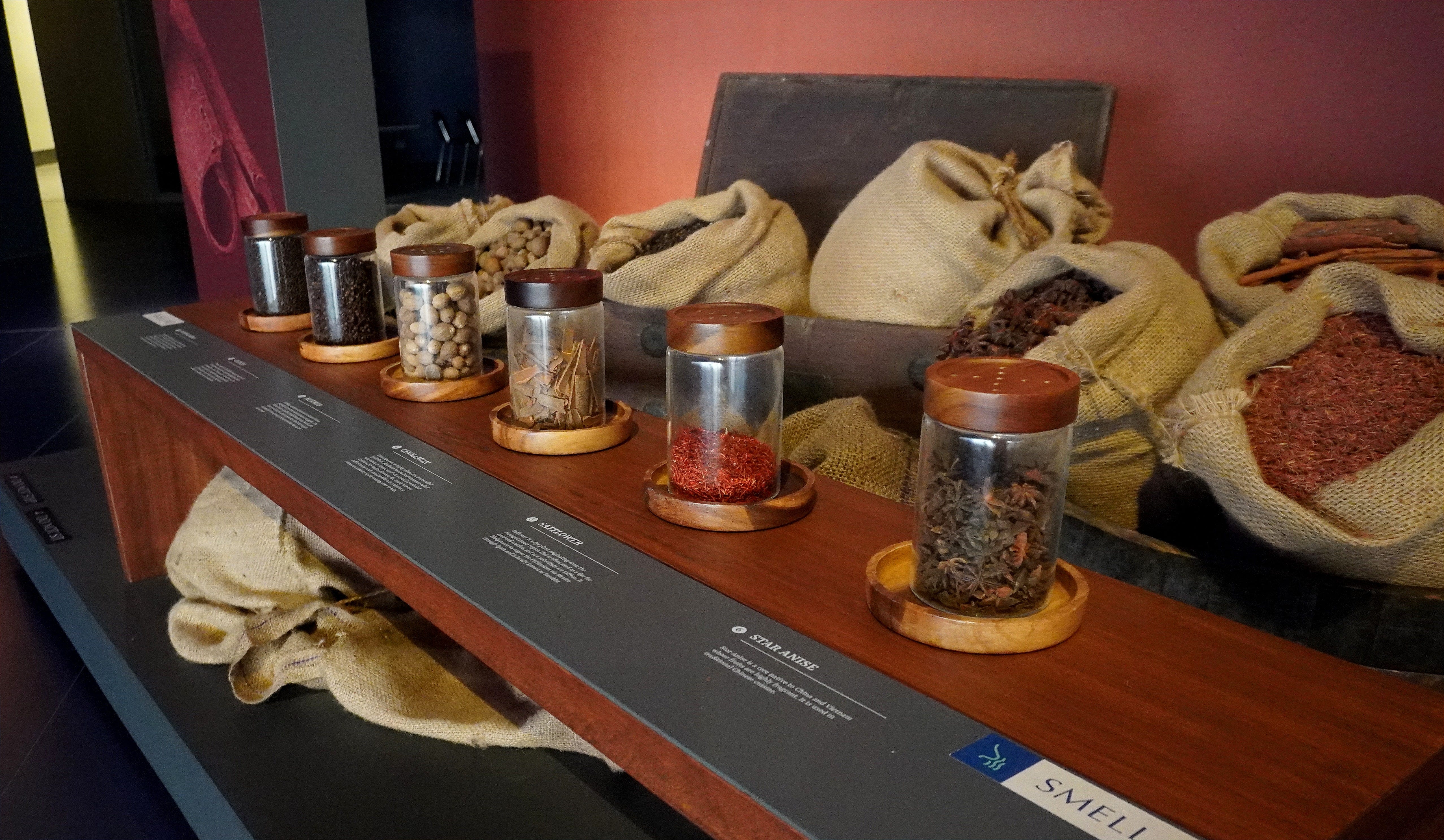
What makes this section particularly memorable is how interactive it feels. Rather than simply reading information panels, visitors can tap digital screens to follow the journeys of different galleons and learn about the ports they visited. Exhibits invite visitors to smell spices, examine fabrics, and observe pottery similar to those exchanged centuries ago. History often feels distant because it is encountered through dates, names, and timelines. Here, visitors are able to engage with the same objects that once connected continents. The experience transforms trade from an abstract concept into something tangible and human.
The museum follows a chronological path, allowing visitors to gradually understand how interconnected the world had already become centuries before modern globalization. Every route represented more than the movement of goods; it represented the movement of beliefs, customs, technologies, and people. Long before the internet connected distant corners of the world within seconds, ships were already carrying cultures across oceans.
As visitors continue through the museum, the walls gradually become lined with historical maps of Manila and its surrounding areas. Looking at centuries-old maps makes you see the amount of effort and detail cartographers gave to map out our landscape. You can see erased lines, scribbled-out words, and squiggly lines that make up what we know of geography today. These old maps serve as a reminder that so much of the information modern society takes for granted exists because generations before us dedicated themselves to observing, recording, and understanding the world around them. Long before satellite imagery and digital navigation, there were people painstakingly sketching coastlines and charting unfamiliar waters, laying the groundwork for knowledge that would eventually become readily available to future generations.
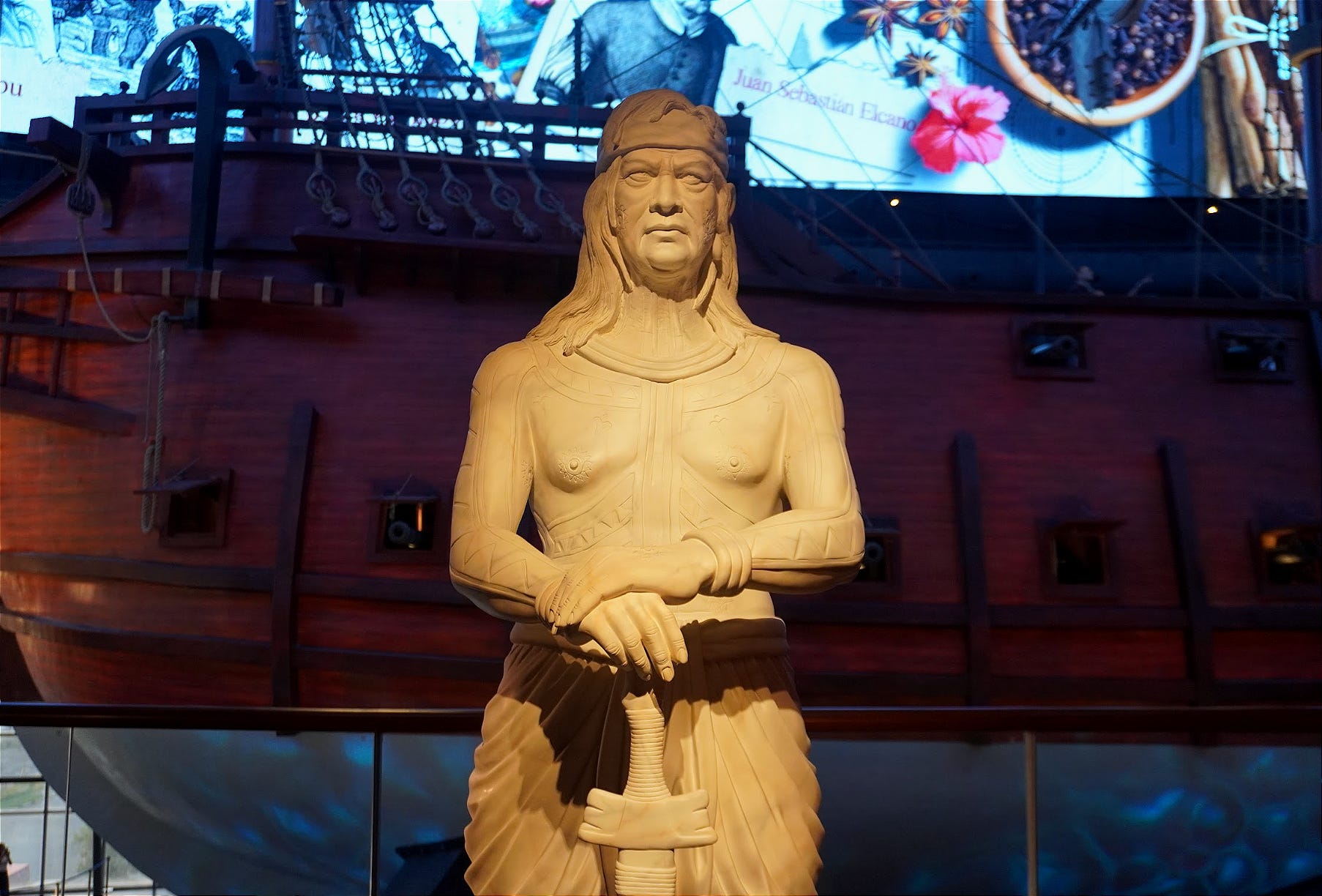
The second gallery shifts toward a more familiar chapter of Philippine history by exploring the arrival of Europeans and the beginnings of Spanish colonization. Sculptures, paintings, and historical artifacts depict encounters that would permanently alter the course of the archipelago’s history. Visitors encounter life-sized figures of personalities such as Lapulapu alongside displays featuring pre-colonial weapons and artistic representations of traditional practices such as the blood compact.
Eventually, visitors are invited to step aboard the Espíritu Santo itself, which is perhaps the most immersive part of the museum. Despite being constructed from fiberglass, the ship possesses a surprising sense of authenticity. The interior carries the scent of wood, while barrels, supplies, and cargo are arranged throughout the decks as though the crew had only recently stepped away. Cannons line portions of the vessel alongside displays explaining how they were maintained, while visitors can peer into lower sections containing sacks of goods, waiting to be transported across the Pacific. The attention to detail makes the ship feel lived in rather than reconstructed.
Walking through the vessel makes it easier to imagine the realities of maritime life during the Galleon Trade. Visitors can examine the tools used aboard the ship, explore the captain’s quarters, and gain a better understanding of the conditions sailors faced during these journeys. While the captain enjoyed relatively comfortable accommodations, ordinary crew members endured cramped living spaces, limited food supplies, and months of uncertainty at sea. The museum does not present the galleon merely as a symbol of trade or empire. Instead, it emphasizes the people whose labor made these voyages possible.
This perspective becomes particularly evident through an animated film shown within the ship itself. Created by Filipino artists, the film follows several individuals aboard a galleon voyage, including a child working below deck, a sailor managing the sails, a cook attempting to ration dwindling supplies, and a captain responsible for leading the vessel. Through their stories, visitors gain insight into lives that are often overshadowed by larger historical narratives. Discussions of the Galleon Trade frequently focus on economics, politics, and commerce, yet every successful voyage still depended on ordinary people enduring extraordinary circumstances.
The film makes those realities impossible to ignore. Storms become more frightening when viewed through the eyes of those trapped within them; hunger becomes more personal when seen from the perspective of a cook struggling to feed an entire crew; winds become scarier when you see seafarers hanging onto their sails just so they don’t sink; and reaching land after months at sea becomes a moment of hope and relief to everyone involved. Watching these stories unfold, it becomes difficult not to wonder how people managed to endure months, and sometimes even years, surrounded by nothing but the unforgiving sea.
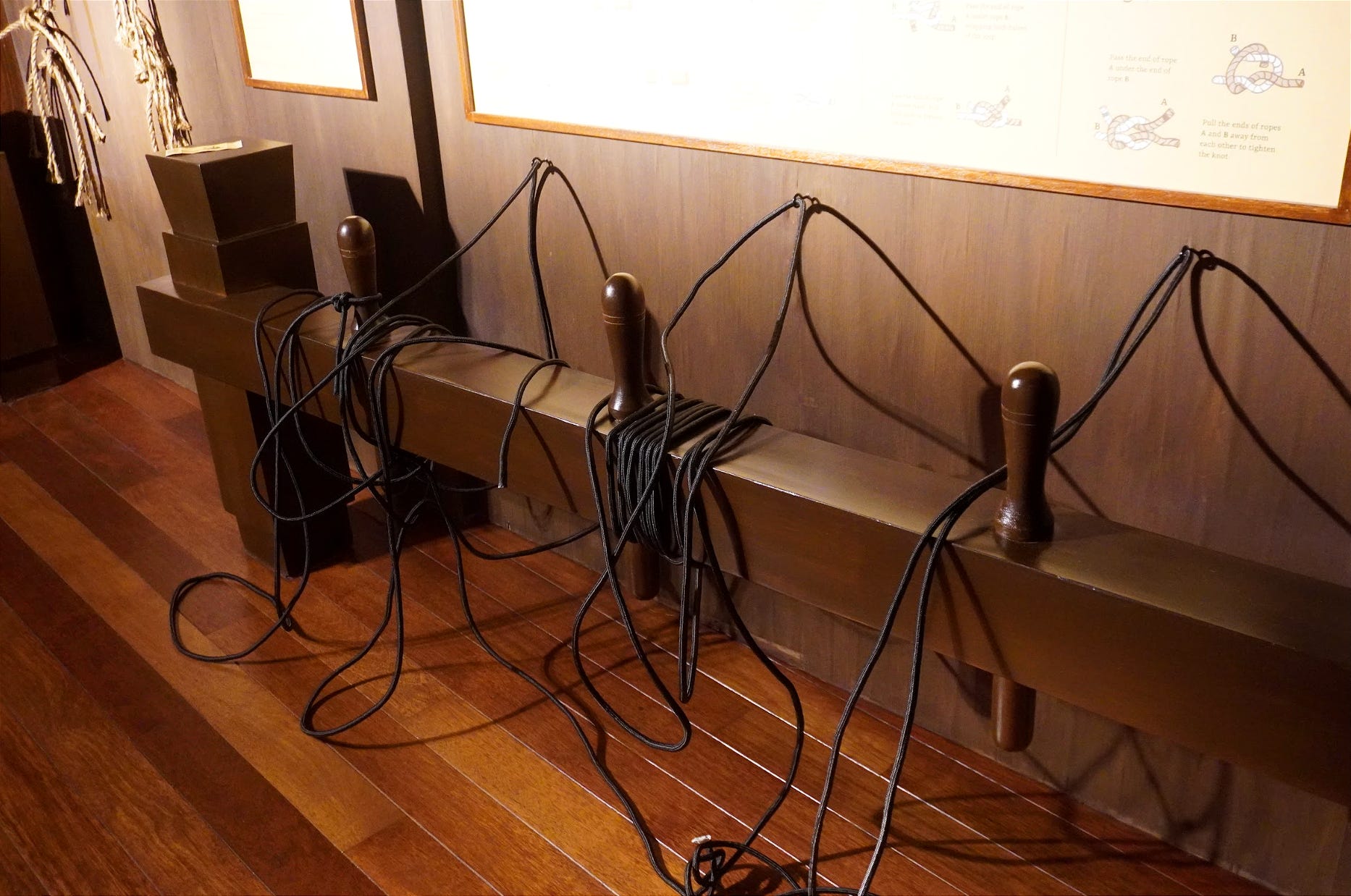
The museum attempts to answer that question through the details scattered throughout the ship. Ropes and tutorials invite visitors to attempt these techniques themselves, offering a glimpse into the skills required at sea. Additional exhibits showcase navigational instruments and maritime equipment, the tools they used to create maps, and visitors are even given the opportunity to lie down in a recreation of the captain’s wooden bed. These details may seem small, yet they contribute significantly to the museum’s immersive quality. Rather than observing history from a distance, visitors are encouraged to experience portions of it for themselves, imagining that they, too, are a part of history.
By the end of the journey, it becomes clear that the significance of the Galleon Trade extends far beyond the ships themselves. The influence of these centuries of exchange remains visible in everyday Filipino life. According to the museum’s executive director, Manuel Quezon III, many aspects of Philippine culture still bear traces of this period. The vegetables celebrated in Bahay Kubo, familiar words such as palengke, tiangge, Tatay, and Nanay, and countless traditions woven into daily life all reveal the lasting impact of interactions that occurred across oceans hundreds of years ago.
While the museum highlights the past, it also offers a new perspective on the present. Throughout its exhibits, the Galeón Espíritu Santo reminds visitors that Philippine history has always been closely tied to the sea. The sailors who crossed the Pacific centuries ago belonged to a long tradition of maritime labor that continues to shape the country today. Filipinos continue to comprise a significant portion of the world’s seafarers, many of whom spend months away from their families while working aboard vessels far from home. Although modern maritime travel differs greatly from the conditions experienced aboard seventeenth-century galleons, the experience of spending months at sea remains a reality for many Filipino workers.
This is what makes this experiential museum feel so relevant despite focusing on events that occurred centuries ago. The Galleon Trade becomes visible here not just as a system of commerce, but as a long history of movement across oceans where people, ideas, and objects were constantly in contact, shaping one another in the process. What the museum shows is that these encounters were not distant or abstract. They left traces that can still be seen in the way things are named, made, worked, and understood today, turning history into something that continues to live in the present.
When visitors emerge from the Espíritu Santo, what they see first is not the size of the ship or the exhibits surrounding it. Looking up, they are greeted by the same sky as the people of the past and the people of the future who will one day walk through those galleries themselves—
A sky full of stars.