


By Zachary Lucas Reyes
Universitas Staff
The very notion of living often feels like prison life. With mountains of deadlines and chasing endless requirements, we are arrested by them until the mind rests; and we are restless with them until we arrest these worries proper. We, however, consider ourselves well-rested until another deadline admits us into that familiar state once more: restlessness. The cycle repeats. From which restlessness births respite and repeats ad nauseum, what emerges is routine.
We say that the very notion of living, or perhaps even existence, feels like prison life in the sense that you are not only confined by the limitations of your sentence and the routine chores that come with it, but by the routinely existence of waking up only to ponder your prison-bound state. In the same way a job that slowly kills you, or a semester that becomes soul-crushing—it is in knowing these facts of living that becomes the state of someone’s wanton restlessness.
The human person therefore is not, cannot, nor should not be limited in this regard. That is, he regards himself to be free. And because he is free, he should not permit himself to do something that is entirely undesirable, for he would act upon bad faith. In the Shawshank Redemption, we find exactly that; a film that is ultimately concerned with two things: the facts and freedom.
If you were imprisoned for twenty years, how would you find respite in that? Where is respite to be found in meaningless routines and sub-par living conditions? More importantly, where is freedom to be found in waking up knowing you are living these facts everyday? We call these sum of facts within a person his facticity. Those are his unchosen, objective, and concrete details of his existence—his past actions, environment, and anything that limits human freedom. When someone is imprisoned, it is a fact of his existence in the same way merely existing becomes one as well. We never choose to exist, strictly speaking, nor did our protagonists choose to be imprisoned in the Shawshank Redemption. So, why then do we still choose to keep existing?
In The Consolation of Philosophy, Boethius finds himself in a state with striking similarity to us. Having been falsely imprisoned under hasty allegations of treason, he is condemned to gaze at his facticity, thus falling into despair. He, however, writes The Consolation as a profound meditation on his self-possessed freedom. The mind becomes an impenetrable fortress where no wicked man can impose his will upon the wise one. Boethius, the wise man, is subject to the wickedness of false imprisonment, but is not entirely subjugated by it; for he is in a sense unconquered by what attempts to conquer him. The evil of imprisonment becomes relative to him. That is to say, freedom hinges on what Boethius does with what is done to him. He writes in The Consolation:
“The serene man who has ordered his life stands above menacing fate and unflinchingly faces good and bad fortune. This virtuous man can hold up his head unconquered. The threatening and raging ocean storms which churn the waves cannot shake him; nor can the bursting furnace of Vesuvius, aimlessly throwing out its smoky fires nor the fiery bolts of lightning which can topple the highest towers. Why then are we frightened by fierce tyrants who rage without the power to harm us?”
When we are restless we fixate on the facts, but we find respite when we turn to freedom; because freedom is that movement towards the supreme good of happiness, and what more freedom is found in doing something that makes you happy. For Boethius, that freedom is declaring himself to be great in mind and writing his magnum opus. While he is subject to his uncontrollable circumstances, he is entirely responsible for his response and actions, which define his freedom.
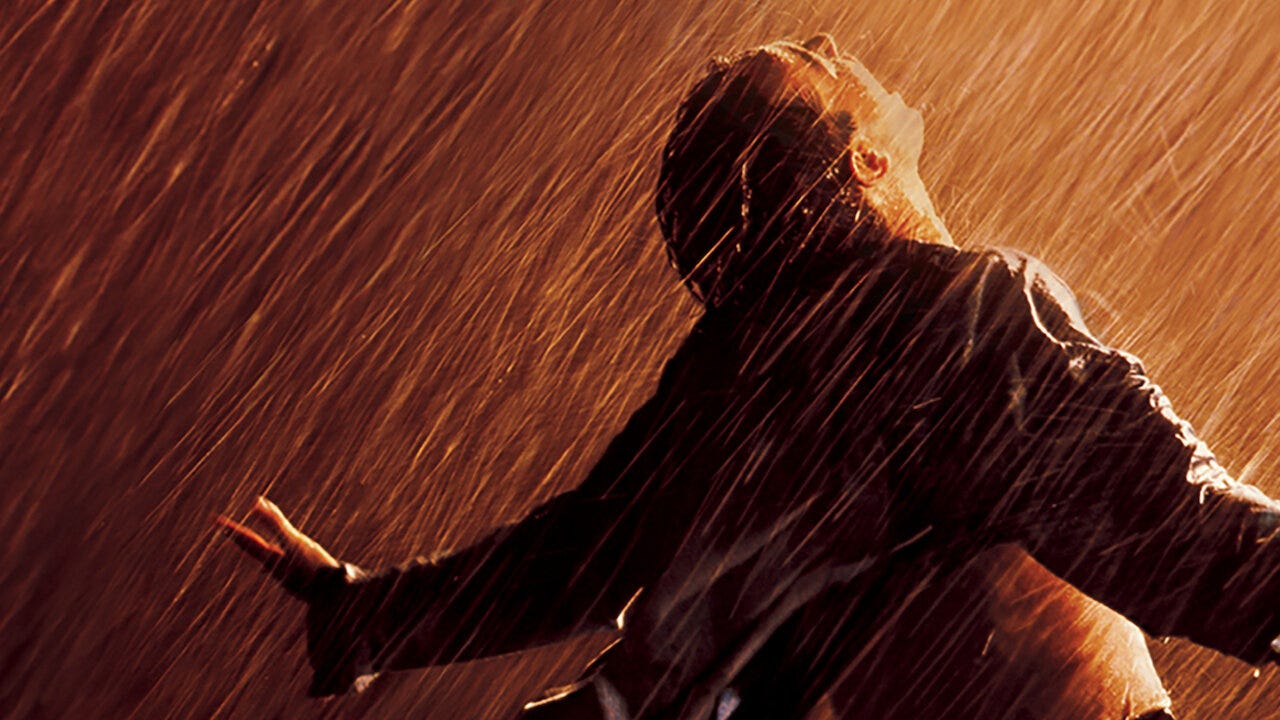
The concept of freedom then can be understood as this: freedom is what you do with what’s been done to you. That is what French philosopher, Jean-Paul Sartre, would say when summing up the concept. Freedom becomes transcendental in the sense that it is the full expression of an intimate unity between power and will. Once we realize this, we find that the one of the strongest objects of freedom is the mind. The fact in freedom then is not the absence of limitation. Rather the fact in freedom is the tandem relationship between facticity and our rational response to that facticity.
Would it not then be a more rational response to escape imprisonment? If we suppose that rationality lies at a change of circumstance rather than one of response to circumstance then we gravely misunderstand freedom in its most fundamental sense. Consider in The Shawshank Redemption that one of the imprisoned men was finally set free, who after attaining freedom, trudged his newfound job as a store clerk and dreaded that routine existence of life once more, ending his life. Can we confidently say that he was free? Ironically, he died a free man, yet died impoverished of such a freedom.
Our mistake here is believing that we can escape routine. To deny such truths of existence, pleasing or harsh, is no remedy. Neither is it a remedy to deny our call to freedom. Such is the case when we deny that any semblance of meaning can be found in a routine, meaningless task. The Myth of Sisyphus tells us otherwise: there is no better remedy to routine existence than to do them, defiantly, we might add. Even if Sisyphus were condemned to roll a boulder up a hill only for it to roll back, he will find freedom because he has set his object of freedom on that impenetrable fortress of the mind. Despite having never escaped physical imprisonment, could we not say that Boethius found freedom in its most fundamental aspect when he set his mind on the eternal, communal goal of happiness? Whether our protagonists from the Shawshank Redemption escape or not is trivial because freedom becomes a concern of the mind, rather than one of environment. If we find that someone can be so despondent in the seat of power while the chained prisoner is at peace with his very reasoned existence, does freedom then prosper elsewhere? What we find here is that freedom is imminent and emergent. Our call to freedom is as undeniable as are the facts of our very existence.
The very notion of living often feels like prison life; and if freedom is all of these previous ideas, then with mountains of deadlines and chasing endless requirements we can always arrest them with meaning. We can always find wonderful conversations in between or profound reflections on why we still choose to exist. The cycle repeats. From which facticity births freedom and repeats ad astra per aspera, what emerges is our true emergent, inevitable condition of happiness.
Subscribe to UA&P Universitas
We tell UA&P’s story.
By subscribing, you agree Substack’s Terms of Use, and acknowledge its Information Collection Notice and Privacy Policy.