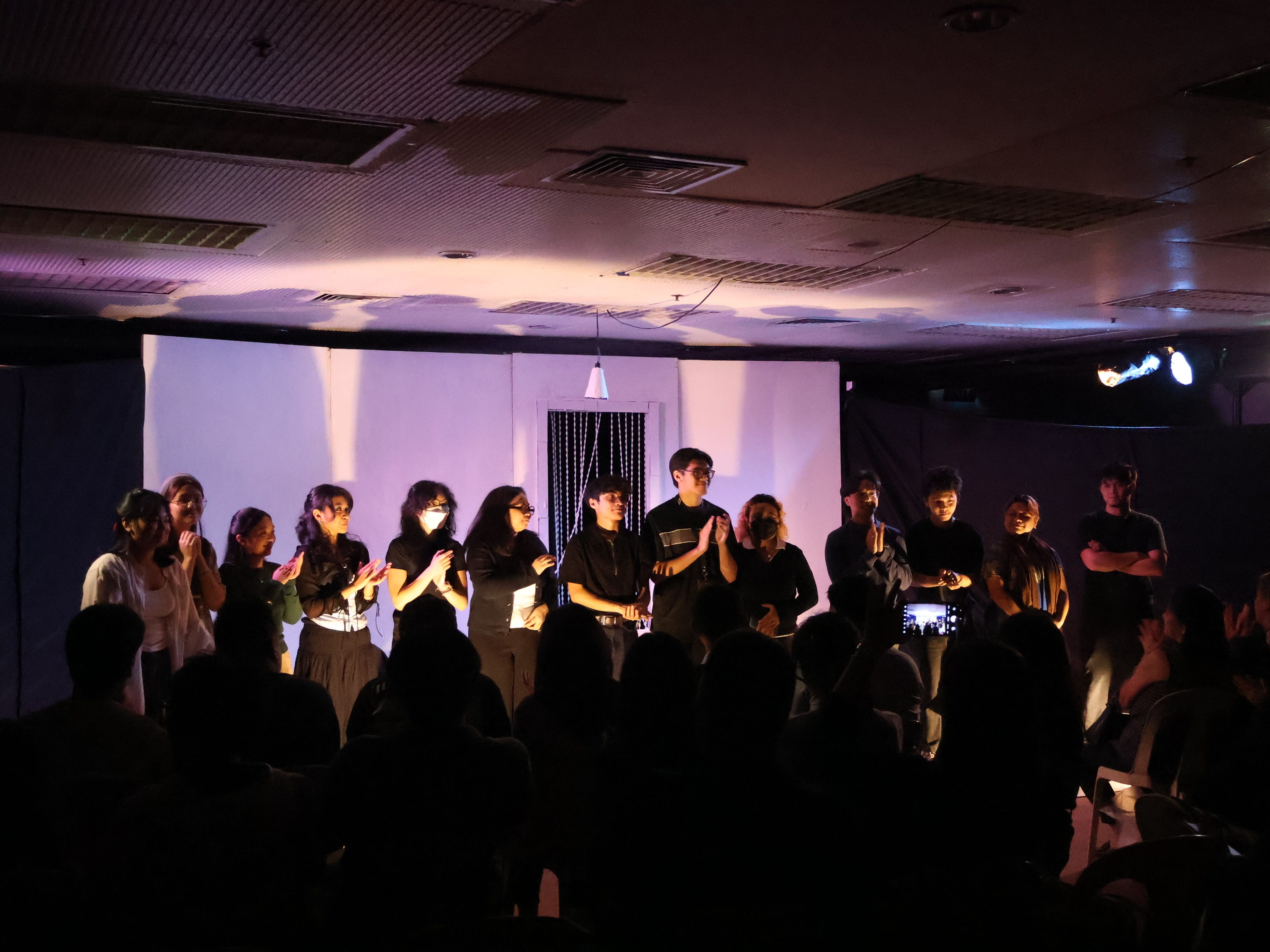
On a playground, a game of tag begins with a simple chase. Children scatter across the open space, running as fast as they can to avoid being caught. One person is taya, tasked with chasing the others. Once someone gets tagged, the role passes to them. The new taya must then chase the remaining players, carrying the responsibility of catching someone before the game can continue.
At least, that is how it is supposed to work.
Outside the playground, becoming taya is not always as simple as taking someone else's role. Some are made to carry responsibilities they never asked for, while others are left to face consequences they did not choose. Unlike a childhood game, the roles do not always change, and not everyone gets the chance to pass the burden on.
This idea lies at the heart of Dulaang Rock Opera Company's (Dulaang ROC) 37th Season Newbies Production, TAYA. Named by Project Manager Zach Santos, the production is presented as two separate plays staged together. It features Gabrielle Vicente's Salamin, directed by Ysabelle Beatriz Horca, an Internal Associate of Dulaang ROC and an Integrated Marketing 26YP student, and Ang Halimaw sa Aming Hapag, written by eight-time Palanca Award-winning Filipino playwright, author, and University of Asia and the Pacific (UA&P) associate professor Dr. Joachim Antonio and directed by Jared Jezoar Pacheco, a Dulaang ROC member and third-year MAPE-IRD student.
Together, the two plays explore what people are expected to carry, the choices they are forced to make, and the consequences that follow.
Growing up is often treated as something to look forward to. Graduation approaches, and the future seems full of possibilities. Yet somewhere between choosing a path, meeting expectations, and figuring out who to become, excitement can turn into pressure.
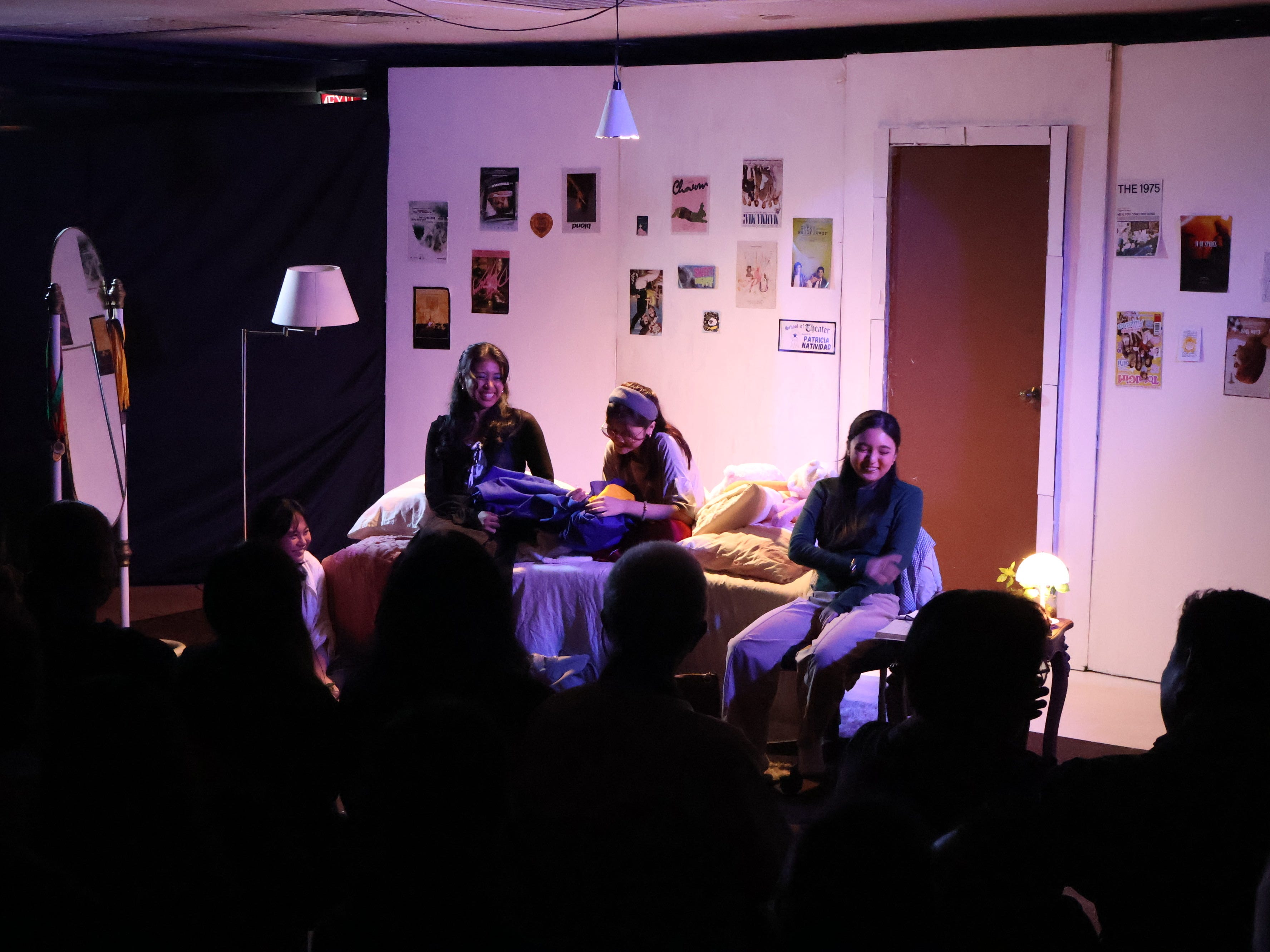
In Salamin, four graduating high school students navigate the uncertainties of adolescence. Patricia, played by Sammy De Castro; Patty, played by Gabrielle Oliva; Trish, played by Arianne Bitoon; and Trixie, played by Sophie Peralta, engage in conversations about ambitions, family responsibilities, academic expectations, and conflicting ideas about their futures. Each carries a different understanding of what growing up means, revealing how difficult it can be to distinguish personal desires from the expectations placed on them.
For director Bea Horca, these conflicts were particularly close to home.
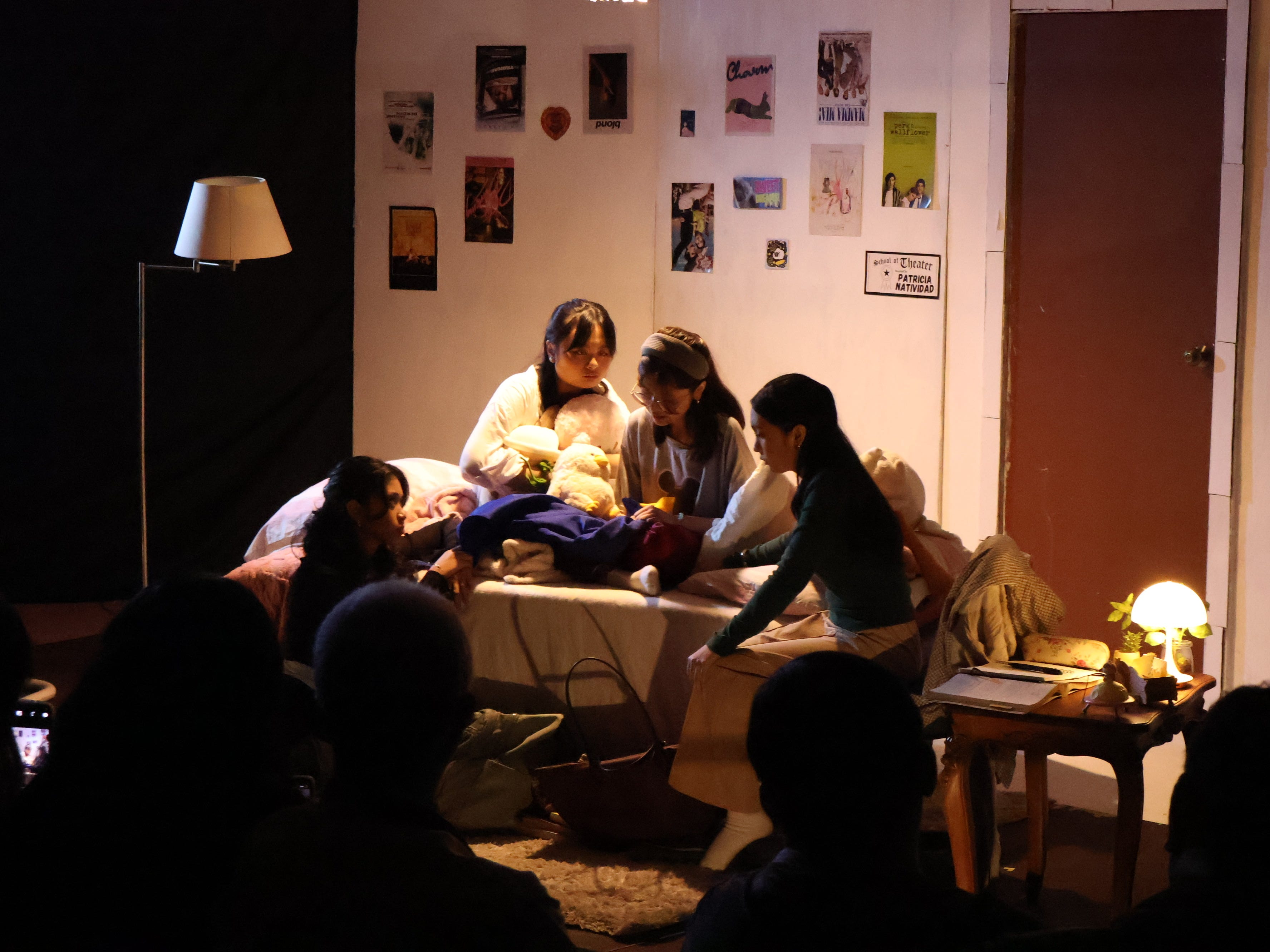
“I think what really drew me to Salamin was how familiar its conflicts felt. I'm also a graduating high school [Junior College] student, and so I always thought that growing up would also be something so exciting. But then, you know, at this age, you kind of realize just how heavy it really is, and I think this play is such a great representation of that, and I think somehow it's a universal struggle, which makes it really close to my heart,” she shared.
Horca's perspective reflects the tension between how growing up is imagined and how it is experienced. Adulthood promises independence, but that freedom comes with responsibilities and compromises that are not always easy to navigate.
The title Salamin, meaning mirror, captures this process of self-examination. Through the different identities its characters hold and the expectations they face, the play examines how young people come to understand themselves at a point when so much seems uncertain.
Photos: Kimi Magsajo
Its concerns extend beyond the characters themselves. The pressure to succeed and the fear of making the wrong decision are familiar experiences for many young people. In this sense, Salamin becomes a reflection not only of its characters but also of the uncertainties its audience may recognize in their own lives.
If Salamin turns inward, Ang Halimaw sa Aming Hapag directs its attention toward a much wider reality.
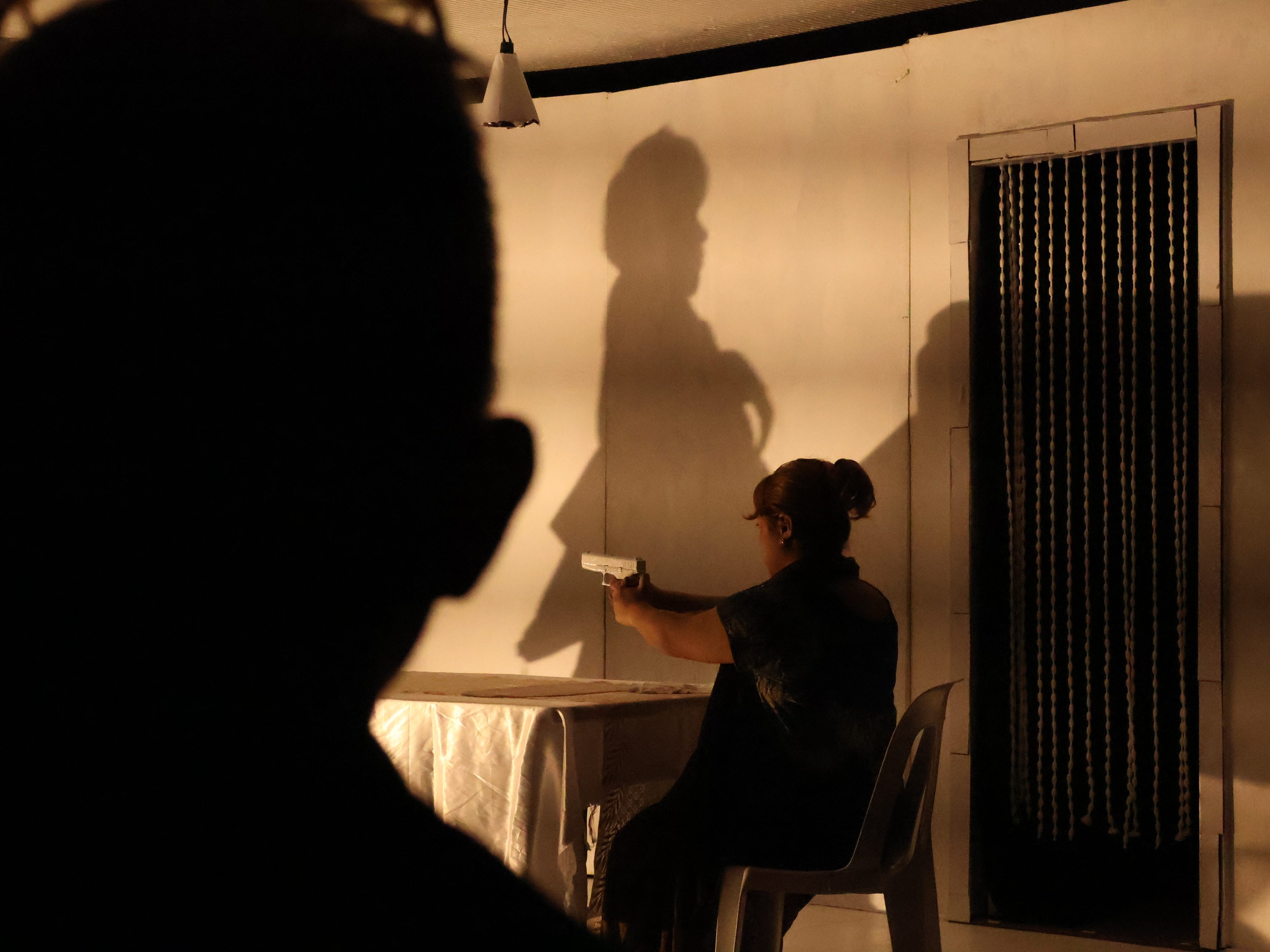
The second play brings audiences into the home of Delia, played by Seiya Orzal, and Jayson, played by Robert Andaya, a couple whose midnight conversation unfolds around their dining table. Beneath the familiarity of an ordinary domestic setting lies a heavier subject: extrajudicial killings and the violence sustained by systems of power and impunity.

The dining table, usually associated with family meals and everyday conversations, becomes the setting for a confrontation with morality, justice, and complicity. By placing a national issue within an intimate household, the play narrows the distance between public injustice and private life.
For director Jared Pacheco, bringing this story to the UA&P community was a deliberate decision.
“I wanted to direct this play to break the comfortable bubble ng UA&P community at dalhin sila sa isang seryosong pagninilay kung paano natin tuwirang binabaliwala ang karahasan at injustice sa labas ng ating mga silid-aralan,” he explained.
Pacheco's intention points to an uncomfortable reality: recognizing injustice does not necessarily mean confronting it. Discussions about violence and human rights may take place in classrooms and public conversations, but suffering can remain distant when it does not directly affect the spaces people occupy.
Ang Halimaw sa Aming Hapag challenges that distance. Its domestic setting brings questions of justice into a space associated with familiarity and comfort, asking audiences to consider how people respond when their beliefs are tested by difficult circumstances.
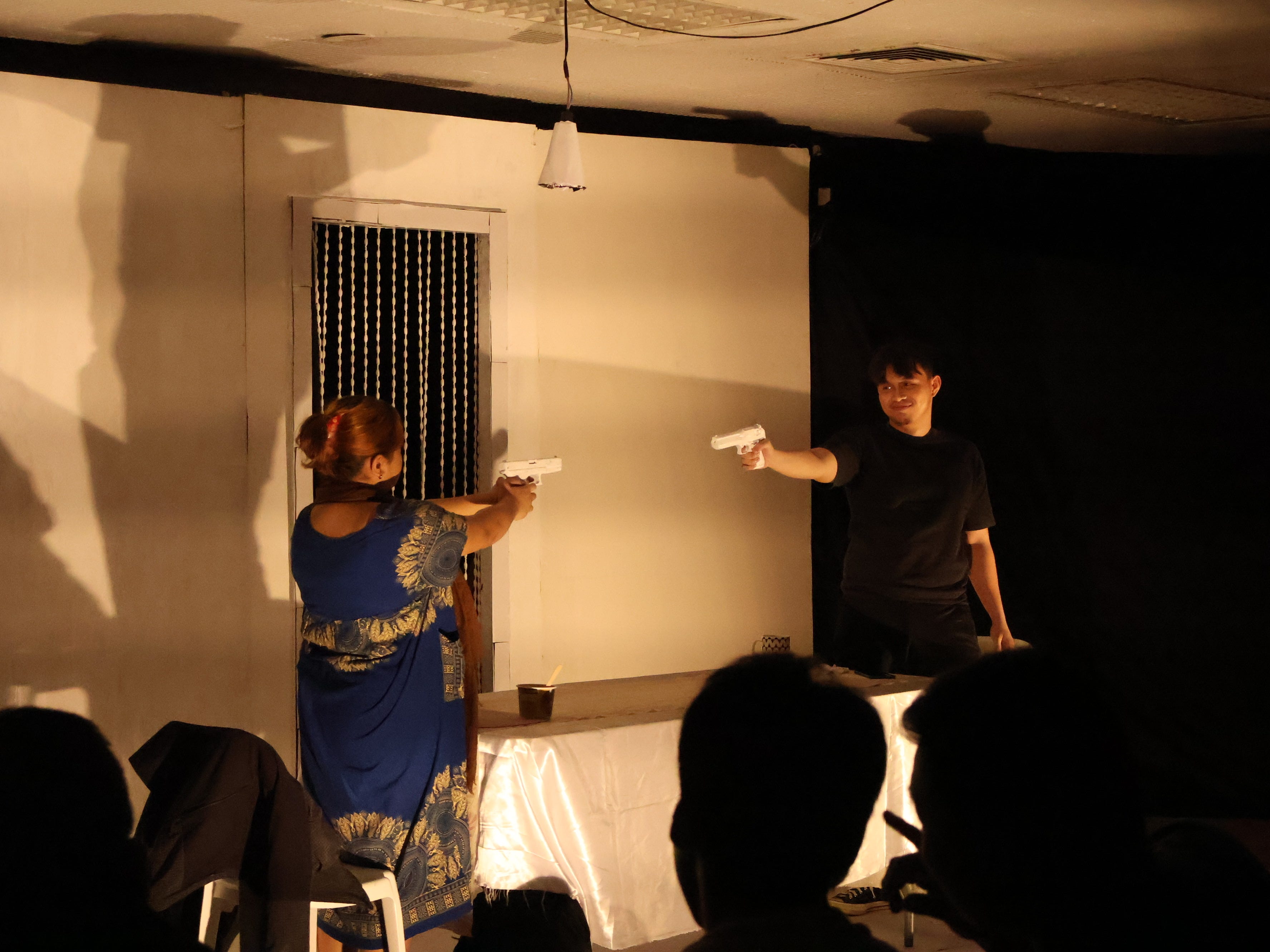
Here, the meaning of taya becomes more complicated. Unlike a childhood game, where the roles eventually change, the consequences of injustice are rarely distributed equally. Those with less power and fewer protections often bear the greatest costs, while others remain sheltered from the realities surrounding them.
The pairing of Salamin and Ang Halimaw sa Aming Hapag gives TAYA its central tension. The first explores the personal uncertainties of growing up, while the second confronts audiences with realities that extend beyond their immediate experiences. One invites self-reflection; the other demands a wider examination of the world people inhabit.
The distinction between personal and societal responsibility is not as simple as it first appears. The choices people make within their homes, relationships, and communities exist alongside larger systems that shape the opportunities available to them. Individual decisions can reinforce these systems, while those same systems determine who gets to make choices in the first place.
This is where the title TAYA brings the two productions together. Pagtataya refers to what a person is willing to risk, while taya refers to the person assigned a particular role or responsibility. Together, the two meanings raise a distinction between choosing to take a risk and being made to carry its consequences.
A person may willingly sacrifice something for what they believe in. Another may have no choice but to bear the consequences of someone else's decisions. These experiences are not interchangeable, and recognizing the difference is central to understanding the realities both plays examine.
For some, the stakes are the expectations they struggle to meet and the futures they are trying to build. For others, they involve safety, justice, and the right to live without fear. For those fortunate enough to remain untouched by these realities, there is still the question of what they choose to do with that distance.
Perhaps this is what TAYA ultimately asks its audience to consider: when life makes us taya, what are we willing to put at stake? A game of tag only works because everyone takes part. Someone gets caught, takes the role of taya, and the chase begins again. But outside the playground, not everyone gets to choose their role, and not everyone gets the chance to pass it on.
When the stakes are real, the question is no longer simply who becomes taya. It is what we are willing to do with the role we are given, what we choose to risk, and whether we will let others carry the burden alone.
Because when the stakes are real, looking away does not mean the game has stopped.