


By Andreas Christian Punzalan
Universitas Staff
This article has been updated to correct some inaccuracies. See erratum below.
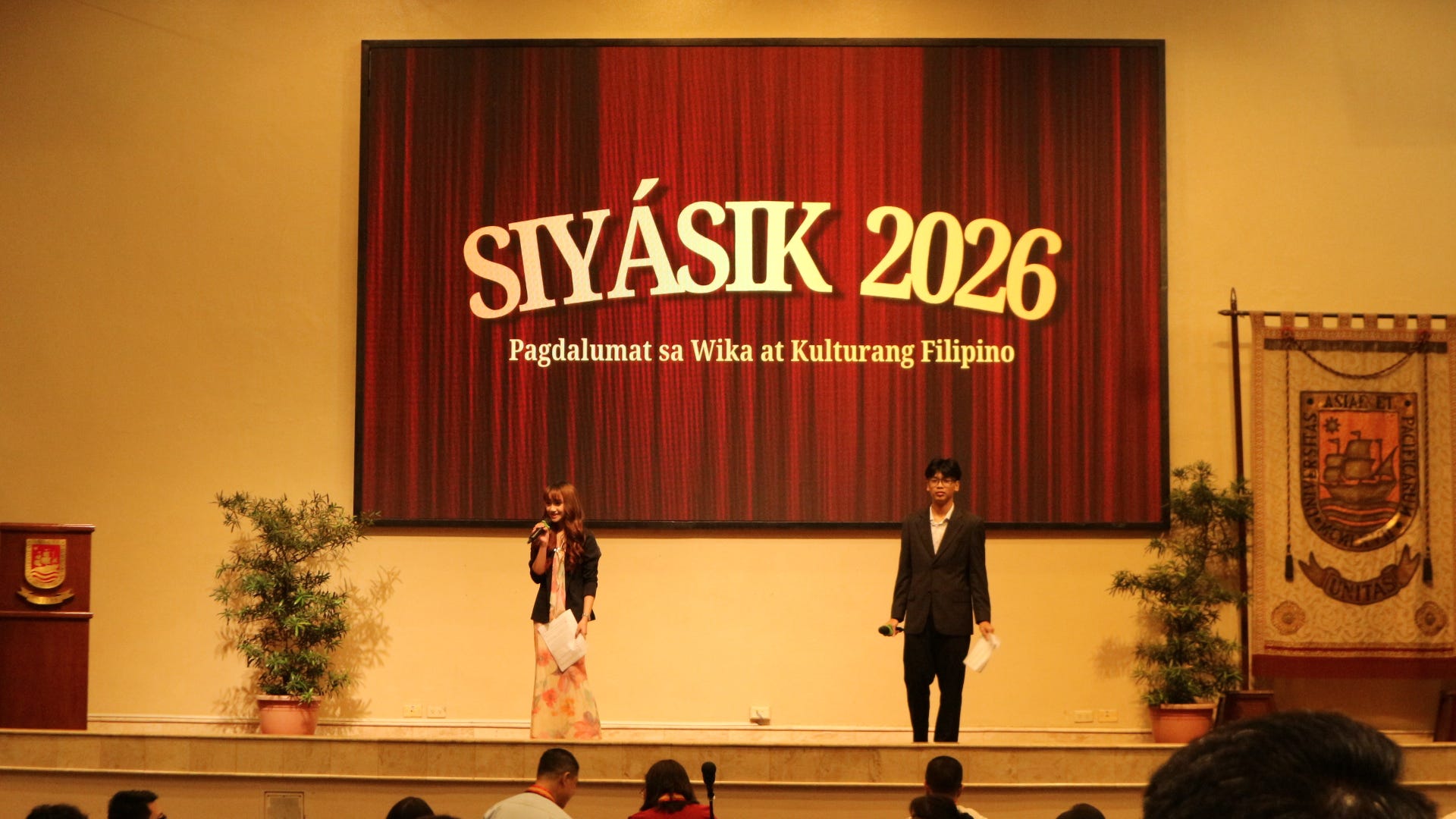
On May 13, Wednesday, the Junior College program hosted “Siyásik 2026: Pagdalumat sa Wika at Kulturang Filipino,” a research conference for Junior College 16YP students, at the Li Seng Giap Auditorium. In Siyásik, the best groups of each 16YP block presented their research for their Mabisang Komunikasyon (FILKOM 011) subject under Mr. Albert Lagrimas and Mr. John Errol Velasco. Mr. Lagrimas served as the head of the overall organizing committee of Siyásik, as well as the director, mentor, and advisor of 16YP. With the theme of “UNITAS: Unang Hakbang tungo sa Intelektuwalisasyon mula sa iba’t ibang larang,” Siyásik aimed to encourage students to learn more about their culture and to promote the intellectualization of the Filipino language for use in different fields.
The event began with a lively performance by Ms. Sophia San Pedro and Mr. Alexander Liu, members of the UA&P Chorale, singing “Panalangin” by Apo Hiking Society. Afterwards, Associate Dean for Academic and Student Affairs, Dr. Moreal N. Camba gave the opening remarks, explaining the premise of the event. Following this, Mr. Louise Amante introduced the panelists for Siyásik: Mrs. Regina Marie G. Castillo, a faculty member of the School of Politics and Governance (SPG), Dr. Guillermo Dionisio, Program Director of the Center for Liberal Education under the College of Arts and Sciences (CAS), and Mr. Garry Perez, an SPG faculty member and the former Operations Committee Secretary.
Opening the main event, 26YP MA PolEco-IRD student and Siyásik 2025 sole champion, Jaireen Macaldo, presented her research: “Pagsasalin sa Filipino ng “The Butterfly Lovers”: Wikang Filipino na magamit sa pambatang Romantikong literatura mula sa wikang Tsino.” Ms. Macaldo’s research was a direct translation of the Chinese children’s tale, The Butterfly Lovers, from Chinese to Filipino, rather than using English as an intermediary. During her presentation, she explained the nuances of the process, including the process of reconfiguring the Subject-Verb-Object pattern of Chinese sentences to that of the Verb-Subject-Order of Filipino, and the need to omit certain inappropriate words or use simpler language to make stories more understandable for children. She concluded by recommending that future researchers simply determine the frequency of which approach from Translation Strategy Theory to use for translation and to conduct research on bilingual youth who have read translations in their language to prove how it aids their skills. After her presentation, she was awarded a medal for her exemplary work as the champion of Siyásik 2025 by Mrs. Elerosa Caparas, Program Director of UA&P’s Junior College Program.
Following Ms. Macaldo’s presentation, Mr. Velasco introduced the metrics by which the panelists would judge each presentation. Students were scored based on the following: (1) 30% of the full score would come from the clarity of their presentation and their compliance with the 15-minute presentation time limit, (2) 30% would come from the depth of their understanding and analysis of their chosen research topic, (3) 20% would come from the proficiency of their responses to panelists’ questions, and (4) 20% would come from their adherence to the theme of Siyásik.
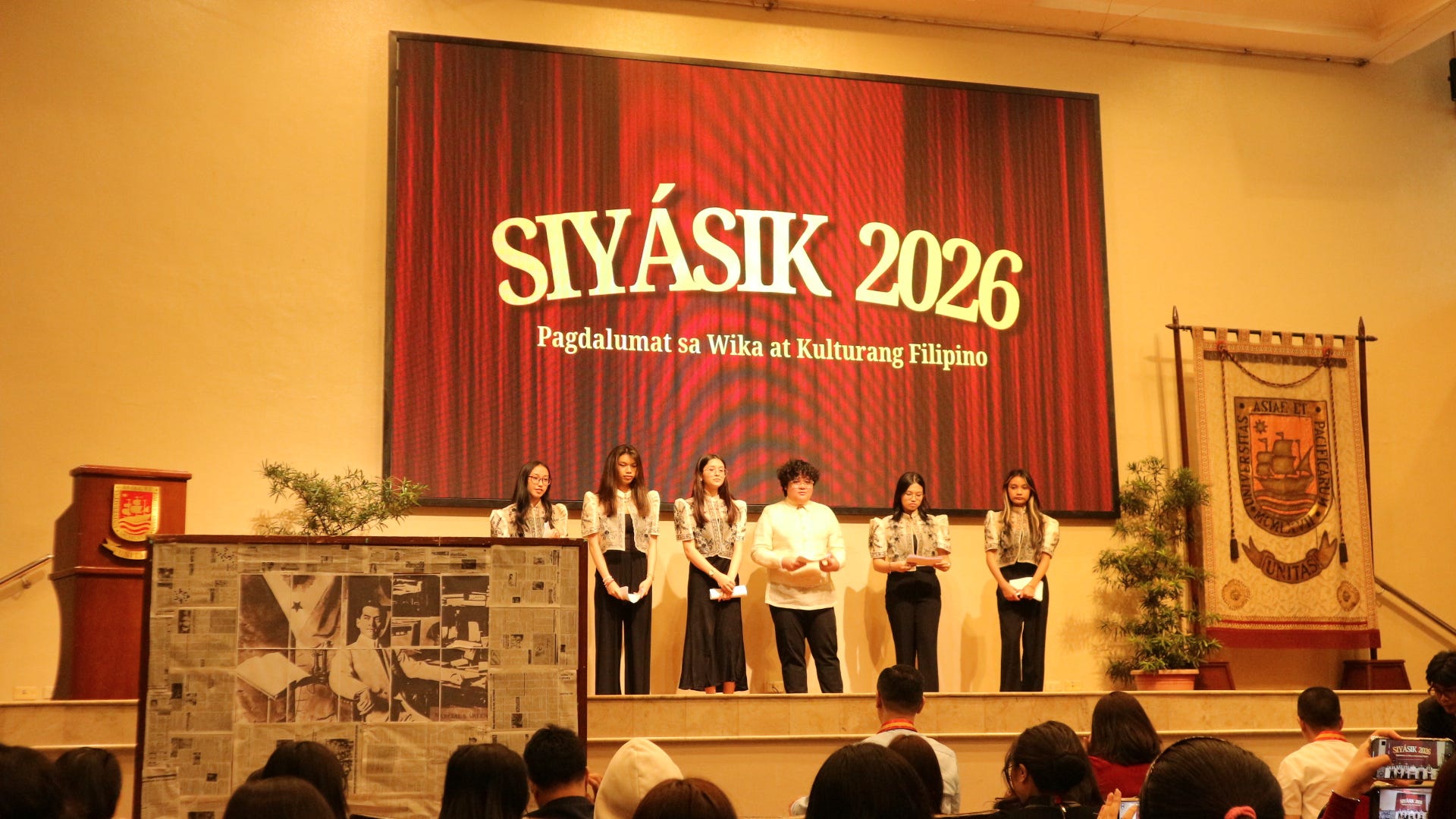
Afterwards, the event proceeded with each block presenting their research. Presenting first was 16YP1, with their research “Katotohanan O Kathang-Isip Lamang?: Isang Kwalitatiobing Pagsusuri sa Paglalarawan Sa Palikulang Quezon (2025)” by Jodee Allessi K. Antonio, Danielle Courtney A. Austero, Raul Piolo Miguel S. Basallote, Janica These B. Ocampo, Gabrielle Faith Oliva, and Arianna Meghan C. Sy. Opening with a dramatic, theatrical skit about the importance of how different narratives are portrayed, their research was an analysis of the accuracy of the representation of Jerrold Tarog’s film Quezon (2025). They conducted their analysis with the help of Reception Theory and a Focused Group Discussion, and found that the film portrayed Manuel L. Quezon as a “morally gray” leader. The researchers also found that there were severe deficiencies in the accuracy of the film’s representation of history, including the oversimplification of different political relationships and the addition of fictional elements to the story. Using Reception Theory, the researchers found that viewers gave meaning to the film either as a critical representation of history or simply accepted the film at face value to be the truth. Citing other research, they also showed that historical films play a large role in shaping public historical awareness. The 16YP1 researchers concluded by emphasizing the importance of analyzing historical films with a critical perspective to clearly separate truth from creative interpretations of history.
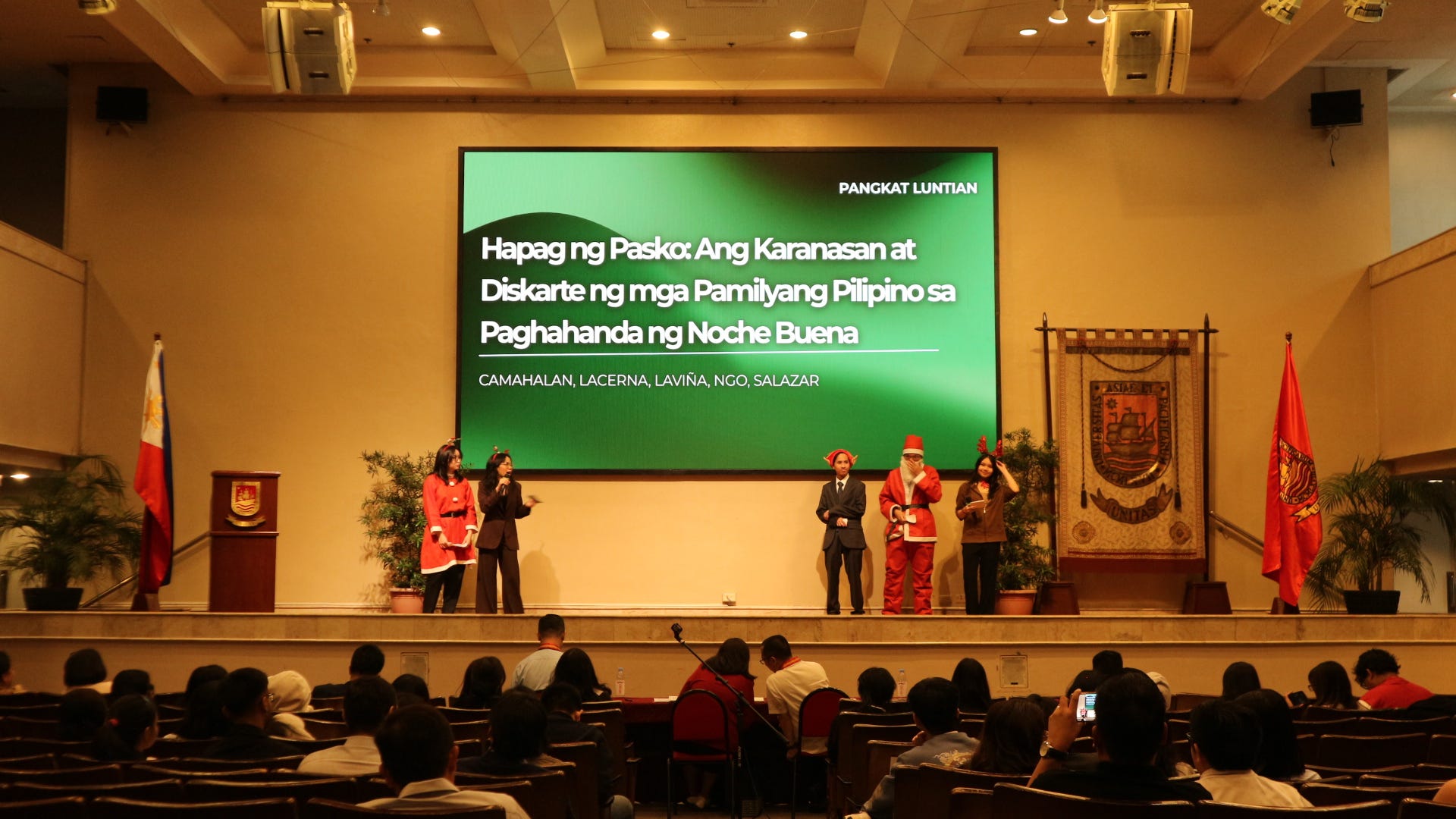
Second was 16YP2, presenting “Hapag ng Pasko: Ang Karanasan at Diskarte ng Pamilyang Pilipino sa Paghahanda sa Noche Buena” by Raiza F. Camahalan, Janna Beatrice D. Lacerna, Mark Santiago A Laviñe, Niall Basil Vn I. Ngo, and Lia Therese T. Salazar. Walking on stage wearing Santa, elf, and reindeer costumes, the presenters explained that their research was inspired by the Department of Trade and Industry’s statement that a ₱500 budget was enough for Noche Buena preparations. They aimed to survey the experiences of Filipino families with limited budgets and to ascertain the sufficiency of ₱500 for Noche Buena preparations. Using the Household Economics Theory and purposive sampling, they interviewed ten service workers, aged 25 to 65, who were actively involved in family expenses. To identify emerging themes, the 16YP2 researchers used a Focus Group Discussion and in vivo coding. Their results showed that 70% of the participants stated ₱500 was insufficient for Noche Buena, 10% said it was sufficient, and 20% said it was a tight budget. The presenters concluded by saying that while a ₱500 budget is generally insufficient for materials and preparation, the cultural importance of Noche Buena remains highly valued despite the condition of the Philippines’ marginalized sectors and economic state.
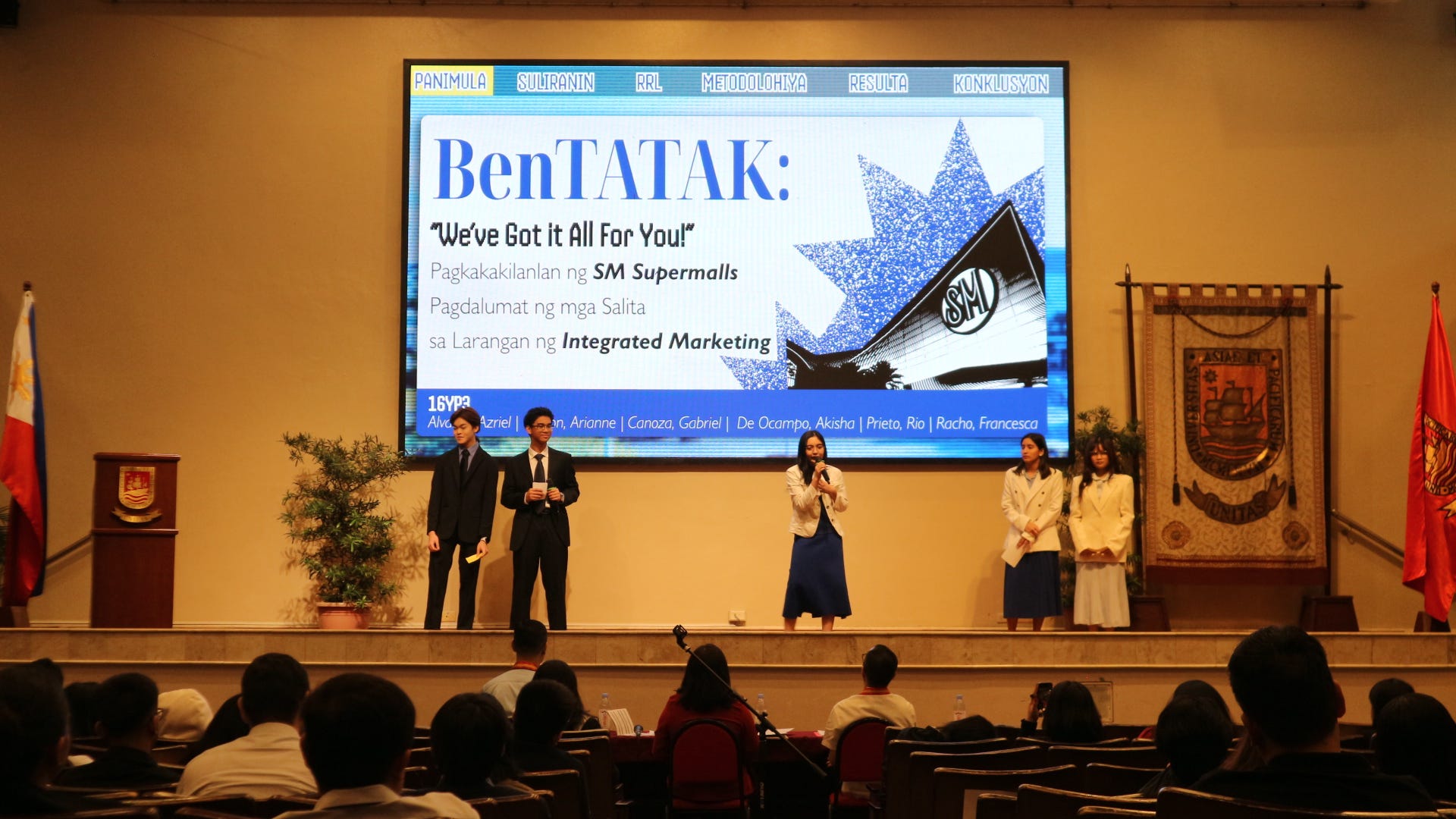
Third was 16YP3, presenting “BENTATAK: We’ve Got it All for You! Pagkakakilanlan ng SM Super Malls Pagdalumat ng Salita sa Larang ng Integrated Marketing” by Gabriel Canoza, Arianne Jasmine Bitoon, Azriel Aiden Alvarez, Akisha Brianna De Ocampo, Rio Veanna Prieto, and Franchesca Maria Racho. In color-coordinated blue outfits, they explained that their research analyzed SM Supermalls’ iconic “We’ve Got It All For You” tagline using the 7Ps of marketing to understand corporate strategy. The 16YP3 researchers analyzed the mall directories of SM Mall of Asia, SM North EDSA, and SM Megamall, aligning it with Maslow’s Hierarchy of Needs. They also surveyed 120 respondents to determine their satisfaction with different services offered by SM Supermalls. They concluded by explaining that their results found that the different establishments at these malls satisfy these demands, and thus that SM’s branding and tagline genuinely resonate with shoppers as a true one-stop shop for Filipinos.
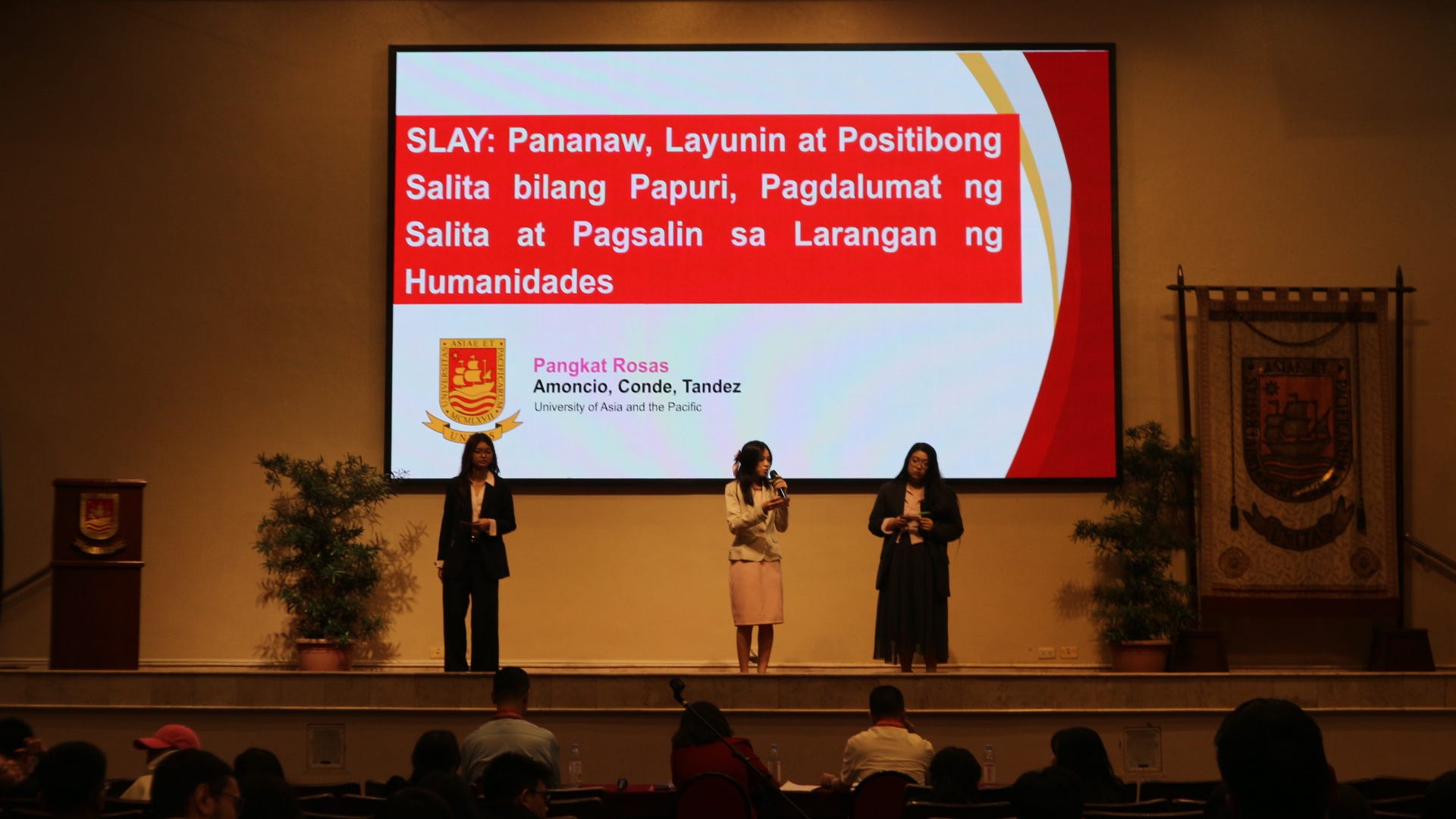
Second-to-last to present was the 16YP4 block with “SLAY: Pananaw, Layunin at Positibong Salita bilang Papuri, Pagdalumat ng Salita at Pagsalin sa Larangan ng Humanidades” by Mikaela Amoncio, Michaela Angela Conde, and Qilo Minerva Tandez. Their research focused on how the word “slay” underwent a semantic shift from meaning “to kill” into a word of praise, as a product being widely used on social media platforms. Additionally, they included the Tausug perspective on translation and cultural understanding to find an equivalent translation for “slay.” Using the Filipino-Tausug lexicon, they found that the word “malingkat,” which means beautiful, gorgeous, or attractive, is a possible equivalent of “slay” in certain contexts expressing praise and aesthetics. The presenters stated that this demonstrates the connection between culture and language in Mindanao, where dignity, respect, and beauty are valued as parts of self-worth. They used a qualitative design through the analysis of different references using a diachronic and synchronic approach to come to these conclusions. They concluded their presentation by saying that “slay” represents a cultural adaptation of language, while applying the Tausug perspective furthers the discourse on translation and the intellectualization of Filipino in the humanities.
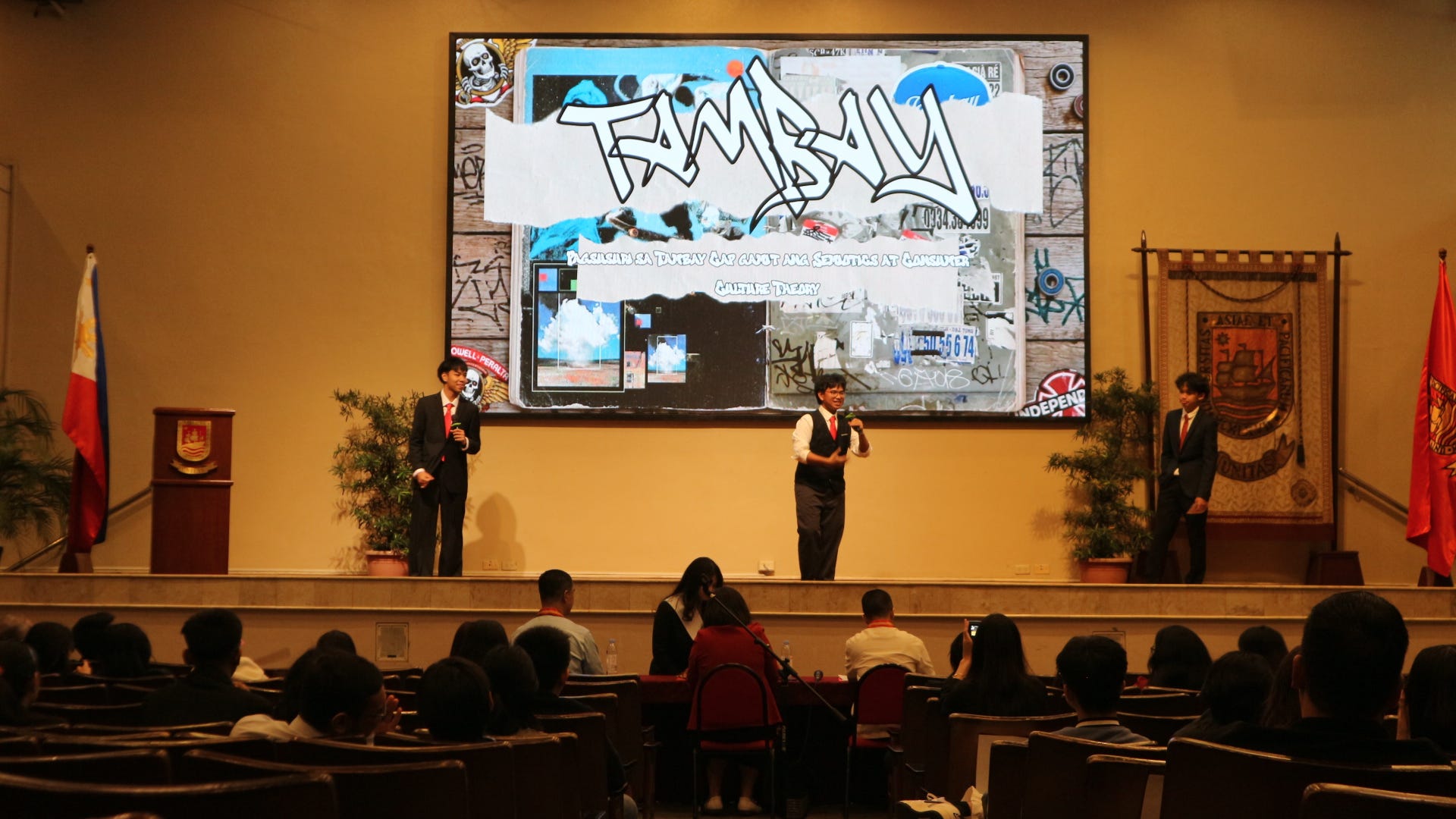
The last block to discuss their research was 16YP5, presenting “Pagsusuri sa Semiotics ng ‘Tambay Traders, Inc.’ Gamit ang Semiotic Model ni Barthes at Symbolic Interactionism ni Blumer bilang Komodipikasyon ng Produktong ‘Tambay Cap’” by Jan Derreck M. Abella, Sean B. Granada, and Jeoff Benedict G. Loveria. Their research focused on the Tambay Cap as an example of a brand rooted in the concept of “tambay” (street-life or loafer), transforming a simple hat into a symbolic marker of identity for the masses. They explained that in the Filipino context, consumer identity is deeply rooted in culture, and how branding often transcends product utility to become a symbol of community belongingness. The 16YP5 researchers applied Roland Barthes’ Semiotic Model and Consumer Culture Theory to understand why “tambay” was formed as an ideology and how it is used for identity construction. The presenters explained that they examined visual and analytical results from 2022 to 2026, when the brand successfully rebranded “tambay“ from a negative stereotype into a symbol of dignity, “street cred,” and pride. The researchers concluded by saying that the Tambay Cap is a commodification of culture and shows how marketplace myths actively shape modern identity and the participation of Filipinos in society.
While the panelists evaluated the final ranking of the presenters, the closing program began. After 16YP5’s presentation, another winning team from Siyásik 2025 of the former 16YP4 block presented “Koneksyon, Komunikasyon at Atensyon: Estratehiyang Ginagamit Sa Content ng Video ng Cong Tv Channel sa Youtube” by Mikhaelo Eiman, Sabrina Imbuido, Tala Molina, and Kurt Tuliao. Their research focused on analyzing the success of the Cong Tv Channel and the strategies it implemented to increase engagement and viewership.
After deliberation, the panelists announced the results of Siyásik 2026:
1st Place and Overall Winner: 16YP4
2nd Place: 16YP3
3rd Place: 16YP2
4th Place: 16YP5
5th Place: 16YP1
With the conclusion of the final presentation, Dr. Philip Peckson, CAS Dean, gave insightful and impactful closing remarks. He mentioned that he often uses Filipino in his classes, explaining via an example that while envy is a sufficient word to use when explaining the sin of resenting another person’s fortune in his classes, it does not strike the listener the same way the word inggit does. He went on to say that there was something about Filipino “na mas malapit, mas totoo.” In that fashion, Siyásik showcased Filipino’s richness “bilang wika ng kaalaman at ng pag-iisip” through the research presented during the course of the event.
Coming from the root words “siyasat” (investigation) and “pananaliksik” (research), the word Siyásik reflects the spirit of a meticulous search for knowledge. As Dr. Moreal Camba perhaps puts it best in writing, the theme of “UNITAS: Unang Hakbang tungo sa Intelektuwalisasyon mula sa iba’t ibang larang” proves that research is not merely an academic task. Instead, it is also about giving voice to the realities the researchers represent. Through their research, the students who participated in Siyásik are proof that the Filipino language is more than sufficient; that it is sharp, meticulous, and can be used at all levels of discourse. Thus, Siyásik 2026 served as a platform for ideas and meaningful learning to shape critical and responsible scholars and Filipino citizens.
Erratum
Updated: May 19, 2026
An earlier version of this article contained the following errors:
The subject under which the research papers were produced was incorrectly stated. The correct subject is FILKOM 011 (Mabisang Komunikasyon), not Komunikasyon at Pananaliksik sa Wika at Kulturang Pilipino.
The article attributed supervision solely to Mr. John Errol Velasco. Mr. Albert Lagrimas also co-supervised the activity, handling sections 16YP1, 16YP2, and 16YP4.
The term “IMRAD” has been removed, as it referred to a paper format and did not accurately describe the conference activity.
The panelist introduction was conducted by Mr. Louise Vincent B. Amante, not Dr. Moreal Camba.
Mr. Albert Lagrimas, who conceptualized and directed Siyásik since its inception in 2025, was omitted from the original article. He served as director, mentor, adviser of 16YP, and head of the overall organizing committee.
Universitas regrets these errors.