


Monsieur to a convict is like a glass of water to one of the shipwrecked of the Medusa. Ignominy thirsts for consideration.
– Victor Hugo, Les Misérables
There is a kind of person we find easy to forgive: someone who made one careless mistake, admitted it quickly, apologized sincerely, and never did it again. Then there is everyone else: the person who lied for years, the friend who betrayed us, the relative who keeps repeating the same harm, or the offender whose apology comes only after the consequences become painful. It is easy to support forgiveness as an idea. It is much harder when a real person stands before us carrying the weight of what they have done. So, should everyone get a second chance?
Victor Hugo’s Les Misérables and Pope John Paul II’s 1980 encyclical Dives in Misericordia (Rich in Mercy) do not give us a simple yes or no. Both treat mercy not as softhearted denial, but as a response that holds together human dignity, truth, responsibility, and the possibility of change. The better question may be this: Must a person’s worst act become the whole truth about them?
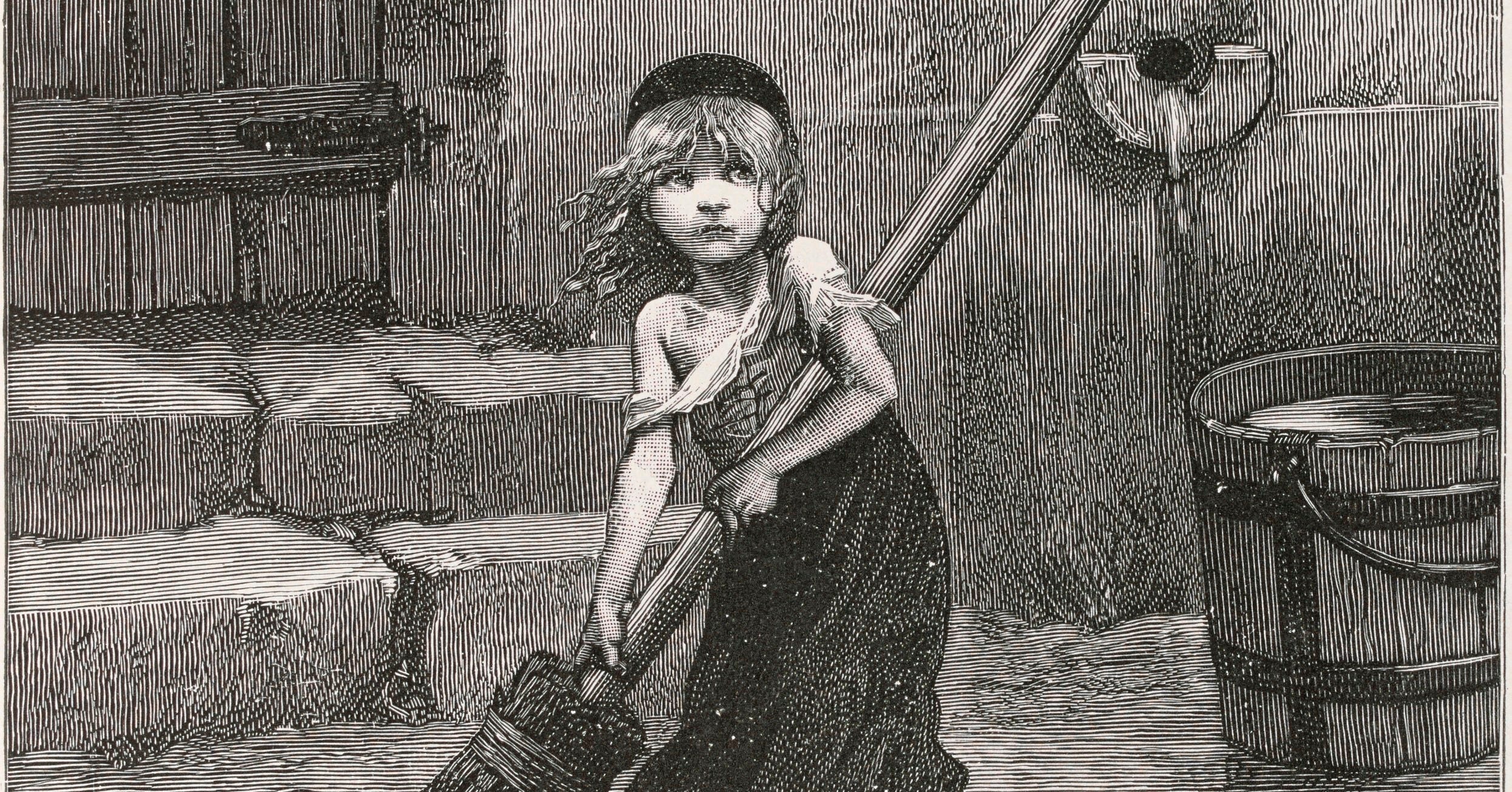
The man society had already judged
At the beginning of Les Misérables, Jean Valjean has been turned into a verdict. He has spent nineteen years in the French prison system: five for breaking a window and stealing a loaf of bread for his widowed sister’s hungry children, and fourteen more added because of four escape attempts. On release, he must carry a yellow passport identifying him as a former convict. It is not quite accurate to say that he is rejected by literally everyone, but the pattern is unmistakable: doors close, lodging is denied, and even the work he finds is underpaid.1
Valjean has served his legal sentence, yet society treats that sentence as his permanent identity. In Hugo, we see an interest not only in crime but also in what happens after punishment. What future does a society offer when it tells a person to reform while blocking nearly every path back into ordinary life? Valjean’s bitterness does not come from nowhere. Years of brutal confinement and rejection have deepened it. That history helps explain his conduct; it does not excuse it.
Then Bishop Myriel offers him a meal, shelter, and a bed. Valjean repays him by stealing the bishop’s silver plates. When the police return Valjean, the bishop says the silver was a gift and adds two candlesticks. After the officers leave, he tells Valjean to use the silver to become an honest man. In one English translation, he declares: “You no longer belong to evil, but to good.”2
We should not flatten this scene into a general rule that victims must conceal crimes or refuse legal help. It is one character’s radical, freely chosen act in a novel. Myriel takes a personal risk with his own property; he does not volunteer someone else’s safety or erase someone else’s loss. Nor does he simply announce, “Nothing happened.” He knows that Valjean stole from him. His gift changes what can happen next. The silver becomes both material help and a moral demand: build a different life. Here, a second chance is not a prize for innocence. It is an invitation to become responsible for freedom.
Mercy does not mean that harm was harmless
This is where Dives in Misericordia offers an important correction to the idea that mercy is merely being nice. Reflecting on Jesus’ parable of the prodigal son, John Paul II does not deny that the son has wasted his inheritance and hurt his father. The son himself recognizes what he has done. Yet the father sees that something fundamental remains: his son’s humanity and dignity. The son has acted badly, but he has not become worthless.3
Mercy, then, is not pretending that an injury caused no harm. It does not erase victims, cancel every consequence, or require trust to return on command. As the encyclical puts it, mercy differs from justice but is not opposed to it.4 Later, it states plainly that generous forgiveness does not cancel “the objective requirements of justice.”5 That question is uncomfortable because punishment can feel final, while restoration is usually slow. Restoration may include restitution, treatment, supervision, changed behavior, and limits that last for years. In some cases, safety may require permanent separation.
John Paul II warns that a world stripped of forgiveness would become a world of “cold and unfeeling justice.” He also calls forgiveness a basic condition for reconciliation.6 Read in context, this is not a call to abandon boundaries. It is a warning that justice alone cannot create healed relationships or a humane society.
Our language can work against that possibility. We say that someone is a thief, a liar, an addict, a criminal, or a failure. Such words may point to real acts or patterns. But when a description becomes a person’s permanent name, it can deny even the possibility of change. The label becomes a second prison, one with no release date.
Valjean changes, but not all at once
It would be easy to make Valjean’s story too neat: the bishop forgives him, Valjean sees the light, and from then on, he is a different man. Hugo does not make transformation that simple. Soon after leaving the bishop, Valjean encounters Petit-Gervais, a young traveling chimney sweep from Savoy. When the boy drops a forty-sou coin, Valjean plants his foot on it and drives him away. Only afterward does he fully grasp what he has done. He calls for the boy and searches for him, but cannot find him.7
Before we get lost in the succeeding events of the novel, let us pause before the scene because it matters. Valjean is not instantly perfected. He is a man caught between an old, hardened self and a new moral possibility. Mercy has opened a door; it has not carried him through it.
Years later, under the name Monsieur Madeleine, he has become a successful manufacturer and the mayor of Montreuil-sur-Mer. He creates jobs and uses his wealth generously. Yet even his good intentions cannot prevent every injustice: Fantine is dismissed from his factory by a supervisor without his knowledge, and Valjean realizes too late how badly she has been failed. He then cares for her and commits himself to rescuing her daughter, Cosette.8
Later still, he risks his safety for other people, including Marius, the young man Cosette loves. His life does not become spotless or simple, but its direction changes. Valjean’s second chance matters because mercy does not stop with him. Mercy received becomes mercy practiced. That may be one of the clearest signs that change is real: not a dramatic promise, but a sustained difference in how a person treats other people.
What if the person does not change?
Not every life follows Valjean’s arc. Some people apologize and repeat the harm. Some use the language of forgiveness to avoid accountability. Some demand the same access to our lives without doing the work required to become trustworthy. No one is morally required to make themselves, or anyone else, unsafe in order to prove that they are merciful.
Forgiveness, reconciliation, and trust overlap, but they are not the same thing. Forgiveness can mean giving up revenge or refusing to let hatred govern one’s life. Reconciliation rebuilds a relationship and requires participation from both sides. Trust concerns what it is reasonable and safe to rely on; once broken, it must be earned through consistent conduct.
These distinctions are a practical interpretation of mercy, not definitions supplied word for word by Hugo or the encyclical. They matter because careless talk about “second chances” can pressure victims to resume contact, restore authority, or ignore danger. Yet Christian mercy cannot be reduced to keeping one’s distance and then forgetting the person who caused harm. Mercy must remain joined to charity: the steady desire for that person’s good, conversion, and restoration to a life of truth, even when prudence requires separation.
A person may therefore be forgiven without being welcomed back into the same role and treated as fully human without being given the same access. Refusing revenge does not require pretending that trust has been repaired. Love may take the form of prayer, honest correction, fair treatment, help offered through safe channels, or support for genuine reform. It does not mean shielding someone from the consequences of what they did; those consequences may be part of how responsibility and change become possible.
In that sense, a boundary need not be the opposite of mercy or charity. It can protect the wounded, restrain further harm, and leave room for the wrongdoer to seek a better path. The aim is neither easy reinstatement nor cold abandonment, but a love governed by truth, justice, and concern for the good of everyone involved.
The risk and discipline of hope
The bishop’s mercy is risky. He has no guarantee that Valjean will change. Valjean has just stolen from him. That is what makes the scene unsettling. The bishop acts before he has proof of reform. Most of us want the proof first: an honest account, restitution, treatment, years of changed behavior. Often, that caution is wise. Yet people also need some real way to demonstrate change. A society that demands rehabilitation while permanently excluding people from work, housing, community, and civic life creates a contradiction: “Become different, but we will never treat you differently.”
This tension lies at the heart of a second chance. Hope says, “You can become more than what you have done.” Accountability says, “You must still face what you have done.” Without hope, justice can harden into vengeance. Without accountability, mercy can collapse into indulgence. In Dives in Misericordia, mercy restores a person “to value” and helps draw good from evil without calling evil good.9 Hugo turns that idea into a life. Bishop Myriel not only spares Valjean from arrest; he confronts him with the possibility, and obligation, of becoming someone new.
So, should everyone get a second chance?
Everyone should be regarded as more than their worst act. That does not mean everyone is owed the same kind of second chance, from every person, in every setting. For someone leaving prison, a second chance may mean a fair opportunity to find work and housing. In a damaged friendship, it may mean one honest conversation—or respectful distance. In a workplace, it may involve supervision and a gradual return of responsibility. After abuse or repeated harm, it may mean recognizing the wrongdoer’s humanity while maintaining a firm, even permanent, boundary.
A second chance does not make the past disappear. It means the past need not dictate the only future available. Jean Valjean is not transformed because someone tells him that theft does not matter. He begins to change because someone sees that theft is not all he is, and then calls him to live according to that larger truth. That may be the hardest form of mercy: not excusing a person, not trusting them blindly, but leaving room for accountability, repair, and moral growth. Second chances matter because none of us is only the sum of our failures. We may not be innocent or untouched by consequence, but we are still unfinished. In Christian theology, that unfinishedness rests finally in God: like the loving father in the parable, he keeps open the way home, calling the sinner to repent and receive mercy again.10
Victor Hugo, Les Misérables, trans. Isabel F. Hapgood (1887), Part One, Book Two, chapters 1–2. Hugo gives the original five-year sentence, the added years for four attempted escapes, the yellow passport, refusals of lodging, and the reduced pay. Project Gutenberg edition.
Hugo, Les Misérables, Part One, Book Two, chapter 12, “The Bishop Works.” Chapter titles and wording vary by translation; the quoted wording is from Hapgood’s translation. Project Gutenberg edition.
John Paul II, Dives in Misericordia (Rich in Mercy), encyclical letter, November 30, 1980, §§5–6, especially the discussion of the son’s wrongdoing, return, and enduring human dignity. Vatican text.
John Paul II, Dives in Misericordia, §4: mercy “differs from justice, but is not in opposition to it.” Vatican text.
John Paul II, Dives in Misericordia, §14: forgiveness “does not cancel out the objective requirements of justice.” Vatican text.
John Paul II, Dives in Misericordia, §14. The phrases about reconciliation and “cold and unfeeling justice” occur in the encyclical’s discussion of forgiveness in social and interpersonal life. Vatican text.
Hugo, Les Misérables, Part One, Book Two, chapter 13, “Little Gervais.” Project Gutenberg edition.
Hugo, Les Misérables, Part One, Books Five–Eight. Fantine is dismissed by a female supervisor while Madeleine is unaware of her situation; his later intervention should therefore not be mistaken for having prevented the original injustice. Project Gutenberg edition.
John Paul II, Dives in Misericordia, §6. The encyclical says mercy “restores to value, promotes and draws good from all the forms of evil existing in the world and in man.” Vatican text.
See Luke 15:11–32 and John Paul II, Dives in Misericordia, §6, on God as the father who welcomes the returning son. C. S. Lewis’s The Screwtape Letters, especially Letters II and IV, dramatizes Hell’s alarm at human conversion, prayer, forgiveness, and adoption as God’s children. Describing this as the devils’ “envy” of humanity is a reasonable interpretation, not a direct statement by Lewis. In Catholic theology, the deeper contrast is that fallen angels made an irrevocable choice, whereas human beings can repent during earthly life; this is not a failure of God’s mercy. See Catechism of the Catholic Church, §§392–393. Vatican text.
