


Good morning, dear UA&P family.
When the new Management Committee assumed office last year, the very first question we had to answer was not about finances, enrollment, or organizational structure.
It was something much more fundamental. It was the answer to the question:
What is UA&P? What is UA&P for? Who is it for?
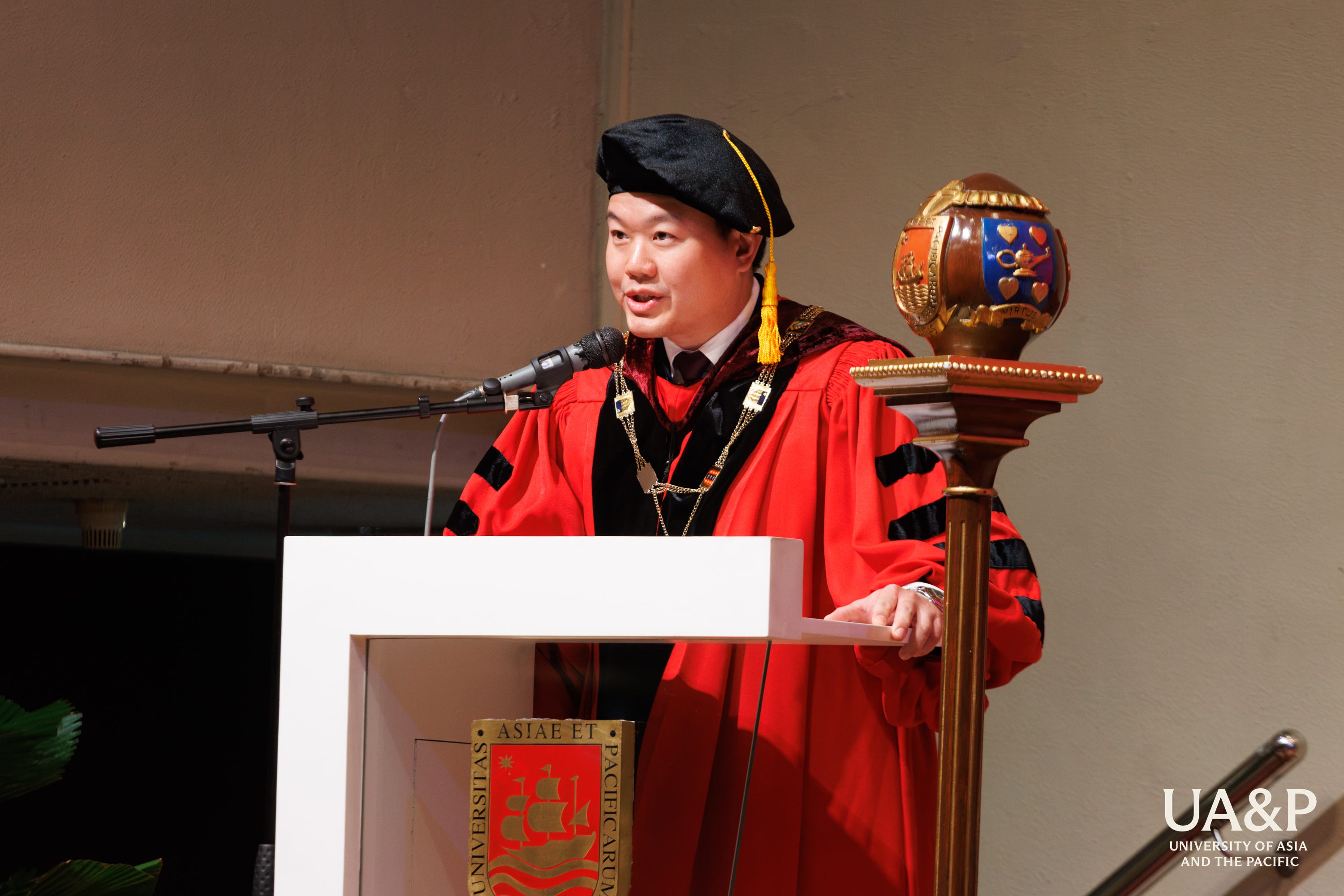
Because before we could even decide how and where to lead this University, we first had to understand why it exists.
To answer that question, I had to meet with our founders, Dr. Jesus Estanislao and Dr. Bernardo Villegas. I also sought the wisdom of many of the pioneers who built this institution—Dr. Dumol, Dr. Torralba, Dr. Abola, and many others.
We revisited our founding documents: the Credo, the Mission Statement, the Statement of Principles, as well as the other documents that define the identity of this University, including the letter of the then Prelate of Opus Dei, Bishop Javier Echevarría, to UA&P’s first president, Dr. Jess Estanislao.
And what we discovered was not a new direction. What we discovered was a direction that had guided UA&P from the very beginning—and a direction that ought to guide UA&P for as long as it exists.
That UA&P is, first and foremost, an apostolic undertaking.
That UA&P exists to bring people closer to God through the university education it provides.
That UA&P exists to form men and women of competence and character who, through their professions, will positively influence society—so that in the process, they may become, as St. Josemaría would say, saints. Saints in the middle of the world—men and women who sanctify their ordinary work and transform society from within.
And in the process, we, as the ones tasked with providing this formation, would end up as saints ourselves.
This, ultimately, is the purpose of UA&P.
This is also the reason why I accepted the responsibility of serving as your President. As I shared during my investiture last year, this is the only reason I accepted this office. And I hope that each one of you, whatever your role in this University, sees this same mission as the reason why you are here.
Together, we confidently and courageously embark on this noble journey. We have to—because, again, as St. Josemaría said, “this world’s crisis is a crisis of saints.”
And so, once we clarified our purpose, the next question naturally followed.
How do we accomplish this mission? How do we form the next generation of business and industry leaders who will make a positive impact on society?
Again, the answer was already found in our own founding documents. As stated in our Mission Statement, UA&P aims to achieve this by “reaching a level of excellence in its research and teaching programs that will earn for it a place among the most prestigious academic institutions in the Asia-Pacific region.”
Thus, through our Credo, every member of this University has agreed to dedicate and commit themselves to “the highest standards of professional excellence in their academic, scientific, and cultural endeavors.”
Excellence is not a new direction for this administration. It is, in fact, our founding direction.
Because if we aspire to form exceptional leaders, then we ourselves must become an exceptional university.
Because before students can choose UA&P, they must first have a compelling reason to choose us.
And so our task, therefore, was quite clear from the beginning: to help raise future saints by forming men and women of competence and character; to prepare leaders who will positively influence business, government, and society; and to build a university worthy of that mission—a university whose research, teaching, and formation are recognized among the finest in the Asia-Pacific region.
It is an ambitious vision, and a difficult mission to achieve. And it is a task given to us within the context of having to stabilize the University’s finances, addressing internal divisions and unrest, responding to an increasingly competitive higher education landscape, laying the ground work for the next 100 years, and preparing the university for succession.
It was within this context that I first met with the Management Committee. I asked them for only three commitments.
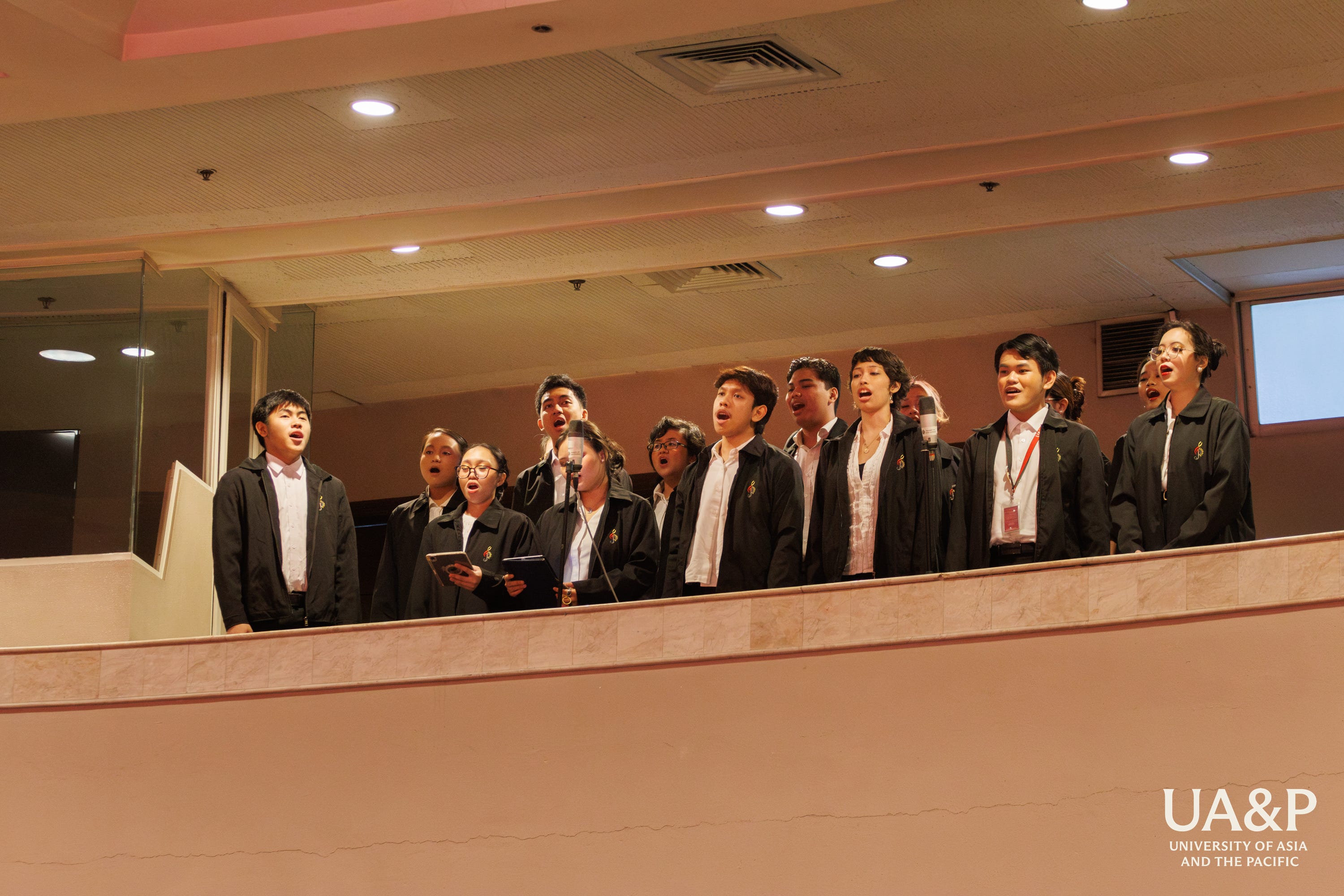
First, unity of purpose. We may disagree on everything, but we cannot disagree on why we are here and what we aim to achieve—that our responsibility is to bring this University to the level of excellence required to fulfill the mission entrusted to it by our founders.
Second, fortitude. We would be making difficult decisions—unpopular decisions. But if they were necessary for the long-term good of the University, we would make them anyway.
Third, freedom from vested interests. We are not here to advance anyone’s personal agenda—including our own. Our loyalty must be to the University, to our students, and to the mission we have been entrusted to carry forward. Every decision must answer one simple question: Will this bring UA&P closer to its mission?
And so, once we agreed on those principles, we got to work.
We adopted a three-pronged strategy. Every initiative, every policy, and every decision had to satisfy three fundamental requirements: Catholic, Business, and Excellence.
First, Catholic. We had to ensure that UA&P remained faithful to the Catholic idea of what a university ought to be.
This is the idea of the university articulated by St. John Henry Newman in The Idea of a University—a vision that has profoundly shaped Catholic higher education, and one the Church herself reaffirmed just last year when Pope Leo XIV proclaimed Newman a Doctor of the Church.
It is likewise the vision authoritatively expressed in St. John Paul II’s Apostolic Constitution Ex Corde Ecclesiae, which reminds us that a Catholic university exists not merely to transmit knowledge or prepare students for employment, but to pursue the whole truth, to integrate faith and reason, and to provide the integral formation of the human person through a genuine liberal education.
Second, Business. We had to be clear about what distinguishes UA&P in the higher education landscape.
Every great university is known for something. Harvard is known for leadership. MIT for science and technology. Juilliard for the performing arts. Likewise, UA&P must be known for what it does best.
Our roots trace back to the Center for Research and Communication (CRC), which was once regarded as the country’s leading independent think tank on economics, business, and public policy. This is not just our heritage—it is our DNA.
And the market continues to recognize this. Nearly eighty percent of our students enroll in business-related programs. Parents come to UA&P because they want their children to receive an education that is not only intellectually rigorous, but also professionally relevant.
But how does this relate to the liberal education we seek to provide? It does not mean abandoning or diluting that education. On the contrary, it means remaining faithful to it.
Liberal education forms the person; professional education prepares the person for practice. The two are not competing ideals—they are complementary.
Liberal education provides wisdom, character, and ethical foundation. Professional specialization provides the competence, skills, and expertise to lead in the marketplace.
Our objective, then, is not simply to produce graduates who can find jobs. It is to form business and industry leaders—professionally competent, ethically grounded, and inspired to use their talents in the service of society.
This is the distinctive value of a UA&P education: Catholic formation as the purpose, liberal education as the foundation, professional specialization as the means, and leadership in business and society as the outcome.
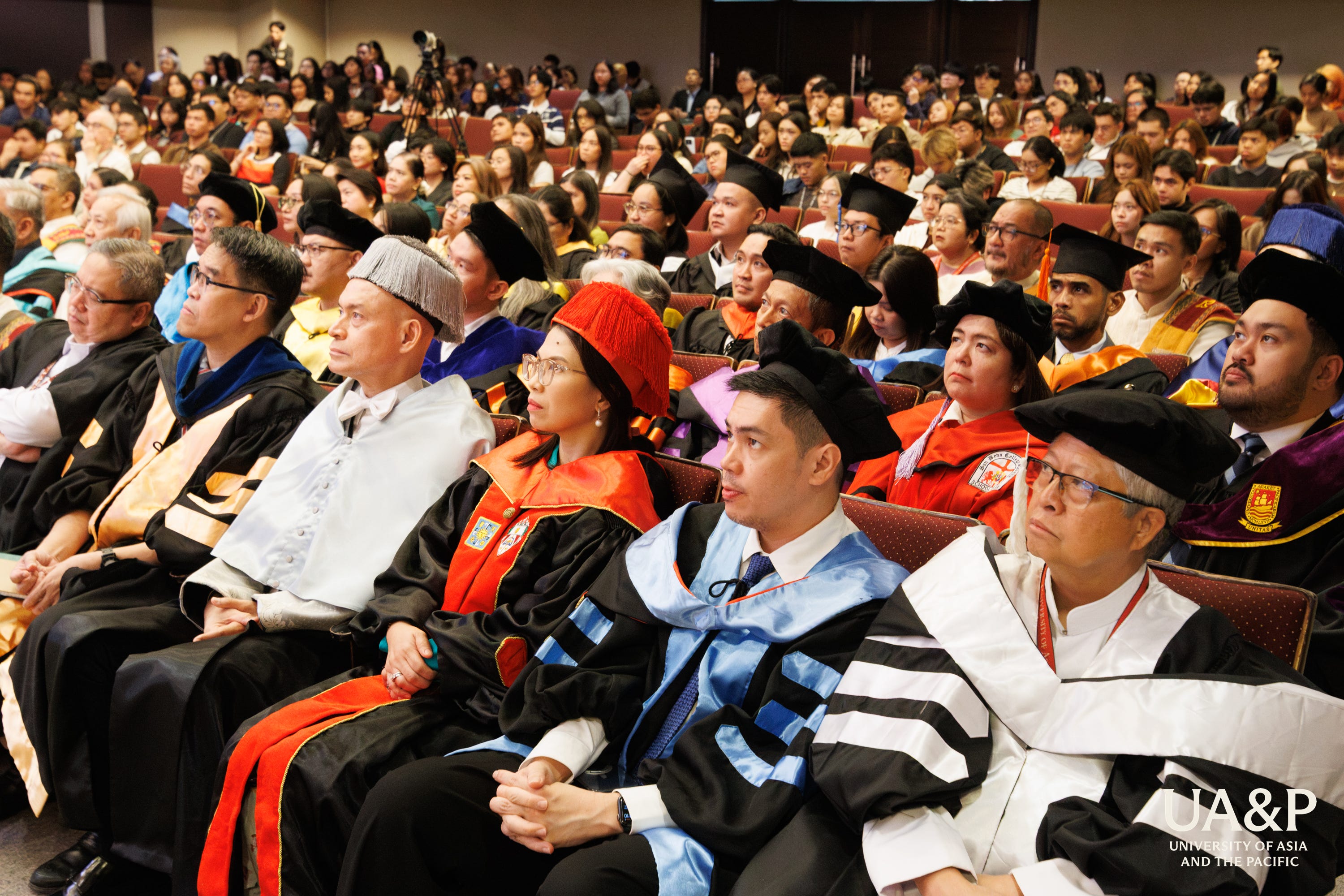
Third, Excellence. If we are serious about forming the next generation of industry leaders, then we must be prepared to compete with the best of the best.
Our aspiration has never been merely to be a good university in this country.
From the very beginning, our mission has been to achieve a level of excellence in research and teaching that earns UA&P a place among the most prestigious academic institutions in the Asia-Pacific region.
Excellence, therefore, is not optional. It is intrinsic to our mission.
We cannot expect to attract the best students, inspire the best faculty, or form exceptional leaders if we are willing to settle for mediocrity.
That is why we made the deliberate decision to raise our standards across the university. We are raising expectations for faculty and staff. We are strengthening accountability. We are reviewing our programs, our systems, and our ways of working—with the aim of strengthening academic quality across the institution.
In every initiative, we asked a simple question: Does this move UA&P closer to becoming the best university it can be?
Excellence is not about prestige for its own sake. It is about offering our very best to God, giving our students the education they deserve, and remaining faithful to the mission entrusted to us by our founders.
Having clarified our purpose, our strategy, and our standards, we then had to confront reality.
Every generation inherits both opportunities and challenges. Ours was no different.
If UA&P was to fulfill its mission, we first had to strengthen the institution itself. Three realities demanded our immediate attention.
First, financial sustainability. A university cannot fulfill its mission if it cannot sustain itself. The past several years had made clear that our financial model required urgent attention. Difficult decisions had to be made—not because we wished to change the character of the University, but because we wanted to preserve it for future generations.
Second, our brand and market position. We needed to become clearer about who we are and what we stand for. In an increasingly competitive higher education landscape, excellence alone is not enough if people do not understand our distinctive value. We had to articulate, consistently and confidently, what makes a UA&P education unique.
Third, our institutional culture. No strategy, however brilliant, can succeed without the right culture. We had to rebuild a culture of professionalism, accountability, discipline, collaboration, and unity. We had to break down silos, raise expectations, and remind ourselves that while we may belong to different offices and schools, we all belong to one University and one mission.
These three priorities became the lens through which we evaluated every initiative during the past year.
I will not attempt to enumerate all the initiatives we have undertaken. You have seen many of them. You have been part of many of them. More importantly, they all point to one thing: they are directed toward a single purpose—making UA&P a better instrument for its mission.
Our work is far from over. There is still so much to be done. Even now, we are laying the groundwork for the new UA&P campus in Carmona, the UA&P Business School, the UA&P Medical School, and bespoke programs that will extend our mission to new frontiers.
We will continue to face difficult decisions. We will continue to make mistakes. We will continue to have disagreements. But as long as we remain united in our purpose, faithful to our identity, and uncompromising in our pursuit of excellence, I have every confidence in this University’s future.
Years from now, when people look back on this chapter in the history of UA&P, I hope they will not remember us merely for the buildings we constructed, the policies we introduced, or the programs we launched.
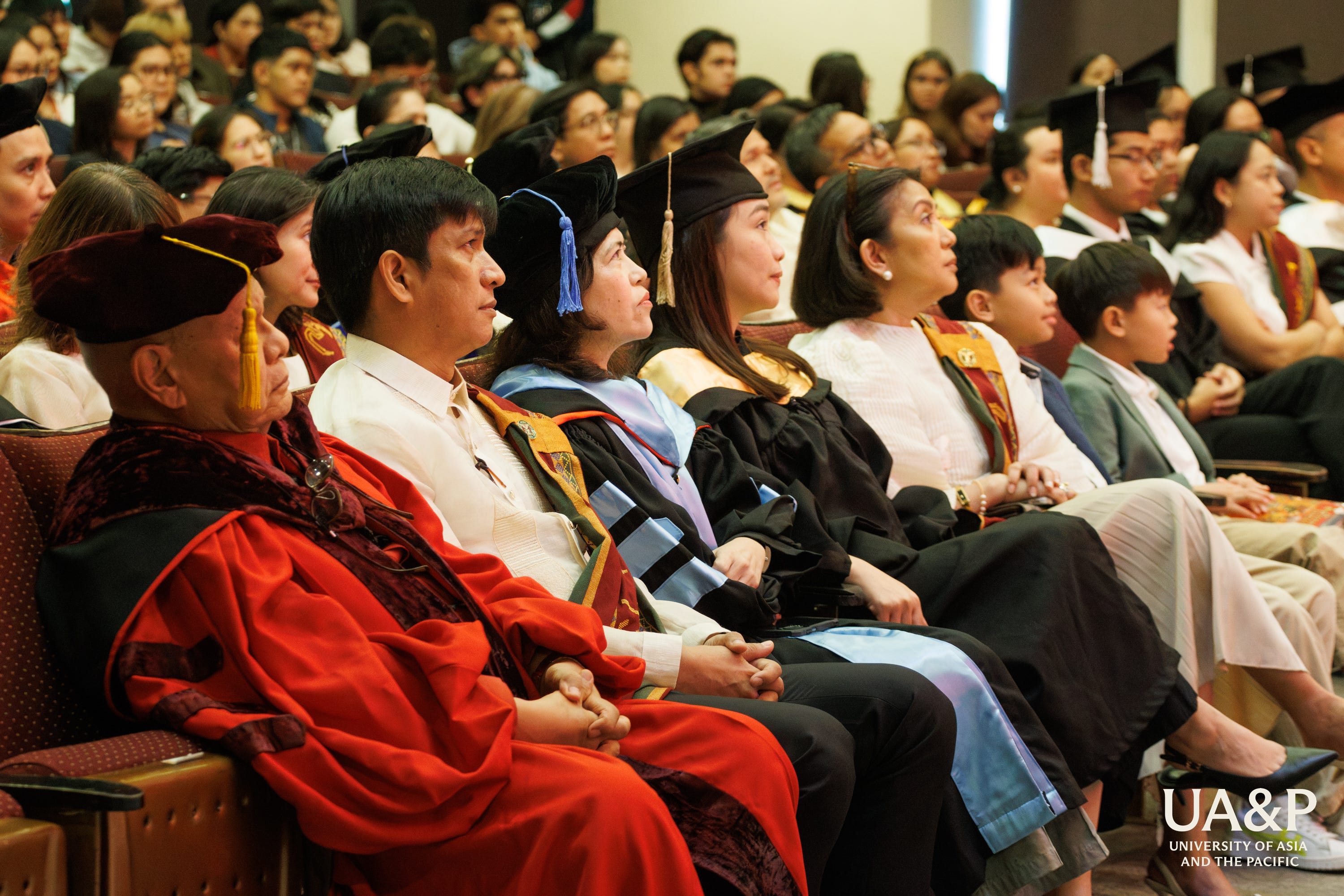
I hope they will remember us as the stewards who rediscovered who UA&P truly is.
The stewards who restored confidence in its mission.
Who raised its standards.
Who had the courage to make difficult decisions—not because they were popular, but because they were right.
Who placed the mission above self-interest, and excellence above mediocrity.
Ultimately, universities are not transformed by strategic plans, organizational charts, or even presidents. They are transformed by people—people who believe in a mission greater than themselves, and who dedicate their lives to advancing it.
That is why I ask each one of you today to renew your commitment to this apostolate.
Whether you teach in the classroom, work in an office, maintain our campus, mentor our students, or support our operations behind the scenes, your work contributes to the formation of the next generation of leaders entrusted to our care.
And so, let us continue to form men and women of competence and character. Let us continue to form leaders who will transform society. And above all, let us continue to pursue excellence—not for prestige or recognition, but because offering our very best is the most fitting response to the mission God has entrusted to us.
If we remain faithful to that mission, then I have no doubt that the best days of the University of Asia and the Pacific are still ahead of us.
And so we ask our Lady, Star of the Orient and Mother of UA&P, to continue leading us always to her Son, who is the Light of the World.
May she guide this University—its faculty, staff, students, alumni, and friends—as we strive to make UA&P ever more faithful to its mission, and ever more worthy of being truly God’s work.
Thank you, and may God bless us all.