

By Dr. Bernardo M. Villegas
University Professor Emeritus
Let me continue enumerating the private initiatives that foster the development of football as a sport in the Philippines. It is my intention to hold these efforts as role models that can be replicated in as many regions and sectors of the Philippines as possible.
I am a strong believer of the principle of subsidiarity, one of the basic tenets of the Social Doctrine of the Catholic Church. Simply put, this principle states that what can be accomplished at the lowest level of society, i.e. family, basic communities, schools, business enterprises, etc. should not be taken over by higher institutions, least of all by an all-powerful State. It may be providential that our Government has limited funds to finance aggressive programs to develop one sport or another. It will have to be the private sector that has to act if we are to be one of the football powers of Asia, as I humbly think we can be (definitely we can never be a basketball power because we are still generally a nation of “dwarves,” except for the towering children of the super-rich who are pampered with highly nutritious and protein-rich food in their early years).
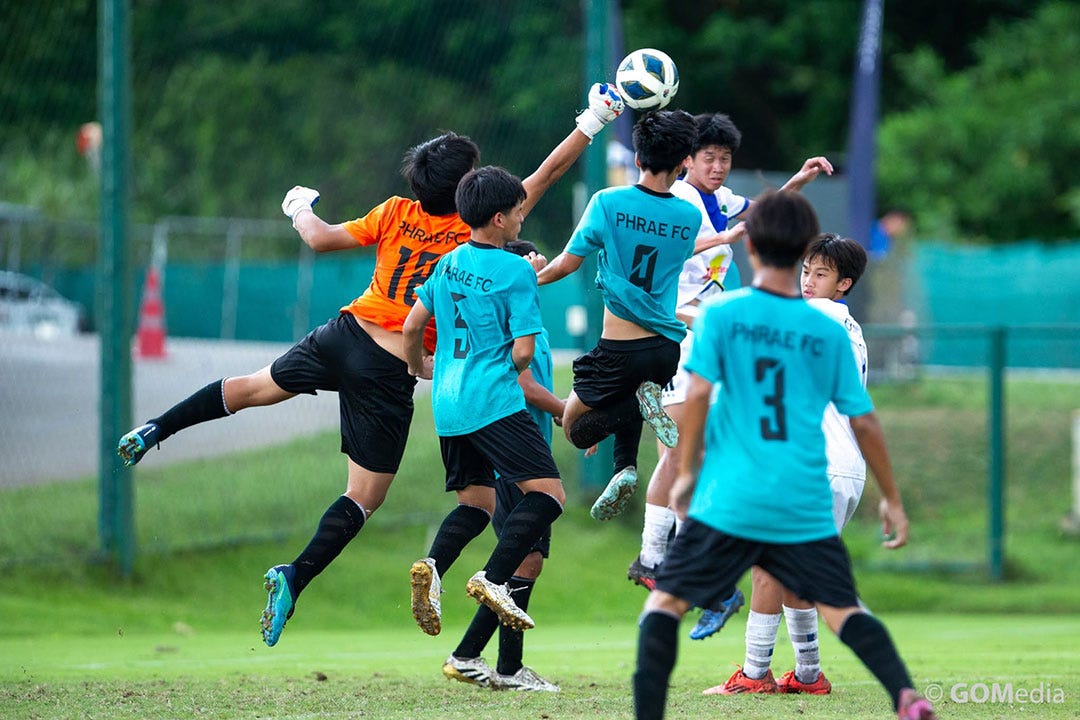
In addition to those initiatives already enumerated in Part 1 of this series, the following are worth mentioning:
• The Aguila FC Youth Academy, which is a Manila-based club with a strong youth development program (U-13 to U-19). Aguila (which is Spanish for “eagle”) emphasizes discipline, teamwork, and grassroots training thus addressing the children of the lower-income households. It is the experience of some of the top football clubs in Europe that some of their best players come from poor families in Africa and Latin America.
• The Makati Football Club, which is one of the oldest grassroots football programs in the Philippines. It is known for international exposure and youth tournaments.
• Barça Academy Manila, which is an official academy linked to arguably the best football club in Spain (with apologies to the fans of Real Madrid). The young players are tutored in the FC Barcelona playing philosophy (tiki-taka, possession). Today, our teenager players can identify with Lamine Yamal, the 17-year-old sensation of FC Barcelona who will surely follow in the footsteps of Lionel Messi.
• The Global Football Academy Philippines, which focuses on player development and overseas exposure. Filipino players can hone their skills in the football clubs of our neighboring countries like Indonesia, Thailand, or Vietnam. A few of them are good enough to play in some second or third division football clubs in European countries like Spain or Germany.
• The GOM Football Center of Excellence, which was founded by former national team player, Darren Hartmann. The Center is known to be a pathway to higher-level football and scholarships.
In addition to academies, there are non-governmental organizations (NGOs) that function as foundations and grassroots-oriented programs that incorporate the sport of football in their overall poverty-alleviation initiatives. Among them are:
• The Younghusband Football Academy, founded by Azkals stars Phil and James Younghusband. The Academy gives the highest importance to values formation and access to poorer communities.
• Football for Humanity, which openly uses football to help disadvantaged youth. Thus, there is a focus on basic education, life skills, and social inclusion.
• FundLife, which is an NGO using football to support out-of-school youth and economically depressed communities. It is active in the regions with high rates of poverty like Eastern Visayas. Some of its leading programs are in Tacloban, Leyte.
The Philippine Football Federation sponsors youth football leagues that organize youth competition (U7 to U19). The League provides regular matches for academy players who, beyond training, must be exposed to competition. In short, the Philippines employs a club/academy model rather than exclusively school-based development. The top academies (Kaya, the Azkals Development Academy, the Henry Moran Football Foundation) provide pathways to national teams. The foundations and NGOs are normally conscious of their role in inculcating social values among the youth as well as economic inclusion. The established ecosystem is still growing but improving steadily.
Taking the principle of subsidiarity further, let’s look at academies, which are few and far between in the Philippines. Unlike in countries with strong football traditions, the Philippines has to depend on a number of elite private schools that can afford to invest in football development to complement the meager resources available to public schools.
The Philippines has a private school-based pipeline, where certain elite high schools feed directly into university teams like those in the UAAP and NCAA Philippines. For example, there are schools like Southridge and Claret School of Quezon City whose high school football players are so good that these two schools are already part of the UAAP tournament.
Southridge has one of the strongest high school football programs in the country. It is a school owned and managed by parents belonging to the high-income group of Philippine society, especially top business executives. Southridge, in its campus in Alabang, has one of the most modern football fields in the entire National Capital Region. Its football team is a regular contender (and champion) in the Rizal Football Association (RIFA). It produces players who move on to the elite universities like Ateneo, De La Salle, and UP. Its football club is well known for discipline (a hallmark of the school where values formation is given as much, if not more importance, than academic training). Southridge is often compared to a “feeder academy” for top universities.
One of its former pupils, Sandro Reyes, now plays for the National Team and trained at the famous La Masia Academy of FC Barcelona where Lionel Messi and Lamine Yamal, among other football greats, trained. Reyes also played for professional football clubs in Spain and Germany. He belongs to the notable Reyes clan of Marinduque.
Then there is Claret School of Quezon City, run by Catholic religious priests, the Claretians. It has a long tradition in youth football excellence. It also has a strong presence in RIFA and PAYA (Private Athletic Youth Association). Like Southridge, Claret regularly produces players for Ateneo University and the University of the Philippines. Its football players are well known for being technically skilled and their competitive spirit.
Other Catholic high schools well known for training good football players for the university level are Ateneo de Manila High School, De La Salle Zobel, La Salle Greenhills, San Beda University Rizal, and Xavier School. These elite private schools have the resources to provide strong coaching and structural development to aspiring football players who want to excel in collegiate football, and for the best among them to the various clubs and ultimately the national football team.
A good number of top Filipino players did not come from clubs but from schools. The system is still evolving, but these schools remain critical talent pipelines. For example, a notable product of the Claret pipeline is Anton del Rosario who was the former captain of the national football team and became one of the Azkals’ most respected defenders. A product of training at the Ateneo de Manila High School was Jarvey Gayoso, who was a star striker for the Ateneo Blue Eagles football team and later played for the Azkals. He then joined professional clubs in the Philippines Football League. From De La Salle Zobel, Miguel Tanton emerged as a top player for the De La Salle Green Archers football team and then pursued professional football in the Philippines and abroad. He benefited a great deal from the emphasis at De La Salle Zobel on technical development and ball control.
From these random examples, we can conclude that Philippine football is evolving. Before 2015, high schools like Southridge, Claret, and Ateneo dominated player development. Today, 10 years later, a hybrid system has evolved which combines school training (Southridge and Claret) with private academies (Kaya and Azkals). It is possible that in the future, academies will predominate in the production of elite players.
Meanwhile, the best players will increasingly come from a combination of school and academy training.