


Two figures in dark blue armor face each other, standing almost perfectly still, save for the subtle shifts of their hands as they point bamboo swords at each other. “KOTE!”
In a flash, you hear the crack of the shinai (bamboo swords) hitting the kote (wrist armor) faster than the eye can follow. The roars of the combatants declaring where they aim to strike shake the room, and the thundering sound of bare feet hitting the floor snaps like thunder. In a split second, it is over. A point has been won, but there is no fist-pumping or smiling; only silence hangs between those holding shinai. From the outsider’s perspective, it looks like a medieval combat reenactment; to its practitioners, it is a process of self-mastery.
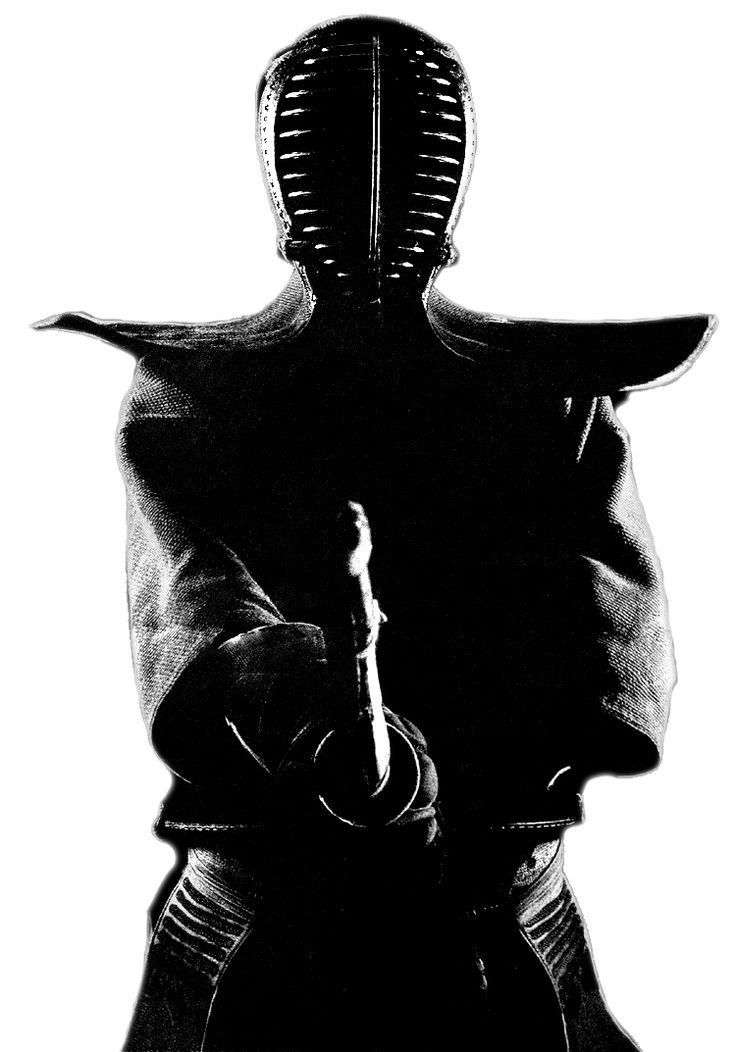
This is kendo, a modern Japanese martial art derived from the samurai sword art of kenjutsu. Kenjutsu was practical, and focused on killing as much as it was about the development of the self. When the samurai class was abolished in the 19th century, the emphasis on actual killing in kenjutsu waned, but its psychological framework survived in kendo. In an age where combat has evolved beyond swords, thousands choose to practice kendo to master themselves instead. The art of kendo goes beyond defeating opponents; it is the art of conquering yourself and developing a beautiful, disciplined character. Through combat, practitioners learn that they must better themselves to better their swordsmanship. I learned this lesson in my time in the University of Asia and the Pacific’s Kendo Club, where learning more about swordsmanship changed my perspective on life and self-improvement in three important ways:
Combat puts the anxieties of daily life into perspective.
As a perfectionist, my natural tendency is to fear the future and lament the past, such as stressing about upcoming tests and fretting over my previous scores. When I began kendo, I was taught that you strike with the resolve to kill someone each time—and to accept that failing to strike true meant your death as well. The shinai used in kendo are bamboo swords to ensure safety in training, but for kendoka (kendo’s practitioners) they are imagined as steel blades.
This is the mindset demanded of the kendoka, and the discipline it demands is of equal weight to that responsibility. When you believe yourself to carry the weight of a life in your hands, there is no room for triviality: you must commit your entire being to a single moment. There is no room for worrying about tests, thinking about your appearance, or showing off with fancy flourishes. In that single moment, the only truth that remains is your mortality. When an opponent who gives their all comes at you with brutal precision and intent to kill, shouting at the top of their lungs to demonstrate their spirit, the only option is to survive.
Before each session, kendokas are made to meditate to ensure they are focused on nothing but kendo and that they strike with the conviction of someone actually fighting for their life. The conviction of either kendoka in a battle drives the ferocity of each of their strikes, with the cuts of shinai deciding matches in split seconds. Returning from combat as intense as that in kendo is grounding, much like a near-death simulation that drives people to change how they live. After your body is flooded with stress hormones, the transition to peace and safety is dramatic.12 Kneeling in silent meditation at the end of a session quiets the mind and spirit in sharp contrast to the loud chaos that preceded it. As I attended more training sessions, I found that missing a few marks on my last test felt increasingly inconsequential, and the stress from upcoming tests faded into a task to be done rather than to be feared. When you are reminded of your vulnerability, it becomes easier to distinguish what actually matters in your life—the things that still feel important after confronting your mortality.
Conflict is a mirror to one’s shortcomings and a path to improvement.
When the human body is put under stress, its default response is the fight-or-flight mechanism—blind reactionary panic.34 Kendo demands more. When you are aiming to kill someone before they kill you, it demands awareness, strategy, and action. The true depths of your character—your courage and focus—can only be tested through conflict of the mind, body, and spirit. Can you remain focused when fear takes hold of your body? Did you train your body well enough to respond to attacks in time? Can you hold on when your muscles feel like they’re burning and your breath is short?
If you are distracted, anxious, or wrathful, you will fail. If your mind wanders for a moment, your opponent’s sword will be on you before you can blink. If you are too scared to fight, you will miss opportunities to strike. If you let rage fuel you, you will overcommit to strikes. It is only when you are pushed to your limits in combat and training that the boundaries of your character are defined, and only then can you go beyond them. When I forced myself to let all other thoughts fade, only mindfulness and focus remained. When I had to strike even when I felt uncertain, I learned to be decisive. When I trained to be aware of my body at all times, I gained poise and control. Through practicing kendo, I learned to untie the knots of my own shortcomings and build confidence to become a better version of myself. I learned to let go of my worries, stay calm under pressure, and wield my body better than I ever imagined possible.
We are not perfect, and never will be.
While there is always a desire to improve, there is also an acknowledgement that we can only approach perfection, but never attain it. When I was learning the basic strikes as a beginner, I remember my seniors in our Kendo Club calming me down because I was frustrated. I had managed to execute one strike really well, and never again. I spent hours repeating the same strike, but none of the hundreds of strikes felt as good as the one I was trying to imitate. My seniors told me that the beauty of kendo is that everyone can progress at their own pace. In kendo, victory is progress because its primary goal is to discipline the human character by practicing the principles of the katana, not simply winning tournaments. This is true to the point where many kendokas choose not to get ranked, and simply practice it to develop themselves. Since the refinement of the human character is a lifelong process that is never truly complete, kendo training can never be finished. I carried that lesson with me; and in everything I do, I try to remember the feeling of chasing that ideal strike. Although I may never fully realize my ideals, my journey is worthwhile if I draw closer to them in my endeavors.
Despite being a martial discipline rooted in ancient samurai sword arts, kendo is, at heart, an analogue of suffering that teaches us to be better in life. It seems counterintuitive that peace can be found in what is essentially swinging swords at other people, but I came to learn that it is precisely through that combat that kendo shows its beauty as an art form. Each strike, movement, and decision emulates the possibilities of loss, challenges, and frustrations we are forced to deal with in our lives.
When you stand to lose everything in combat, you realize what matters. When your opponent strikes, you are forced to be better. When you learn how to approach perfection without attaining it, you find peace. When the echoes of the shouting fade, and the shinai are set aside, kendo leaves us with a simple, beautiful gift: the clarity to see who we truly are, and the enduring discipline to return tomorrow and try again.
Zhan, Yuting, and Xu Ding. “Fear-Pleasure Paradox in Recreational Fear: Neural Correlates and Therapeutic Potential in Depression.” Psychology Research and Behavior Management, vol. Volume 18, June 2025, pp. 1509–18, https://doi.org/10.2147/prbm.s529004.
Leknes, Siri, et al. “Relief as a Reward: Hedonic and Neural Responses to Safety from Pain.” PLoS ONE, edited by Ivan Izquierdo, vol. 6, no. 4, Apr. 2011, p. e17870, https://doi.org/10.1371/journal.pone.0017870.
Arnsten, Amy F. T. “Stress Signalling Pathways That Impair Prefrontal Cortex Structure and Function.” Nature Reviews Neuroscience, vol. 10, no. 6, June 2009, pp. 410–22, https://doi.org/10.1038/nrn2648. National Library of Medicine. Accessed 4 Aug. 2026.
“Understanding the Stress Response - Harvard Health.” Harvard Health, 15 June 2011, https://www.health.harvard.edu/healthy-aging-and-longevity/understanding-the-stress-response. Accessed 4 Aug. 2026.
