


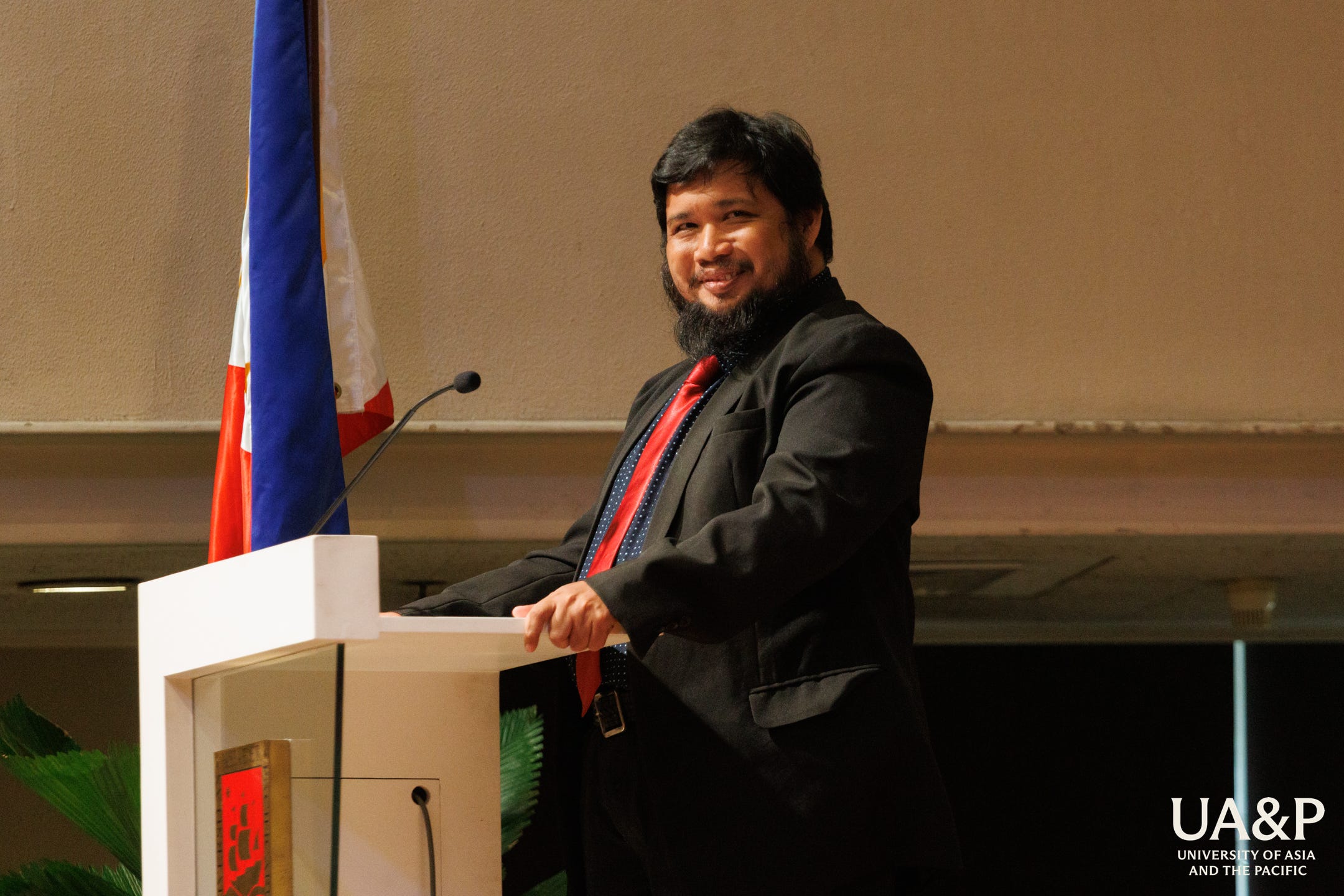
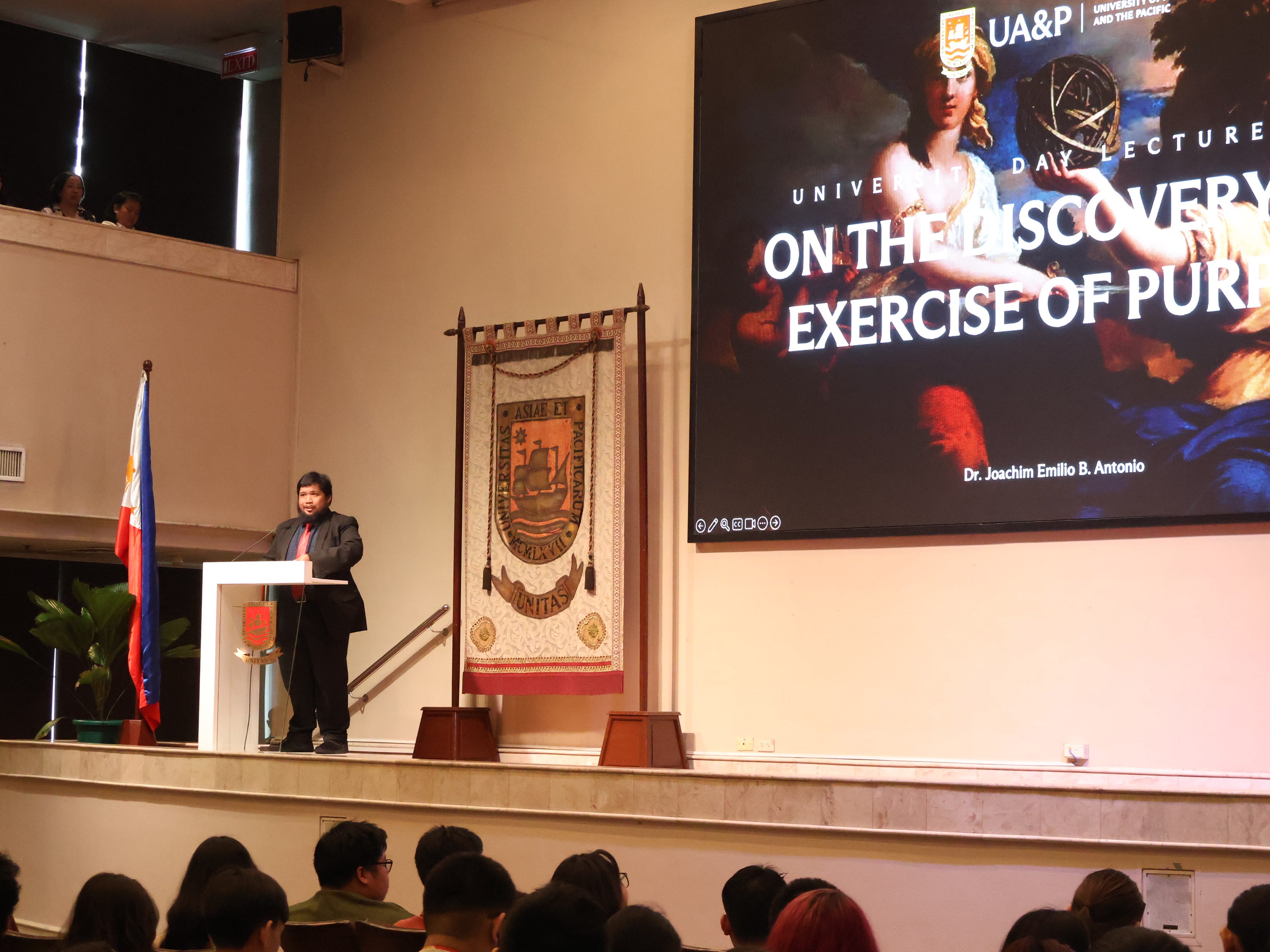
By Dr. Joachim Antonio
Associate Professor, College of Arts and Sciences
In relatively recent years, the Japanese concept of ikigai or “reason for living” has been making its rounds in the public consciousness thanks to social media. From my rudimentary knowledge of the popular Venn diagram of the ikigai, is that we should find our purpose in the intersection of what we love doing, of what we’re good at, of what the world needs, and what we can be paid for.
A deeper dig into the history of the diagram would reveal that the diagram is inaccurate and misleading insofar as the original Japanese concept is concerned. The Venn diagram itself originated in 2009 from astrologer Andrés Zuzunaga, and it was originally called the Venn Purpose Diagram.1 His diagram was eventually adapted by business coach Marc Winn in 2014 in his blog post, where Winn replaced the word purpose with ikigai.2 Winn admitted later on in a 2019 podcast interview that he did not do a deep dive into the concept of ikigai and he was quite surprised how his diagram suddenly became viral.3
Even so, the Venn diagram is not wrong altogether in terms of finding purpose. If there’s anything worth highlighting, it’s the self-interrogation that the diagram invites us to do. That said, asking the right questions becomes crucial in this endeavor.
What I do want to propose is some further refinement from my own lens as a humanist, writer, teacher, and citizen: as a humanist, because it is my discipline; as a writer, teacher, and as a citizen, because those are the roles I play in our community. I do so because these are the circumstances where I attempt to walk the walk. For if we are to talk about life’s purpose, we must talk about life and living, not in a vacuum, but in the middle of the world and through time. And although I may use examples from life as a writer and teacher, I encourage everyone to think of your own circumstances, your disciplines, and the roles you play in our community. This way, despite our differences in our respective particulars, I believe that we will find that commonality in the broader strokes.
A Humanist’s Way of Facing Things
In a world that prefers the path of specialization, it is baffling for many why anyone would choose our brand of Humanities, the area where History, Philosophy, Literature, and Art intersect. Students and parents ask, “What career does this lead to?” and other specialists raise the concern that this interdisciplinary approach can leave the humanist raw in all four disciplines. On one hand, cases may be made for these concerns. On the other hand, it is also this interdisciplinarity that allows the humanist a firmer grounding for purpose. After all, History, Philosophy, Literature, and Art never exist in a vacuum either; it always has to be a History of something, a Philosophy of something, a Literature on something, and an Art on something. And it is in the intersection of these disciplines where we develop that opportunity to be better grounded.
Consider, for example, your own life: what is your history? What are your present circumstances? What are your aspirations? What are your means? These questions refer to the four pillars of the Humanities and, personally, these four pillars also move me to have my own spin on the Venn diagram earlier.
What you love, what you are good at, what the world needs, and what you will get paid for are worthwhile considerations. At the same time, the articulation of these questions discounts the passage of time. Love, for example, is more than just willing the good; it is, in fact, preceded by the recognition of good. This reflects the classical Thomistic and Salesian principle that “nothing can be willed unless it is first recognized as good.”4 How can you will the good of something that you cannot first recognize?
And whatever you’re good at—without the context of history—is a reduction to innate talent; what about the skills that you hone and retool over time? And the world’s needs change constantly; will our purpose end once we’ve filled that particular need? Wasn’t that the great anxiety during the Industrial Revolution, or even now, at the age of AI? And is monetary compensation the only transaction that gives value to the pursuit?
Taking my inspiration from the philosopher Julián Marias, I find it helpful to ask about what we’ve been through and what our present circumstances are.5 Awareness of our history allows us to do a proper accounting and contextualization of our present circumstances, especially insofar as resources, opportunities, and limitations are concerned.
Back when I taught Philippine History, one of the first lessons I would teach my students was the Lesson of the Glass: is the glass half empty or half full? Optimism or pessimism has nothing to do with this, as this is a question of history: what was the glass before? If full, now it’s half empty; if empty, now it’s half full. And, while we’re at it, we should also ask: where did the water come from? How long has the glass been this way? Questions like these allow us to know what to do with the water and the glass.
It is this historical mindset that allows us to envision a reasonable future. As an example, it is a common mistake of many aspiring writers to start but not finish an ambitious project such as a novel. The general reason: a poor grasp of their own circumstances as opposed to what the project demands. Skill, in this case, may have nothing to do with it. Does one’s schedule and responsibilities permit the scale of such an ambitious project? Many times, the aspiring writer doesn’t even ask this question.
As we may intuit from Aristotle,6 we do not criticize a building under construction the same way we would a condemned building, any more than we would uniformly have the exact same expectations from both a budding professional and a professional past their prime. As circumstances develop over history, so do aspirations.
Insofar aspirations go, the role of literature is crucial. The stock and trade of literature is largely the irreal: here, we follow people that may have never existed, going through events that may never have happened. But towards what appeal? As what we can glean again from Aristotle,7 the irreal gives us the glimpse towards possibilities, both the exhilarating and the terrifying.
What possibilities open up given our present circumstances? While literature tends to be reduced as mere leisure or a source of wisdom, I find in my practice—more than just being a writer—that literature is a good way to develop one’s sense of future-orientedness. History and Philosophy will tell us that no earthly circumstance ever really lasts: no victory, defeat, prestige, or humiliation is forever; Literature gives us a sense of what can be beyond our present, and that the utopia and dystopia of our future largely rests on the decisions that we make. If Plot is indeed “character in action,” then our action allows us to calibrate away from distractions and towards our purpose.
And action does lead us to discuss the Arts. While the Arts have a much larger scope in the Humanities, what I find important in the reflection of one’s purpose is the aspect of Arts that focuses on craftsmanship. Upon further reflection,8 art is what makes irreality become real: the idea that becomes a poem, the vision that becomes a painting, the insight that becomes a performance.
I’d like to dwell on Art as Craft a bit longer, as I find this the bridge between History and Literature. A pleasure and bane I have as an artist is the general ignorance of the consumer to what goes on behind the craft process. Rarely, if at all, does a reader wonder how many drafts it took for a text to become a pleasant, coherent read; rarely do viewers pay attention to the time and community it takes to build a single film; or for a community to ask what it takes to coordinate a single school year.
“A haiku is just three lines with seventeen syllables,” someone might say. But a haiku has to be the right combination of seventeen right syllables in the right order. And that is just putting it lightly. The Japanese scholar Haruo Shirane was able to write a whole book on the haiku of Bashō,9 and this testifies to the possible richness in such a tight constraint. The practice isn’t easy. And even if there are some of us who can be prolific in our craft, such as writing, it helps to consider our history and our circumstances: a history of repeated practice and failures has helped us refine our process. And anyone who starts off trying to get everything right the first time usually ends up finishing nothing at all. This is true for writing and, I believe, for any practice.
This then leads us to Philosophy, without which we wouldn’t be even talking about purpose. While there are many angles from which we can approach purpose-finding, it helps to even just ask the basics of Aristotle’s four causes: How did it come to be? What is it made of? What is it for? What is it?10
Further reflection cements the contribution of History, Literature, and Arts in answering these questions: “How did it come to be?” is something History can answer; Art addresses the question, “what is it made of?”; and Literature opens the possibilities of answers to the question, “what is it for?”
These pillars together make for a robust contemplation on the question, “what is it?” What is “it”?
Definitely “it” can refer to purpose. But I’d rather think of “it“ as referring to our lives. And if we answer the questions about our lives in the order of History, Art, and Literature, we get a clearer understanding of our circumstances, the means and resources at our disposal and, from there, the possible trajectories that our circumstances, means, and resources can lead us to. All this gives us an idea of what we are… in the present.
Because, through time, our history continues to grow as we achieve and fail in our aspirations, as we wax and wane in our means and resources. As we live, our circumstances are bound to change, and it is important to remember: our actions move us to our victories and losses, and these further add to our history, thus further evolving our aspirations and our means to take action.
Given this, it is clear that we cannot just simply ask ourselves these questions, just lock in to our answers, and solve our problem of purpose once and for all. We ask these questions regularly and recalibrate regularly.
And, if we’re empathetic enough, we pay attention to how those around us answer these questions regularly as well.
An Account of Shakespeare in UA&P
With all the abstractions out of the way, I will, with my remaining time, demonstrate the way this purpose-finding works in a concrete fashion, mainly with a life in UA&P, with William Shakespeare as the throughline.
My first experience of Shakespeare was when I was still in elementary grade, when I would watch performances of Shakespeare by college students in Dizon Auditorium. The event, back then, was called Shakespeare Week. The impact of these student productions still lingers in my memory: a production featuring the crossover of various female leads in Shakespeare; or a production involving a live snake; or a Julius Caesar production featuring a Mercedes-Benz driving by what we now call The Nest. While I will never know the full context of what drove these students to be this intense in their productions, I believe that nobody can get to this intensity without an authentic love forShakespeare. And, as you can clearly see, these students had a profound influence in my younger years that echoes to this day: thanks to UA&P’s Shakespeare Week, I learned to approach Shakespeare even before I stepped into high school.
Unfortunately for me, Shakespeare Week disappeared when I entered UA&P as a student. But the enthusiasm for Shakespeare has not waned for some former students who stayed to work for UA&P. Thanks to them, I had a taste of performing Shakespeare myself, even in minor roles in The Comedy of Errors and Much Ado About Nothing. This extensive exposure to Shakespeare shaped my craft and understanding of theatre, of writing, of teaching, and of leadership. This shaping then influenced my career trajectory. And by career trajectory, I am not talking about how I won the Don Carlos Palanca Awards eight times, among my other accolades.
Instead, I would like to highlight something more important. It is through Shakespeare and his UA&P fans that I appreciated that there is more to language than just its meaning, and that there’s more to theatre than just being a performance art. The joy of reading text out loud, feeling the words in your face: your ears, lips, tongue, throat, and lungs evokes an empathy difficult to replicate in any medium outside literature. Furthermore, Shakespeare’s text goes beyond mere literature, as it steps into areas of Philosophy and History in such a level that one must admire his craftsmanship.
As for theatre, its very nature of being live and collaborative made me more serious about the physical, educational, economic, managerial, and civic considerations: for everyone involved must learn the material; be practical and innovative in the allocation and use of one’s means and resources; and be clear that, more than just the dopamine hit, a production must leave everyone better than before they encountered the project. This transformative experience has led me to deploy various innovations in the classroom. One of them is the 10 Minute Shakespeare Program, which resulted in 10-Minute abridgments of Shakespeare’s scripts done only through deletions. Another is the 10-Minute Scriptwriting activity.
The 10 Minute Shakespeare Program—or 10MinSh—worked two ways: first, with students racing to abridge Shakespeare to a stageable 10-Minute version that keeps to the original text and the main plot. Then, with classes being divided into groups to perform 10MinSh to the UA&P community. 10MinSh taught these students more than just Shakespeare’s wisdom: it taught them to take care of each other as performers, of their audience, and of their rehearsal and performance spaces.
Thus, when they did the 10-Minute Scriptwriting activity, many of them applied what they learned in writing their scripts. Their scripts exercised care for their readership, for their collaborators, and for their audience.
I mention this because what I will show you next is, for me, quite notable:
Eleven of these scripts from the Scriptwriting activity made it to the 2015 and 2017 Short + Sweet Manila Theater Festival. At least three made it as far as to become crowd favorites, with two becoming finalists, and one getting nominated for best script and best overall production. From what I am aware of, at least one still gets staged from time to time in college and community theatre productions beyond UA&P.
10MinSh itself is even more notable. After the first UA&P staging of 10MinSh in 2014, we did the first abridged Shakespeare in the same year for Fullybooked and in the following year for UA&P. In 2016, we launched the full-brand Compact Shakespeare, with 10MinSh and four-actor and one-actor variants in UA&P. In 2017, we launched the website. Fast forward to 2026: as of
the end of May this year, after nine years, we’ve had over 188 inquiries requesting permission to use across 22 countries in 6 out of 7 continents. These abridgments reach performers, and these performers reach their community.
Today, as my current circumstances render me away from Shakespeare classes, I am happy to say that a junior colleague has picked up from where I’ve left off and, for the first time, someone from Ely, Nevada has followed what my students started: before the end of this year, we’ll be uploading his contribution of a 10MinSh abridgment of The Tempest. While I am hesitant to say that my Shakespeare journey is close to its end, it is still an honor to witness how others pick up from where I’ve slowed down.
If anything, I hope that this story repeatedly demonstrates what an intense and authentic pursuit of purpose does: the student generation who threw themselves into Shakespeare Week; the teachers and staff who brought Shakespeare beyond the classroom and into campus life; my own attempts inside the classroom and beyond; my students with their scripts and productions; and Shakespeare himself. While most of us involved don’t necessarily have Shakespeare as intensely in our lives now as in the moments mentioned, it is in those mentioned moments that our purpose at the time was clear: we discovered something good that we were compelled to share.
This echoes to me two things: The first is Pope Leo XIV’s statement in Magnifica Humanitas, “truth is not a territory to be defended but a good to be shared.”11 The second is Pope Francis’ statement in Evangelii Gaudium, “time is greater than space.”12
The expression of love for Shakespeare that I had the honor to witness and participate in over these decades was largely from a sincere impulse to share the good and not to protect Shakespeare because he is male, white, and dead. Furthermore, many of whom I got to witness did not have career, wealth, or prestige in mind in their pursuit of purpose. The UA&P College students and their teachers were not thinking of me when they did Shakespeare Week back then; nor did my students have an idea how their works would go way beyond the classroom; and Shakespeare probably had no idea of the reach he would have over time. Like true artists, we all focused on the aspiration of bringing form to the truth, the good, and the beauty we discovered.
The Bigger Picture
And the example I only have time for is our Shakespeare culture within UA&P. The bigger reality is, in the same way that my circumstances go far beyond Shakespeare, so too do your own lives go beyond your respective specializations and professions. We don’t just love one thing, as we recognize the good in many things over time; we are not just good at one thing, as we lose, acquire, and develop means over time; the world’s needs also change over time, as we address its needs and discover new ones; and getting paid for pursuing purpose, isn’t really so much the criteria, as it is making each endeavor sustainable for as long as it needs to be. While money may sometimes be a factor of sustainability, so are relationships, environment, and culture. I would argue that relationships, environment, and culture are greater factors than money.
Honestly, I am excited to hear each of your stories over time insofar as the discovery and pursuit of purpose is concerned.
Again, why limit purpose to profession? A good citizen would know that being a good professional is also paramount. The same cannot necessarily be said for good professionals. Examples of good professionals who are bad citizens abound.
We are more than our jobs: we are citizens of our families, our neighborhood, our workplace, our country, the communion of saints. In each, we all have our respective calling that calls for some unity of life. The calling in one area is also the calling in another. And it is not so much the ends achieved that will measure us, but our authentic fidelity, grit, and manner in which we exercise our purpose. It is about us faithfully ordering the goods of our life, throughout our lives.
To end, I would like to read to you this beautiful composition by John Henry Newman, who perfectly captures what I’ve been trying so hard to explore. This is entitled, “The Mission of My Life”13:
“God has created me to do Him some definite service. He has committed some work to me which He has not committed to another. I have my mission. I may never know it in this life, but I shall be told it in the next. I am a link in a chain, a bond of connection between persons.
He has not created me for naught. I shall do good; I shall do His work. I shall be an angel of peace, a preacher of truth in my own place, while not intending it, if I do but keep His commandments.
Therefore, I will trust Him; whatever I am, I can never be thrown away. If I am in sickness, my sickness may serve Him; in perplexity, my perplexity may serve Him. If I am in sorrow, my sorrow may serve Him. He does nothing in vain. He knows what He is about. He may take away my friends. He may throw me among strangers. He may make me feel desolate, make my spirits sink, hide my future from me. Still, He knows what He is about.
“Long, till the shades lengthen and the evening comes,
And the busy world is hushed, and the fever of life is over,
And our work is done.
Then in his mercy may he give us a safe lodging, And holy rest, and peace at the last.”
Thank you.
References
Aquinas, Thomas. 1948. Summa Theologica. Translated by the Fathers of the English
Dominican Province. 5 vols. New York: Benziger Brothers. https://www.documentacatholicaomnia.eu/03d/1225-1274,_Thomas_Aquinas,_Summa_Theolog iae_%5B1%5D,_EN.pdf
Aristotle. Metaphysics. Translated by W. D. Ross. The Internet Classics Archive. https://classics.mit.edu/Aristotle/metaphysics.html
Aristotle. Nicomachean Ethics. Translated by W. D. Ross. The Internet Classics Archive. https://classics.mit.edu/Aristotle/nicomachaen.html
Aristotle. The Poetics of Aristotle. Translated by S. H. Butcher. Project Gutenberg, 2008. https://www.gutenberg.org/files/1974/1974-h/1974-h.htm.
Francis. Apostolic Exhortation Evangelii Gaudium: On the Proclamation of the Gospel in Today’s World. Vatican City: Vatican Press, 2013.
Kemp, Nicholas, host. “Marc Winn on Merging Ikigai with the Venn Diagram of Purpose.” Ikigai Tribe (podcast). Audio, December 29, 2019. https://ikigaitribe.com/ikigai/podcast05/.
Kemp, Nicholas, host. 2020. “Interview with Andrés Zuzunaga.” Ikigai Tribe (podcast). Audio, January 29, 2020. https://ikigaitribe.com/ikigai/podcast07/.
Leo XIV. Encyclical Letter Magnifica Humanitas: On Safeguarding the Human Person in the Time of Artificial Intelligence. Vatican City: Holy See Press Office, 2026.
Marías, Julián. Metaphysical Anthropology: The Empirical Structure of Human Life. Translated by Frances M. López-Morillas. University Park: The Pennsylvania State University Press, 1971.
Newman, John Henry. “Hope in God—Creator.” In Meditations and Devotions. London: Longmans, Green, and Co., 1893. Accessed July 23, 2026. Newman Reader, http://www.newmanreader.org/works/meditations/meditations9.html#doctrine1.
Shirane, Haruo. Traces of Dreams: Landscape, Cultural Memory, and the Poetry of Bashō. Stanford: Stanford University Press, 1998.
Winn, Marc. 2014. “What is Your Ikigai?” The View Inside Me (blog). May 14, 2014.https://theviewinside.me/what-is-your-ikigai/.
Winn, Marc. “Marc Winn on Merging Ikigai with the Venn Diagram of Purpose.” Interview by Nicholas Kemp. Ikigai Tribe (podcast). Audio, December 29, 2019. https://ikigaitribe.com/ikigai/podcast05/.
Nicholas Kemp, host, “Interview with Andrés Zuzunaga,” Ikigai Tribe (podcast), audio, January 29, 2020, https://ikigaitribe.com/ikigai/podcast07/.
Marc Winn, "What is Your Ikigai?" The View Inside Me (blog), May 14, 2014, https://theviewinside.me/what-is-your-ikigai/.
Nicholas Kemp, host, “Marc Winn on Merging Ikigai with the Venn Diagram of Purpose,” Ikigai Tribe (podcast), audio, December 29, 2019, https://ikigaitribe.com/ikigai/podcast05/.
Thomas Aquinas, Summa Theologica, trans. Fathers of the English Dominican Province (New York: Benziger Brothers, 1948), I, Q. 82, a. 3.
Julián Marías, Metaphysical Anthropology: The Empirical Structure of Human Life, trans. Frances M. López-Morillas (University Park: The Pennsylvania State University Press, 1971), 71.
Aristotle, Nicomachean Ethics, trans. W. D. Ross, The Internet Classics Archive, http://classics.mit.edu/Aristotle/nicomachaen.6.vi.html, bk. II, sec. 2.
Aristotle, The Poetics of Aristotle, trans. S. H. Butcher (Project Gutenberg, 2008), https://www.gutenberg.org/files/1974/1974-h/1974-h.htm, Book IX.
Aristotle, Nicomachean Ethics, trans. W. D. Ross, The Internet Classics Archive, http://classics.mit.edu/Aristotle/nicomachaen.6.vi.html, bk. VI, sec. 3.
Haruo Shirane, Traces of Dreams: Landscape, Cultural Memory, and the Poetry of Bashō (Stanford: Stanford University Press, 1998)
Aristotle, Metaphysics, trans. W. D. Ross, The Internet Classics Archive, https://classics.mit.edu/Aristotle/metaphysics.5.v.html, bk. V, part 2.
Pope Leo XIV, Encyclical Letter Magnifica Humanitas (Vatican City: Holy See Press Office, 2026), par. 25.
Pope Francis, Apostolic Exhortation Evangelii Gaudium (Vatican City: Vatican Press, 2013), par. 222.
John Henry Newman, “Hope in God—Creator,” in Meditations and Devotions (London: Longmans, Green, and Co., 1893), accessed July 23, 2026, Newman Reader, http://www.newmanreader.org/works/meditations/meditations9.html#doctrine1.