


By Juliana Maria Odoño
History Instructor, College of Arts and Sciences
“How do you pick up the threads of an old life? How do you go on... when in your heart, you begin to understand... there is no going back?”
—Frodo from The Lord of the Rings by J.R.R. Tolkien
As I write (or rewrite) this quote, it’s been nearly a month since the first showdates of UA&P ViARE’s Newbies Production “Wake-Up Call.”
The Herschel backpack used by my actor, with its jingling Lego and Hong Kong keychains, is back on my chair.
Tacked to my cubicle’s wall is a poster of “The Morning Scrolls On Still” (the play I directed), my actor’s signature hastily squiggled beside his sleeping form.
Perhaps the History professor in me revels in these small tokens, “artifacts” that are reminders of the rollercoaster ride my team and I had ridden together these past few months.
And as I look at them, perhaps I also see Frodo in my mind’s eye, looking pensively at the maps and objects scattered around his little hobbit hole after coming back to the Shire.
His quest was not quite easy to forget… and had changed him in more ways than one.
If directing and saving Middle Earth have one thing in common, then perhaps it is that they are both radical experiences, ones that are not entirely devoid of sorrow even after they have occurred.
There was (and still is) an unease, even a melancholy pensiveness I felt as I hung up my directing cap.
Sure, I did not miss the many challenges and conflicts that arose within the production itself.
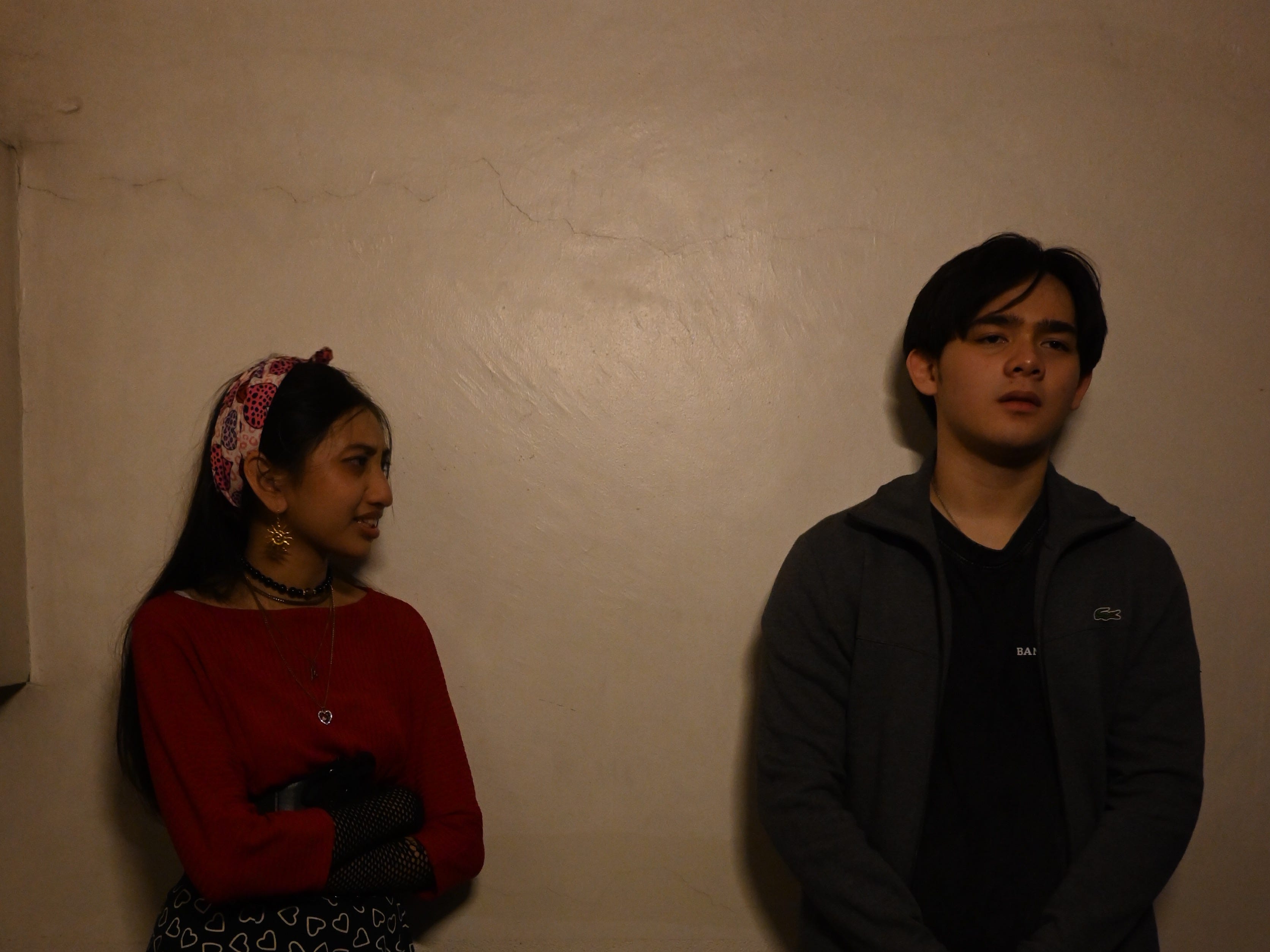
Neither did I miss my bouts of “comparingiritis”, as I watched the more experienced directors drill their actors, worrying that I was not polishing my actor enough.
There was also the challenge of meeting my team halfway, of compromising my vision a little to fit their capabilities, whether it was timing a slide, deciding on my actor’s facial expressions, or even the shade of my actor’s eyeshadow.
Dealing with these challenges were, indeed, moments of great character development.
But perhaps what I miss most are the many, small moments that made them a little easier to bear.
A memorable habit that I picked up during rehearsals was the time check. One member would call out “time check” with the current time, while the others replied “thank you, (insert the time here).”
One of my fondest time check memories involved a director perfectly calling out “time check” at 6:07 PM. One may only imagine what consequences (and hand gestures) followed after that.
The moments where the tech team would get the timing of the music and the slides of the play perfectly in sync, or when the lights changed at the exact moment I envisioned it during rehearsals were also crisply satisfying.
There also came a point that actors from the other plays could recite the lines of the other play by heart (often with exaggerated feelings).
Or worse, they could make puns out of the lines… or the title of the production itself (to everyone’s amused annoyance, of course).
I would argue that it was this feeling that the plays were gelling and coming together in all aspects (humor included) that gave the team even more impetus to continue despite the challenges.
For me, the joys of the directing experience consisted of these small moments.
And the protagonists of these moments were my team’s members, the students who are no longer nameless faces I pass by in UA&P, but who I am happy to call my co-artists, my crew, my “ViARE kids.”
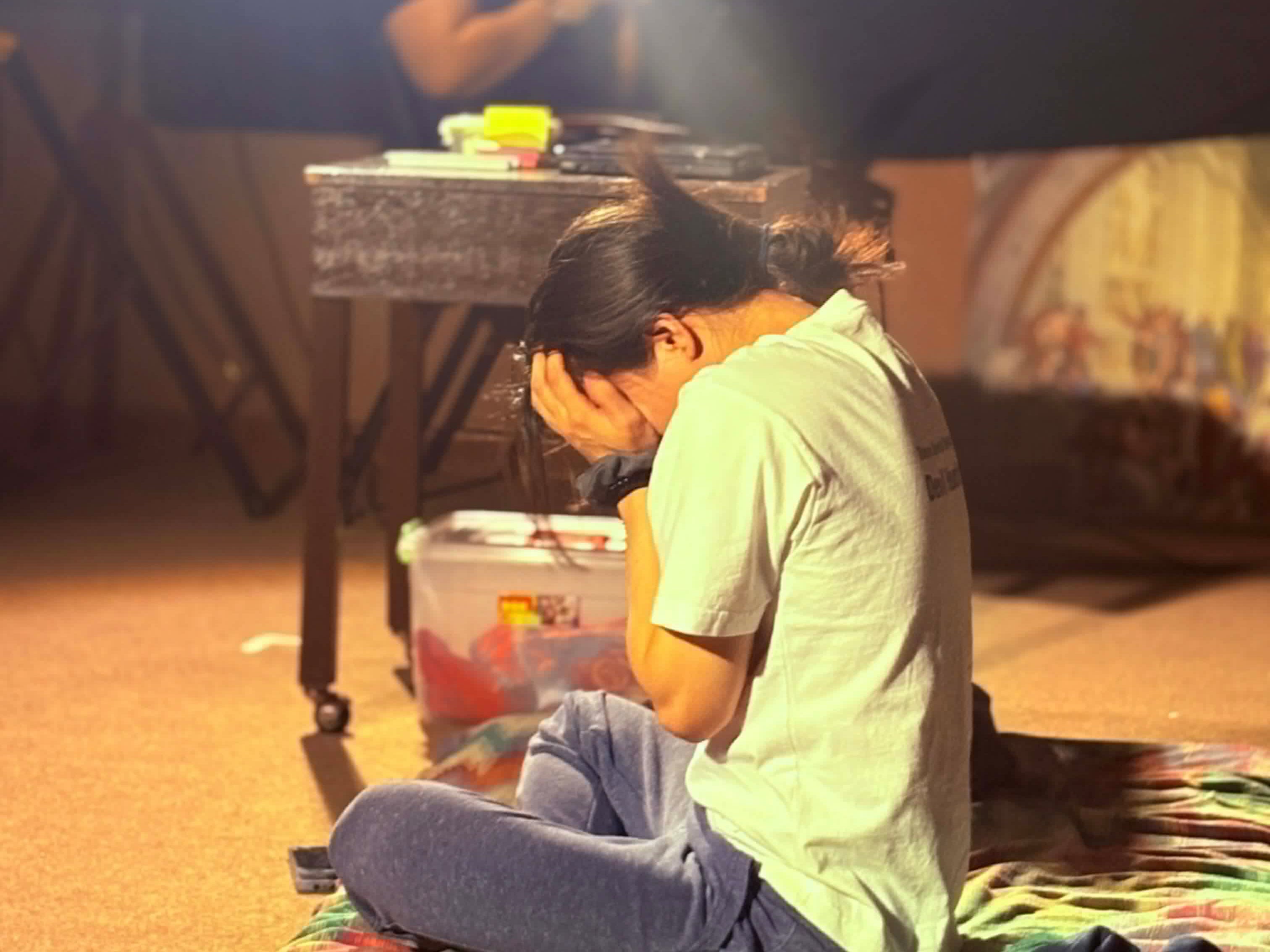
While some of my favorite, small moments with these kids are surely the shenanigans I listed above, I think that the memories that truly make my heart sing are when they shared a bit more about themselves— when they gave me a glimpse into what they were interested in or even what they were going through.
It could be as entertaining as a spontaneous musical number, a hilarious cartoon character impression, or it could be as serious as a frustrated rant about some aspect of the production they were having trouble with.
As much as I missed the laughs and conversations with my friends, colleagues, and even my family, listening and laughing with the kids gave me great joy. It was in seeing to their concerns that I was able to weather through my worries of missing out, and was even soothed of my deeper heartaches.
Using the words of one of my wisest mentors, the joys (as much as the sorrows) of the production and dealing with the students expanded and spread my heart even further, and in more ways than I could have imagined.
While I am relatively new to the business, perhaps the greatest lesson I’ve taken away from this experience is that directing a play is not only about project management or creative expression.
It is also about taking care of and helping human beings who have interests, dreams, and goals like I do.
While this is something which I have always hoped to do as a teacher, to be able to take care of and help others by doing something I have grown to love (i.e., theater and the arts), despite its many difficulties, is a soul-singing thing, one that I call “heartspreading.”
It is perhaps the end of this experience almost a month ago that is part of the reason why I feel my melancholy pensiveness.
Perhaps this is also the reason why my mind’s eye wanders back to that patched-up Herschel backpack on my chair, or why I tacked that poster to my cubicle.
Truly, how can one pick up the threads of teaching and schoolwork after going through such an enriching and agonizingly fun experience?
The difference between me and Frodo is that my story is far from over.
If anything, I have realized just how much the act of expanding one’s heart, of “heartspreading”, is a gift that keeps on giving.
Perhaps (and to annoy my ViARE kids a little bit), I could even say that taking care of this “baby” of ours has been my own personal “wake-up call” of sorts.
And if one is awake… it is very, very difficult to fall back to sleep again.