


The ACB classrooms. The quiet, fluorescent rows of the ALB library. The chaotic lines at the University Cafeteria every lunchtime, or the CAS Garden where everyone kills time between classes.
To the average student rushing through UA&P, these are merely transit zones—ordinary spaces filled with a chaotic symphony of chatter, heavy binders, and endless rushing to and from classes. We pass through them daily without a second thought, treating them as backdrops to our grandest milestones: a perfect exam score, a major organizational achievement, or a well-deserved end-of-sem meal at a nearby restaurant. We expect our lives to be defined by these loud, monumental peaks.
But it is rarely the milestones that find their way into our geographical mind maps. Instead, it is the quiet, routine rhythms—the ones we dismiss as insignificant while they are happening—that silently etch themselves into the campus concrete.
We live under the comforting illusion that our identities are contained entirely inside our skulls; but as Mark Rowlands, Joe Lau, and Max Deutsch explore in Externalism about the Mind, the conscious mind is not entirely self-contained.1 Their work centers on content externalism—the philosophical position that the mind is not an isolated entity bound by the skull, but rather that the nature of our thoughts, mental states, and very identities are fundamentally connected to the environment around us. Our minds weave themselves into our surroundings, and who we are quite literally spills out into the world. Crucially, we do not spill out into these spaces alone. Because our daily lives are fundamentally social, the environments we inhabit become heavily saturated with the ghosts of our shared experiences. Our identities intertwine not just with the concrete, but with the people standing upon it beside us.
This external perspective finds a beautiful, literary companion in topoanalysis, a concept coined by philosopher Gaston Bachelard in The Poetics of Space.2 He observed that memories are inherently motionless, and the more securely they are fixed into physical space, the sounder they are. Our physical surroundings do not just hold abstract memories; they house, protect, and archive our past selves and, by extension, the relationships that defined those selves. A campus bench or a library corner ceases to be mere furniture; it becomes a physical hard drive, saving the exact frequency of a friendship or the specific warmth of a shared chapter.
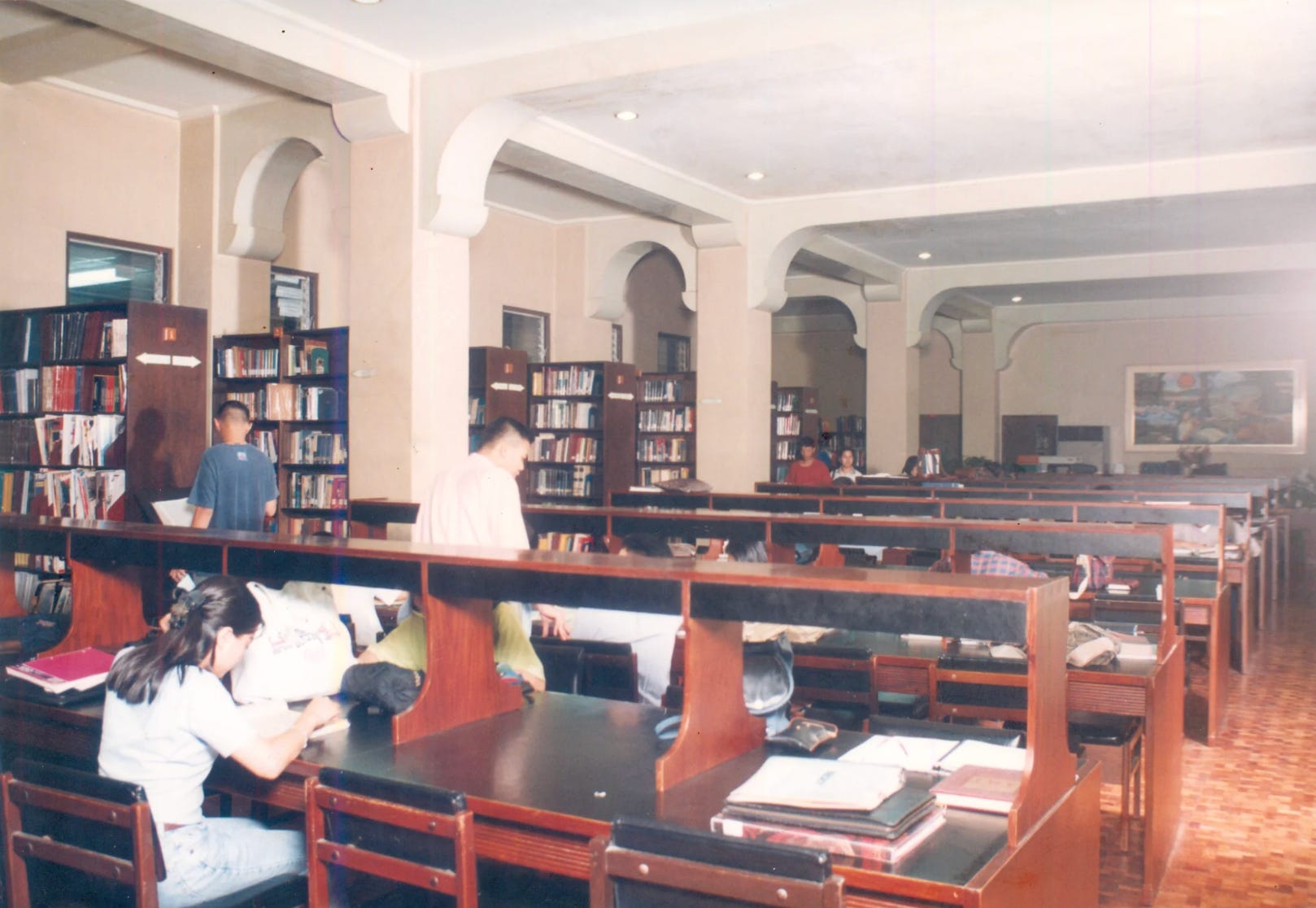
As this archiving happens quietly, we rarely notice the invisible architecture we build out of our daily routines and relationships until that specific presence disappears from our space. The simple, everyday routines we shared with them end up impacting us far more than any major occasion ever could, leaving behind structural fragments etched into the storefronts along Pearl Drive and the tables inside our classrooms. The layout of the campus concrete remains entirely unchanged—the same hallways, the same wooden doors, the same stairways—but the internal structure of how we experience it goes through a radical shift. A row of library desks is no longer just a place to study; it becomes a physical archive of a shared history. Once chapters close, this is what people become to us. Not a tragedy of total loss, but foundational fragments of our identity anchored permanently to physical matter.
Perhaps this is the quiet, collective blind spot we share as students. We operate at a relentless velocity, perpetually sprinting toward a horizon of next steps—the next defense, the upcoming internship, or simply surviving to the next semester. In this frantic state of focusing on the future, we force dry, functional information into our heads just to survive the week. In doing so, we completely ignore the pure, emotional structures being quietly formed in our periphery.
The real heartbreak lies in the delayed realization of what we actually miss when we look back. We assume our legacy in these spaces will be defined by the grand milestones: the major awards, the 1.0s, or the culminating thesis defenses. But time filters out the noise, revealing that what we miss are not the grand milestones, but rather the smallest, mundane routines and the quiet, unconditional care happening in the background of our busy lives. This care presents itself in the smallest details: a blockmate waiting patiently for hours at a campus bench while you finish an exam, a friend teasing you over a shared inside joke in a quiet corridor, or someone sharing a book recommendation during a free hour—physical proof that they paid attention to your smallest parts, even when you were too distracted to notice.
It pains us to admit how often it takes losing a connection or crossing the threshold of a finished semester to finally understand its worth. When the frantic rush of university life finally pauses for a break, the silence left behind in these structures can be deafening. Walking through those same hallways, you realize the academic background noise has completely cleared away, leaving you face-to-face with the ghosts of your daily routines. Every spot you were excited to study in, or a specific coffee shop you frequented nearby, transforms from a regular corner into a sharp, heavy reminder of a life that has already moved on.
The human instinct is to run away and avoid discomfort. We avoid these spaces entirely, convinced that aversion is the only reasonable reaction. We tell ourselves we have no right to linger or mourn a drifted connection because of all the ways we failed to be present, punishing ourselves with a self-imposed exile from the places we once shared. But healing does not come from abandoning the structure of our past. When we run away from nostalgic or painful spaces, we are actively cutting off the pieces of our identities that remain anchored there.
So, we have to go back. Sometimes alone, sometimes with company. When you return, you might find yourself walking past a certain library table in total silence—a quiet shift from the days when that exact spot echoed with the noise of an inside joke. Stepping into a familiar coffee shop brings a sudden weight that waits for you in ways you are not always ready to face. Yet, in those quiet moments, you realize you do not just miss the people as they were; you miss who you were when you occupied that space beside them. Even if the relationships remain, the circumstances are entirely different, and times have changed. This is the truth of topoanalysis—by returning to the physical architecture that safely archived our past, we are finally able to reclaim the versions of ourselves that we thought time had stolen.
Ultimately, the greatest regret of the student experience is our failure to treasure these ordinary, mundane routines while we are in them. Returning to these spaces forces a confrontation with those ghosts, and in doing so, teaches us a terrifying, beautiful kindness. It forces us to pause, halting our relentless sprint towards the future.
We cannot rewrite the architecture built upon by our memories, but we can change how we navigate these structures moving forward. By returning to the stories we left embedded in these rooms, we learn to forgive our past, distracted selves. More importantly, it teaches us to actively show intentional love to the people who are still standing right in front of us today. We must lean into the spaces we currently share while we still occupy them together. Moving forward isn’t about lingering forever in the shadow of what was lost; it is about living with the awareness that our current everyday routines are temporary. If we can learn to stay present, we can stop treating the people around us as permanent fixtures and start loving them deeply before the moments we take for granted turn into memories set in the walls.
Mark Rowlands, Joe Lau, and Max Deutsch, "Externalism About the Mind," The Stanford Encyclopedia of Philosophy, Fall 2020 Edition, ed. Edward N. Zalta.
Gaston Bachelard, The Poetics of Space, trans. Maria Jolas (New York: Penguin Books, 2014).
