


By Dr. Guillermo R. Dionisio
Chair, Center for Liberal Education
Good morning, esteemed colleagues.
It is a privilege to reflect with you today on a question as old as the institution of university itself, yet perhaps more urgent now more than ever before: What is the purpose of higher education?
We gather today as specialists in our respective disciplines, and most importantly as teachers entrusted with one of the most vital ministries there is – the formation of human persons. In every semester, we prepare syllabuses, design assessments, and evaluate student learning. We ask whether our students have mastered concepts, acquired competencies, or demonstrated learning outcomes. These are important questions, but they are not the deepest ones.
The deeper question is: What kind of human beings do our students become because they have attended our classes?
That question lies at the very heart of liberal education.
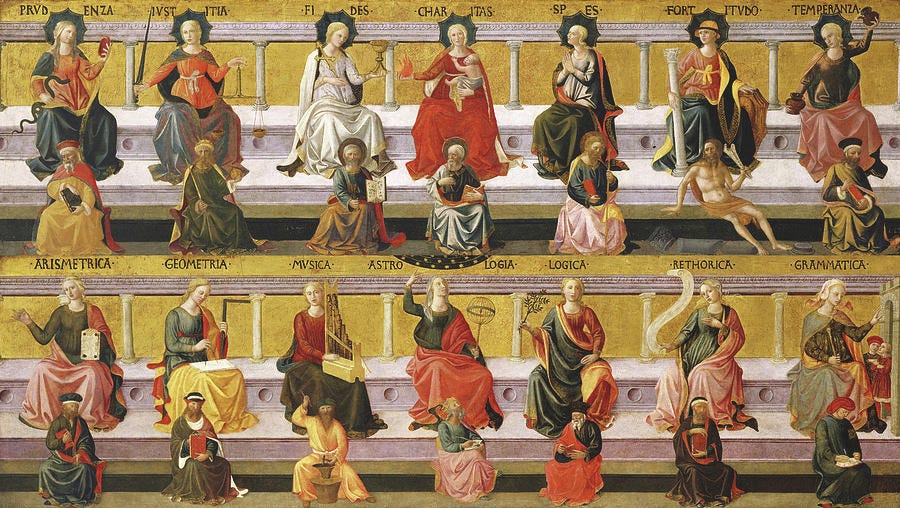
The world in which our students are growing up is massively different from the one many of us experienced as college freshmen. Now there is much:
Technological Disruption - artificial intelligence now generates essays, images, and scientific analyses in seconds. Information is superabundant, yet wisdom often appears scarce.
Social Disconnection - our students are more connected digitally than any previous generation, yet many experience deep loneliness, anxiety, and uncertainty regarding meaning and purpose.
Cultural Polarization - public discourse has become increasingly fragmented. The ability to disagree respectfully, evaluate evidence critically, and pursue truth together is growing more fragile.
Complex global challenges - climate change, migration, widening social inequality, and rapid cultural shifts present multi-layered questions that no single discipline can resolve in isolation.
These realities compel us to ask: should higher education merely prepare graduates for employment, or should it prepare them to live as human persons?
Making that decision is precisely where liberal education begins.
The university as more than professional training
It is common knowledge that universities have always contributed to economic development and professional competence. Society rightly expects our graduates to become business leaders, capable engineers, scientists, accountants, teachers, lawyers, and public servants.
However, if universities produce technically competent graduates who cannot distinguish truth from falsehood, who possess knowledge without wisdom, or who wield power without conscience, then higher education has fulfilled only a fraction of its mission.
This concern is not new. Nearly two centuries ago, St. John Henry Newman reflected on the purpose of the university:
“…university training is the great ordinary means to a great but ordinary end; it aims at raising the intellectual tone of society, at cultivating the public mind, at purifying the national taste, at supplying true principles to popular enthusiasm and fixed aim aims to popular aspiration, at giving enlargement and sobriety to the ideas of the age, at facilitating the exercise of political power, and refining the intercourse of private life.”
- St. John Henry Newman, The Idea of a University, Discourse X, “Knowledge Viewed in Relation to Professional Skill” (1852), 10.
Newman was not dismissing professional training. He was rather arguing that education possesses an intrinsic value because it enlarges the human intellect – enabling us to perceive reality more comprehensively and to exercise sound judgement.
For Newman, the educated person is more than someone who remembers a great amount of facts. Someone who has developed a “philosophical habit of mind” – the capacity to connect ideas, recognize and simplify complexity, and seek truth wherever it may be found. That insight remains remarkably vital today.
The Catholic university and the search for truth
As faculty members of UA&P, a Catholic university, our understanding of education is grounded in a transcendent vision of the human person. We believe that every student is created in the image and likeness of God. Education, therefore, is not a mere Page 3 of 30 rationing of information; it is a participation in the formation of persons capable of truth, goodness, beauty, freedom, love, and service.
This vision was articulated by Pope St. John Paul II in Ex Corde Ecclesiae, the Apostolic Constitution on Catholic Universities:
“… a Catholic University is distinguished by its free search for the whole truth about nature, man, and God.”
- Pope St. John Paul II, Ex Corde Ecclesiae (1990), no. 4
Notice the breadth of that statement. The university searches not only for truth about nature (the domain of the physical sciences), nor only about human society (the domain of the social sciences), nor only about culture (the domain of the humanities). Its search encompasses nature, the human person, and God together.
Truth is one.
Our disciplines are many.
And the university exists precisely because reality is far larger than any single discipline can fully explain.
Why this conversation matters today
Around the world, and explicitly here in the Philippines, higher education is increasingly evaluated through quantitative and outcomes-based metrics:
Graduate employability rates
Professional licensure performance
Research productivity and citations (publish or perish)
International rankings
Industry partnerships
These are legitimate indicators, and we should strive for excellence in all of them. Yet the Catholic intellectual tradition reminds us that not everything that counts can actually be counted.
If graduates attain successful careers but lack moral integrity, compassion, civic responsibility, or a sense of personal vocation, something essential has been lost. As Pope Francis reminds us:
“True wisdom, as the fruit of self-examination, dialogue and generous encounter between persons, is not acquired by mere accumulation of data…”
- Pope Francis, Laudato Si (2015), no. 47
Liberal education as formation
The ancient Greeks envisioned a holistic kind of formation of the human person. Centuries later, Christianity deepened that vision by recognizing that true human flourishing includes intellectual, moral, spiritual, and communal dimensions. Catholic universities inherited and elevated this tradition. Its primary task has never been simply to produce workers. Its task has always been to educate persons to be free.
The German philosopher Josef Pieper echoes this:
“Education concerns the whole man; an educated man is a man with a point of view from which he takes in the whole world. Education concerns the whole man, man capax universi, capable of grasping the totality of existing things.”
- Josef Pieper, Leisure: The Basis of Culture (1948), 39
Grasping the totality in Pieper’s sense is more than observing facts. It is learning to perceive reality truthfully, to recognize goodness, to appreciate beauty, and to discern what truly merits our ultimate commitment. Surely that is the deepest hope we hold for every student who sits in our classrooms.
Throughout the rest of this lecture, let us think, not primarily in our respective fields in CAS – Arts, Asia Pacific Studies, English, Filipino, History, Literature, Philosophy, or Theology – but together as educators entrusted with the formation of human persons.
Before our students become professionals, they are human beings
Before they become successful, they must learn to become wise
And before they can transform society, they themselves must be transformed through education
Let us now address a deceptively simple question: What exactly do we mean when we speak of “liberal education”?
What is liberal education?
The question of liberal education has become urgent today. But before we can defend it, or renew it, we must first understand what it actually means. More frequently than not, liberal education is misunderstood:
For some, “liberal education” is reducible to formation of stance in politics.
Others assume it simply means studying literature, philosophy, or history.
Still others equate it with general education courses that students must get out of the way before beginning their majors.
Historically speaking, however, none of these definitions captures its true depth. In understanding liberal education, we must go back, beyond the nineteenth century of John Henry Newman, and even the age of medieval universities, to the classical antiquity itself.
The word liberal comes from the Latin liber, meaning free, while education derives from the Latin educere, which means to draw out. A liberal education therefore, is literally an education that brings out our being free.
But what kind of freedom is this?
Certainly not freedom understood as doing whatever we please. The Catholic intellectual tradition has always distinguished between freedom as license or the absolute liberty to do what we want, and freedom as excellence – the freedom to know the good, choose the good, and become the kind of person we were created to be.
This understanding connects with the words of Jesus found in the Gospel of St. John:
“If you continue in my word, you are truly my disciples, and you will know the truth, and the truth will make you free.”
- John 8:31-32
Notice the order. Truth precedes freedom. Freedom is not the rejection of truth; rather, freedom is the fruit of living in truth.
This biblical insight greatly shaped the Christian vision of learning: education exists not merely to increase our choices, but to cultivate the wisdom necessary to choose well.
The classical origins: Paideia
Long before Christianity, the ancient Greeks used the word paideia to describe the holistic formation of the human person.
Paideia is not simply about going through schooling. Essentially, it referred to cultivation of intellectual excellence, moral character, civic responsibility, and an appreciation for beauty. To be educated meant becoming capable of participating wisely in the life of the polis – the community. Knowledge, virtue, and citizenship were inseparable.
When Christianity encountered Greek philosophy, Christianity purified and elevated the Greek ideals rather than reject them. The pursuit of wisdom became inseparable from the pursuit of God, who is Truth personified. Thus emerged the educational vision that eventually gave birth to the medieval university.
The Medieval university: The unity of knowledge
One of the remarkable achievements of the medieval university was its conviction that all genuine knowledge ultimately forms a coherent whole.
Theology, philosophy, medicine, law, astronomy, mathematics, music and the natural sciences were not isolated enterprises competing for dominance. They were different windows through which human beings could contemplate the same ultimate reality. This conviction rested upon a theological principle articulated by St. Thomas Aquinas (borrowed from St. Ambrose of Milan):
“All truth, by whomsoever it has been spoken, has its origin in the Holy Spirit.”
- St. Thomas Aquinas, Summa Theologiae, I-II, q. 109, a. 1, ad. 1
Knowledge as an integrated whole
No modern thinker has shaped the philosophy of liberal education more strongly than St. John Henry Newman. In The Idea of a University, Newman argued that university exists not simply to produce narrow specialists, but to cultivate an “enlargement of mind.”
He writes:
“The enlargement of mind consists, not merely in the passive reception into the mind of a number of ideas hitherto unknown to it, but in the mind’s energetic and simultaneous action upon and towards and among those new ideas.”
- St. John Henry Newman, The Idea of a University, Discourse VI, “Knowledge in Relation to Learning”
Notice Newman’s emphasis:
Education is not accumulation, education is integration.
The educated mind does not merely possess facts, it understands relationships.
It sees connections, recognizes proportion, and exercises sound judgement.
This is especially relevant today when our classrooms are starting to be dominated by artificial intelligence. Obviously, the educational challenge is no longer access to data. Our students can now retrieve vast amounts information in seconds. The real challenge is learning how to interpret, evaluate, integrate, and wisely apply knowledge. That is something no search engine or algorithm can accomplish for a student. It requires personal formation.
Beyond specialization
One of the paradoxes of the modern university is that as knowledge expands, our disciplines become increasingly specialized.
Surely, specialization has yielded extraordinary progress. Modern medicine, structural engineering, clinical psychology, data science, etc., could not exist without it. Yet specialization also carries inherent risks.
A scholar may come to know increasingly more about increasingly less. We, faculty members, can become fluent within our own sub-fields while losing the ability to converse meaningfully with colleagues across the other building, or wing of ACB. Students, likewise, may become highly competent technical experts without ever grappling with the larger questions:
What is justice?
What is beauty?
What makes a human life truly meaningful?
What moral responsibilities accompany knowledge?
What does it mean to be a human person?
Liberal education insists that these are not optional or decorative questions. They are essential questions that should not be ignored. Lest we fall into what Maritain describes as mere cleverness:
“There are people who think that it is wonderful to have a mind that is quick, clever, ready to see pros and cons, eager to discuss anything, and who believe that such a mind is that to which university education must give scope -regardless of what is thought about, what is discussed, and how important matter is. These people are unaware that if they succeed in making such conception prevail, they would at best transform universities into schools of sophistry. In fact, they would not even produce sophists, who have some force, but rather disarmed and talkative minds, that believe they are well informed but live by words and opinions.”
- Jacques Maritain, Education at the Crossroads (1969), 61
Educating for civic responsibility
The contemporary philosopher Martha C. Nussbaum offers a compelling defense of liberal education from a civic perspective. She argues that free and democratic societies require citizens who are capable of critical reflection, empathy, and global responsibility. In Not for Profit: Why Democracy Needs the Humanities, she warns:
“Thirsty for national profit, nations and their systems of education are heedlessly discarding skills that are needed to keep democracies alive. If this trend continues, nations all over the world will soon be producing generations of useful machines, rather than whole citizens who can think for themselves, criticize tradition, understand the significance of another person’s sufferings and achievements…”
- Martha C. Nussbaum, Not for Profit: Why Democracy Needs the Humanities (2010), Chapter 1
Whether approached philosophically, politically, or theologically the core concern remains the same. If education becomes exclusively technical-vocational, society will produce efficient workers without cultivating wise citizens.
Catholic universities add an even higher dimension to this concern. We seek to form not only wise citizens, but persons capable of holiness, integrity, and self-giving service.
Professional and liberal education: A false dichotomy
At this point, I think an important clarification is necessary to be made. Liberal education is sometimes mistakenly presented as though it were opposed to professional or technical training. This is a false dichotomy.
A bona fide university education should enthusiastically prepare students for successful, productive careers. Indeed, professional excellence is itself a valuable form of service to the common good.
The physician must be clinically skilled.
The engineer must be able to design safe structures.
The accountant must be technically meticulous.
The business executive must keep enterprise profitable.
The teacher must master pedagogy.
However, professional competence alone cannot answer the ethical and human questions that inevitably arise within every profession:
Should a physician pursue every procedure that modern tools permit?
Should an engineer build a system simply because technology makes it possible?
How should a journalist balance speed with truth?
How should business leaders weigh profit margins against dignity of labor (human dignity)?
How should artificial intelligence be ethically governed and employed?
These questions cannot be answered by technical formulas alone. They require moral discernment and wise judgment. Liberal education equips students to ask and answer precisely these questions.
Education as the formation of judgement and character
Perhaps the greatest gift of liberal education is not information, but moral judgment. C.S Lewis warned that intellectual development without moral formation can become dangerous.
In The Abolition of Man, Lewis wrote:
“We make men without chest and expect of them virtue and enterprise. We laugh at honor and are shocked to find traitors in our midst.”
- C.S Lewis, The Abolition of Man (1943), Chapter 1
Lewis’s metaphor of the “chest” represents the rightly formed moral and emotional life— the essential bridge between abstract reason and physical appetite. Knowledge alone is insufficient. Character matters. Wisdom matters. Conscience matters. This insight lies at the heart of the Catholic educational tradition which seeks to inform minds and rightly order hearts.
If liberal education is an education for true freedom, if it seeks the integration of knowledge, if it forms moral judgment rather than merely transmitting information, then these fundamental questions need to be asked:
Freedom for what?
Knowledge ordered toward what ultimate end?
Formation according to what vision of the human person?
These questions bring us directly to what distinguishes a Catholic University from every other institution of higher learning. The Catholic intellectual tradition does not merely defend liberal education, it offers one of history’s richest explanations for why liberal education matters in the first place
Before we turn to that vision, I would like you to answer the following questions: What does it mean to educate not merely competent professionals, but whole human persons? Think of one graduate whom you consider truly successful not simply because of their career titles or financial achievement, but because of the kind of human being they have become. When you picture that person, what qualities come to your mind first?
The Catholic vision of liberal education
Every educational philosophy, whether it explicitly admits it or not, rests upon an underlying anthropology, an understanding of what it means to be human:
If we believe human beings are primarily economic agents, education will focus strictly on productivity and profit.
If we believe they are merely consumers, education will cultivate preferences.
If we believe they are only biological organisms, education will concentrate on adaptation and survival.
The Catholic tradition traces from a radically different conviction. It begins with the opening chapter of Genesis:
“So God created humankind in his image, in the image of God he created them; male and female he created them.”
- Genesis 1:27
Everything else flows from this foundational truth.
The student who enters our classroom is not merely a future employee, a collection of measurable competencies, or a consumer of educational services. Each student is a person of inherent dignity, created in the image and likeness of God, endowed with reason, freedom, and an orientation towards truth, goodness, and beauty. That single conviction changes everything about how we understand education.
Education as the formation of the whole person
The Catholic tradition has never reduced education to mere intellectual training. It has always sought the formation of the whole person: an integral human formation.
These includes intellectual rigor, certainly, but also moral character, spiritual depth, emotional maturity, civic responsibility, aesthetic appreciation, and a commitment to the common good.
The Second Vatican Council expressed this horizon clearly in Gravissimum Educationis. Its Declaration on Christian Education reads:
“A true education aims at the formation of the human person in the pursuit of his [or her] ultimate goal and at the same time for the good of those societies of which he [or she] is a member.”
- Vatican Council II, Gravissimum Educationis (1965), no. 1
Notice the twofold horizon. Education is ordered simultaneously toward personal flourishing and the flourishing of society.
The Catholic University, therefore, rejects two reductive traps:
Education is not merely individual self-actualization.
Education is not merely workforce preparation.
It is the formation of persons capable of living responsibly with others and, ultimately, entering into communion with God.
St. Josemaria Escriva puts it succinctly:
“There is no university properly speaking if the transmission of knowledge is not joined to the complete formation of the personalities of young people. … when, in the plenitude of time, Christ revealed for all times the hidden mysteries of eternal destiny, an order was established that was both human and divine, in the service of which the university attains its highest role.”
- Josemaría Escrivá de Balaguer y la Universidad (1993), 77
Faith and Reason: Two ways of knowing
One of the defining contributions of the Catholic intellectual tradition is its absolute confidence that faith and reason are not rivals, but partners. Saint Augustine famously expressed this dynamic relationship:
“Believe that you may understand; understand that you may believe.”
- St. Augustine, Sermon 43, 7, 9
Augustine was not asking us to abandon reason for blind belief. Rather, he recognized that faith expands the horizon of reason, while reason purifies and deepens faith. Centuries later, Thomas Aquinas articulated this with so much clarity. For Aquinas, human reason is a divine gift. Because God is the author of both creation and revelation, genuine truths discovered through reason can never ultimately contradict revealed truth.
This confidence reached its iconic modern expression in Pope St. John Paul II’s encyclical Fides et Ratio:
“Faith and reason are like two wings on which the human spirit rises to the contemplation of truth.”
- Pope St. John Paul II, Fides et Ratio (1998), Introduction
A university that abandons reason descends into intellectual sentimentality, while one that excludes the horizon of faith risks reducing reality solely to what can be measured, quantified, or experimentally controlled.
A university that is Catholic invites a perpetual dialogue between theology, philosophy, the natural sciences, the social sciences, the arts, and the professions. Not because their methods are identical, but because reality itself is one.
The unity of truth in an age of fragmentation
This conviction leads directly to another hallmark of Catholic higher education: the unity of truth.
In the contemporary university, academic disciplines are necessarily specialized. We rightly value domain expertise. Yet without an overarching framework, specialization can easily devolve into intellectual fragmentation:
A biologist may know little philosophy.
A philosopher may know little economics.
An economist may know little theology.
A literary scholar may rarely converse with a physicist.
The Catholic intellectual tradition does not oppose specialization. Instead, it insists that specialization must not become isolation. As Pope St. John Paul II wrote in Ex Corde Ecclesiae:
“It is the honour and responsibility of a Catholic University to consecrate itself without reserve to the cause of truth.”
- Pope St. John Paul II, Ex Corde Ecclesiae (1990), no 4.
Notice how he speaks of the cause of truth, and not merely the accumulation of isolated facts. Truth is not fragmented simply because our disciplines are.
The university becomes a genuine universitas, a true community of scholars, when it fosters authentic conversation across disciplinary boundaries. As faculty members of the College of Arts and Sciences, we are uniquely called to model that integration which our students deserve to see.
Education as the search for wisdom
Where the modern world prizes information, the Catholic university must cultivate wisdom.
“The fear of the LORD is the beginning of wisdom.”
- Proverbs 9:10
Biblically, wisdom is not just high intelligence or a technical cleverness. It is the capacity to see reality as it truly is and to order one’s life accordingly.
Aristotle observed that philosophy, the love of wisdom, begins in wonder. Wonder enables us to receive reality as a gift to be contemplated, rather than merely manipulated or exploited.
It is worth asking now:
How often do our students experience genuine wonder in our classrooms?
Do our courses leave room for questions that cannot be answered in a multiple choice exam?
Do we cultivate contemplation alongside analysis?
Do we invite students not only to solve technical problems, but also to ask whether what they are pursuing is good, true, and beautiful?
Education for service and the common good
Furthermore, a Catholic University does not educate merely for personal prestige or career advancement. It educates for service.
Pope Francis has reminded educators that knowledge detached from human solidarity becomes cold and sterile. In Evangelii Gaudium, he sets forth a guiding principle:
“Realities are more important than ideas.”
- Pope Francis, Evangelii Gaudium (2013), no. 231
For academics, ideas matter. Theories matter. Published research matters. But education reaches its true fulfillment only when knowledge becomes embodied in loving, responsible action.
Here in the Philippines, this carries urgent, concrete implications. Our graduates enter a society facing complex challenges: persistent poverty, environmental vulnerability, ethical dilemmas in technology, massive corruption, political polarization, and widening societal inequalities.
A Catholic liberal education must ask our students:
Not just, “What career will you pursue?”
But, “Whom will your knowledge serve?”
The answer to that question marks the difference between treating education as nothing but credential, or embracing it as a vocation.
The teacher’s vocation
This brings us to our own role as educators. Whether we realize it or not, we model what a human scholar looks like. Students learn from our intellectual honesty, our humility, our fairness, our respect for evidence, our openness to dialogue, and our charity toward those with whom we disagree.
Pope Paul VI famously declared in Evangelii Nuntiandi:
“Modern man listens more willingly to witnesses then to teachers, and if he does listen to teachers, it is because they are witnesses.”
- Pope Paul VI, Evangelii Nuntiandi (1975), no. 41
Our students may eventually forget specific details from our lectures, but they will remember:
How we exercised authority in the classroom.
How we addressed their struggles.
How we responded to the difficult questions.
Whether we nurtured their intellectual curiosity or dampened it.
Whether our lives reflected the values we professed.
A university that is Catholic asks beyond what subject matter we teach. It asks who we are becoming as teachers and witnesses to the truth.
The Catholic vision of liberal education is, at its heart, a vision of integral human formation. It proclaims that reason is a divine gift, faith is a guiding light, truth is integrated, wisdom is achievable, and education is ultimately ordered towards human flourishing in service to others and communion with God.
This vision has sustained universities for centuries. Yet today we face unprecedented global shifts: artificial intelligence, digital saturation, ecological stress, and rapid cultural reorientation.
All of this brings us to the crucial question: Can this ancient vision still speak meaningfully to the twenty-first century?
I would suggest that it is more necessary now than ever before.
I invite you to consider your own academic discipline. Beyond technical competence, what human virtues does your field require for true excellence? Now, consider a second question: how does your course cultivate those specific virtues, deliberately, not only in what you teach but in how you teach?
Why liberal education matters in the age of AI
Every week seems to bring another technological leap. It is entirely understandable that educators everywhere are asking aloud:
What capacities remain uniquely human?
What is the fundamental role of the university when information has become instantly available?
These are not pure technological questions. These are primarily educational and, ultimately, theological questions. We need only refer to Magnifica Humanitas of Pope Leo XIV
AI clarifies the purpose of human learning
For centuries, formal education placed immense weight on the acquisition and storage of information, precisely because information was scarce. Libraries were limited, books were expensive, and access to specialized knowledge required years of physical proximity to scholars.
Today, information is superabundant. And artificial intelligence drastically accelerates this reality. It can retrieve, summarize, compare, and reframe information at breathtaking speeds.
However, notice what AI cannot do:
AI can generate plausible answers. It cannot assume moral responsibility.
AI can recognize complex statistical patterns. It cannot exercise conscience.
AI can simulate empathy through natural language. It does not experience compassion.
AI can optimize calculated decisions. It cannot discern the transcendent Good.
The emergence of AI does not render liberal education obsolete. Rather, it clarifies its true purpose. If machines can process data, then universities must become far more deliberate in cultivating those capacities that belong properly to the human person: ethical judgment, prudence, courage, compassion, and the restless search for meaning – the very core values we champion – wisdom, integrity, solidarity, and excellence.
Pope Benedict XVI wisely observed:
“The question of the social use of new technologies is not merely a technical matter, but a human and ethical one.”
- Pope Benedict XVI, Message for the 43rd World Communications Day (2009)
Technology is never neutral. It is never merely about what we can do. It is always shaping who we are becoming. That is a question no algorithm can ever answer.
Intelligence is Not Wisdom
One of the most dangerous misconception of our digital age is the assumption that high intelligence and wisdom are identical. They are not.
A person may possess extraordinary analytic skill while remaining completely devoid of right moral judgment.
An individual or an AI may process vast amounts of data while remaining incapable of discerning what truly matters.
Today, our primary educational hazard is not ignorance. It is the illusion that because information is instantly accessible, understanding has been achieved. There is an infinite distance between retrieving data and contemplating truth. AI can perform the former. But only human persons can undertake the latter.
Technology Must Serve Human Dignity
Pope Francis has repeatedly cautioned against adopting a purely technocratic paradigm – a mindset where technical efficiency becomes the supreme value. In Laudato Si’, he warns:
“Technology tends to absorb everything into its ironclad logic.”
- Pope Francis, Laudato Si’ (2015), no. 108
Pope Francis is not anti-technology. His critique targets something deeper. When efficiency becomes our highest good, other essential human values are quietly sidelined:
Human dignity and moral conscience
Authentic solidarity and communal life
Contemplative appreciation of beauty
Care for common home and the vulnerable
As Catholic educators, we must ask: Are we training our students merely to operate systems more efficiently, or are we forming them to evaluate whether those systems serve human flourishing?
Liberal education in the Philippine context
Our graduates step into a complex social landscape marked by:
Persistent economic inequality and poverty
Vulnerability to climate disaster and environmental degradation
Labor migration and the fragmentation of family life
Deep political polarization, digital echo chambers, and rampant misinformation These challenges cannot be solved by technical skills alone:
Economic issues require ethical leadership, not just financial engineering.
Environmental crises require scientific mastery animated by moral stewardship.
Political polarization requires citizens trained in civil dialogue, local rigor, and mutual respect.
Misinformation requires habits of critical inquiry, evidence evaluation, and intellectual integrity.
Mental health struggles among our youth call for communities that cultivate real hope, belonging, and spiritual grounding.
In short, the defining challenges of the contemporary Philippines are precisely the types of human problems that demand a liberal education.
Education for the common good and vocation
The Catholic intellectual tradition rejects the view that education is a purely private commodity or a tool for personal aggrandizement. Knowledge carries an inherent social mortgage.
In Fratelli Tutti, Pope Francis offers a simple, radical truth:
“No one can face life in isolation.”
- Pope Francis, Fratelli Tutti (2020), no. 8
Education is not merely about upward mobility. It is preparation for participation in the common good.
Our graduates will go on to become engineers, scientists, educators, corporate leaders, public servants, lawyers, artists, and community organizers. The ultimate test of our university is not whether they achieve high incomes or titles, but whether they're professional excellence lifts up their communities.
A Catholic liberal education transforms a career choice into a vocation of service.
Seeking truth in an age of misinformation
The practical question for us today is not whether liberal education belongs in our college or program. The question is how each of our disciplines uniquely contributes to it.
I invite you to think of one signature assignment or project that students complete in your course. If an artificial intelligence tool could complete that assignment flawlessly, what uniquely human capacity, what habit of heart or mind, would you still want your students to develop through that work?
Liberal education across the disciplines
We have argued that liberal education is more necessary than ever—not despite artificial intelligence, but precisely because of it. If higher education is to remain deeply human, it must form students beyond having technical skills. It must form them in wisdom, judgment, character, and social responsibility.
But some might ask: “Isn't it liberal education primarily the task of philosophy, theology, literature, or history?”
The answer is a definitive no.
Liberal education is not a single department. It is not an isolated program. It is not merely a set of general education requirements that students check off before starting their “real” majors.
Liberal education is a vision that animates every discipline within the university.
Every discipline contributes something indispensable to our understanding of reality.
Every discipline cultivates a different habit of mind.
Every discipline forms particular human virtues.
Every discipline participates in the university’s shared search for truth.
St. John Henry Newman reminds us:
“All knowledge forms one whole, because its subject matter is one.”
- St. John Henry Newman, The Idea of a University, Discourse III, “Bearing of Theology on Other Branches of Knowledge”, 4
That single sentence captures the essence of the university. Our departments or programs are many. Reality is one. Our methods differ. Truth does not.
Every discipline asks fundamental human questions
At a deeper level, each discipline grapples with a fundamental question about what it means to be human:
Biology asks: what is life, and what does it mean to steward it?
Psychology asks: how do you humans suffer, heal, grow, and flourish?
Political Science asks: how can human communities govern themselves with justice?
Economics asks: how should resources be ordered to promote genuine human flourishing?
History asks: how does memory shape our present identity and moral choices?
Literature asks: how does one imagine the meaning of love, suffering, hope, failure, and articulate man’s meaning?
Mathematics asks: how do logical order, harmony, and truth manifest in and reveal reality?
Communication asks: how can truth be faithfully articulated and shared in the community?
Notice the underlying reality: every single academic field ultimately converges upon the human person. That convergence is precisely what a Catholic liberal education illuminates.
The faculty as an intellectual community
This brings us to a crucial insight: liberal education does not happen simply because a curriculum exists on paper. It happens when the faculty themselves embody a living intellectual community.
Pope St. John Paul II describes the Catholic university as:
“A living institutional witness to Christ and his message…”
- Pope St. John Paul II, Ex Corde Ecclesiae (1990), no. 49
That witness is expressed whenever faculty members across all departments or programs:
Demonstrate intellectual integrity and humility.
Welcome honest evidence and pursue academic excellence.
Engage colleagues respectfully across disciplinary boundaries.
Students watch how we interact. They notice when teachers or departments collaborate rather than compete. They notice when a scientist speaks respectfully of theology, or when a philosopher values data. In observing us, students witness a model of what an educated mind looks like.
Integration rather than competition
One of the ongoing temptations in higher education is interdepartmental rivalry:
Which department generates the most research funding?
Which major attracts the most students?
Which field is the most marketable?
While these questions have administrative relevance, educationally they miss the larger horizon. UA&P is not an assemblage of isolated ivory towers. It is an intellectual communion. Different disciplines, different methodologies, different questions, yet one single search for truth – unitas! And that is the true meaning of universitas.
If every academic discipline uniquely enriches liberal education, our final question becomes essentially practical:
How do we teach in ways that cultivate wisdom rather than mere information processing?
How do we structure our courses so that they form moral judgement alongside professional skill?
How do we guide our students to succeed professionally while flourishing as persons
What does liberal education look like in the day-to-day life of our classrooms?
I invite you to turn to a colleague near you—ideally someone from a different discipline. Together, complete this sentence for each other’s respective field: Your discipline contributes to liberal education by helping students learn to.
Pedagogical implications for faculty
What difference should all of this make in our classrooms?
The encouraging news is that this does not require us to teach entirely different subjects. It asks us to teach our subjects differently.
From Delivering Content to Forming Persons
The first pedagogical implication is fundamental. We must see ourselves beyond our being content experts in our disciplines. We must recognize ourselves as educators of human persons, first and foremost.
Of course, expertise matters immensely. Students deserve professors who are intellectually rigorous, professionally competent, and deeply committed to scholarly excellence. But our vocation extends far beyond transmitting data. We are entrusted with forming human lives.
This insight reflects the Second Vatican Council’s declaration that true education aims at “the formation of the human person in the pursuit of his ultimate end and of the good of the societies of which he is a member” (Gravissimum Educationis, no. 1). Every class session should implicitly ask two questions simultaneously:
a. What should students know? (cognitive dimension)
b. What kind of persons are they becoming through learning this? (formative dimension)
Those two questions must never be separated:
In every discipline, knowledge shapes character, whether intentionally or unintentionally.
Teaching Students to Ask Deeper Questions
Generative artificial intelligence has permanently altered an ancient assumption about education. For generations, the professor was the primary gateway to information. Today, information is ubiquitous and instant.
Our distinctive contribution as educators is increasingly found elsewhere. That is, in helping students ask better questions.
St. Augustine of Hippo reminds us that education begins in desire, the innate human drive to know, to understand, and to seek wisdom. Yet in his Confessions, he cautions against a restless, superficial pursuit of knowledge:
“There is another form of temptation, even more fraught with danger… the disease of curiosity.”
- St. Augustine of Hippo, Confessions, Book X, Chapter 35
St. Augustine was not condemning genuine intellectual inquiry (studiositas). Rather, he was warning against a scattered, consumerist curiosity (curiositas) that seeks novel information without wisdom, and facts without personal transformation.
Our task as educators is not meant to satisfy curiosity, but to discipline and elevate it. Instead of allowing students to stop at “What is the answer?”, we invite them to ask:
Is this claim true, and how do we know?
What underlying assumptions frame this argument?
What are the ethical consequences of this conclusion?
Whose voices or perspectives are missing here?
What moral responsibilities follow from acquiring this knowledge?
The Classroom as a Community of Collaborative Inquiry
A university that is Catholic should model academic rigor, and more importantly intellectual charity. Students should experience the classroom as a sanctuary where honest disagreement is welcomed because truth is pursued collaboratively rather than competitively.
Pope Benedict XVI emphasized that reason and faith walk together in the search for truth. In his address to Catholic educators, he noted:
“A particular responsibility of each Catholic educational institution is to offer a witness to the ‘profound unity that exists between the way of faith and the way of reason’… [enabling] students to acquire a vision of the subtle balance between the human person’s capacity for self-transcendence and the limitations of human reason.”
- Pope Benedict XVI, Address to Catholic Educators at The Catholic University of America (April 17, 2008)
Facts matter, but facts require interpretation within a coherent vision of reality. Universities produce and distribute information in order to help students see reality more truthfully.
This changes our dynamic as teachers. Rather than rushing to provide instant answers, we can intentionally respond with deeper questions, not to evade the issue, but to invite student discernment. This is why seminar discussions, case studies, reflective writing, collaborative research, and interdisciplinary dialogues remain indispensable. They cultivate habits of discernment rather than passive consumption.
Intellectual Humility in an Age of Certainty
Today’s media-savvy culture rewards instant commentary. Social media algorithms incentivize outrage, and AI tools generate fluent answers in seconds. Yet genuine scholarship requires intellectual humility.
St. Thomas Aquinas, despite his monumental intellectual output, maintained a deep awareness of the limits of human reason before the divine mystery. His writings consistently demonstrate that intellectual rigor and deep humility belong together.
This humility should mark our teaching. It is acceptable, and often profoundly educational, for a professor to say: “I don’t know the answer to the question, but let’s investigate find out together.”
Such statements do not diminish faculty authority. They establish credibility. Students learn that scholarship is an ongoing, humble search for truth rather than a performance of omniscience.
Cultivating Ethical Discernment Across the Disciplines
Every academic field encounter ethical thresholds. The goal is not to turn every class into an ethics or moral theology class. Instead, the ethical dimensions already present within the field can be brought to light:
Engineering and Technology: Does this technology serve authentic human needs or exploit human weakness?
Natural Sciences: How do we ensure research integrity and respect for life?
Psychology: How do we uphold human dignity and confidentiality in clinical settings?
Economics and Business: How do market practices align with distributive justice and human rights?
Communication: How do we combat digital misinformation and practice public honesty?
Environmental Science: How do we carry out faithful stewardship of creation while harnessing its resources?
Knowledge never exists in a vacuum. It carries real-world human consequences. Students profit immensely from assignments that ask not only “what can be done?” (competence), but also “what should be done?” (prudence).
Assessing for Wisdom, not Mere Recall
If liberal education values wisdom, judgement, and synthesis, our assessment practices must reflect these values.
Foundational knowledge is non-negotiable – students cannot analyze concepts they have not mastered. However, once foundational knowledge is established, assessments should challenge students to analyze, compare, synthesize, evaluate, reflect, and create.
St. John Henry Newman argued in The Idea of a University that true education “enlarges the mind” by enabling students to see relationships among disparate ideas. Our assessments should reward integrative learning rather than rote repetition.
We can cultivate this through:
Applied case analyses that present messy, real-world dilemmas.
Reflective synthesis essays connecting theoretical concepts to moral practice.
Collaborative research that requires multiple perspectives and original synthesis.
Community-engaged learning projects that place academic knowledge at the service of others
Teacher as Witness
Students learn from who we are and how we live. Long after they forget our specific decks or assignment instructions, they remember our character and example.
In Ex Corde Ecclesiae, Pope St. John Paul II wrote:
“Academic teachers are called to be outstanding in integrity of doctrine and probity of life.”
- Pope St. John Paul II, Ex Corde Ecclesiae (1990), no.22
Notice that he pairs intellectual integrity with moral integrity. Students observe whether we prepare meticulously, treat them with patience, acknowledge our errors, speak truthfully, and take genuine joy in learning.
Recovering Intellectual Wonder
Finally, there is a pedagogical practice that transcends every discipline: cultivating wonder. Too often, university life is dominated by content coverage. We rush through our syllabuses, grading assignments under tight deadlines, and fulfilling accreditation requirements. These administrative tasks are necessary, but if students graduate having mastered technical content without ever experiencing intellectual wonder, we have fallen short. C.S. Lewis captures this imperative brilliantly:
“The task of the modern educator is not to cut down jungles, but to irrigate deserts.”
- C.S. Lewis, The Abolition of Man (1943), Chapter 1
Liberal education is not merely clearing away ignorance. It is awakening life. Our classrooms should be places where students discover, more than technical information, delight in truth, reverence for creation, gratitude for beauty, and hope for the future.
Liberal education is not about administrative structures or distribution of general education requirements. It is ultimately about the kind of university community we aspire to build, and fundamentally, the kind of human beings we hope our students will become.
Before we conclude, I invite you to think of some of the changes you can make in your syllabus or classroom this coming semester that would cultivate wisdom, ethical discernment, or wonder among your students.
Conclusion and challenge for us all
To draw this lecture to a close, I suggest that we revisit the decisive question, the very question with which we began:
What kind of graduate do we hope to form?
Not merely: what technical skills will our graduates possess?
Not only: what lucrative careers will they pursue?
But most fundamentally: who will they become?
Beyond success: The true goal of higher education
The answer to the question dictates everything we do within our classrooms.
If our highest goal is the formation of human persons who seek truth, love, wisdom, serve the common good, and uphold the sacred dignity of every human being, then our classrooms cease to be places of mere information transfer. They become sanctuaries of human transformation.
St. John Henry Newman reminded us that the true purpose of a university is the cultivation of an intellect capable of apprehending reality in its fullness. He described the genuinely educated person as possessing:
“A connected view or grasp of things.”
- St. John Henry Newman, The Idea of a University, Discourse V, “ Knowledge Its Own End”
That phrase is urgent for our time:
In an age of fragmented information, liberal education forms intellectual integration.
In an age of hyper-specialization, it restores wholeness.
In an age of relentless distraction, it cultivates sustained attention.
In an age of moral uncertainty, it forms prudent judgement.
Our mission
Our goal is more than graduating clever individuals. Our biggest mission is to form persons who embody wisdom, integrity, solidarity, and excellence animated by faith, reason, and love.
Pope St. John Paul II writes in Ex Corde Ecclesiae:
“The basic mission of a University is a continuous quest for truth through its research, and the preservation and communication of knowledge for the good of society.”
- St. John Paul II, Ex Corde Ecclesiae (1990), no. 30
That is the soul of higher education. Truth is never sought for private aggrandizement. It is always ordered toward service.
Our vocation as veachers
We often talk about our heavy workloads: teaching hours, mentoring, research expectations, extension programs, meetings here and there, accreditation, and syllabus revisions. These responsibilities are real, and frequently demanding.
Yet beneath their weight lies something infinitely deeper: a sacred vocation.
Pope Francis has taught us that education is fundamentally an act of hope:
“To educate is always an act of hope.”
- Pope Francis, Address for the Global Compact on Education (15 October 2020)
Hope is not naïve optimism. Hope is the firm conviction that minds can be enlightened, hearts can be transformed, and education participates in God’s ongoing renewal of the world.
A threefold challenge
Let us then pay attention to these three invitations:
Pursue Uncompromising Academic Excellence
The Catholic intellectual has never feared rigorous scholarship. The person demands it. Intellectual excellence honors both our students and the God who is the source of all truth. Let our research and teaching always remain fearlessly ordered toward objective truth.
Teach Our Field as Part of a Unified Conversation
Let us help our students connect the dots between faith, ethics, economics, history, communications, arts, science, etc. Let us invite them to ask not only “How do we achieve this?” but “Why does this matter?” Not only “Can we do this?” but “Should we do this?”
In doing so, we restore that unity of knowledge that lies at the heart of the word universitas.
Never Underestimate the Power of Our Example
Students may forget our lectures, but they rarely forget teachers who embody integrity, patience, joy, and intellectual generosity.
Good teaching cannot be reduced to technique. Authentic education flows from the faith, identity, and moral integrity of the teacher acting as a living witness in the classroom.
Restless heart and the search for meaning
More than sixteen centuries ago, St. Augustine of Hippo wrote his famous prayer regarding the deepest yearning of the human spirit:
“You have made us for yourself, O Lord, and our heart is restless until it rests in you.”
— St. Augustine, Confessions, Book I, Chapter 1
Our students walk through our university gates carrying many kinds of restlessness:
Some seek intellectual mastery.
Some seek career success.
Some seek belonging and validation.
Some seek moral guidance and hope.
Whether they realize it or not, their university journey is part of that deeper human search for truth and meaning.
Our task is not to hand them easy answers. Our task is to accompany them on the journey: teaching them to seek truth with humility, wisdom with perseverance, and goodness with courage.
When we educate in that spirit, we engage in the formation of whole human persons. And we contribute directly to the moral and spiritual renewal of our families, our communities, the Church, our nation, and the world.
Final charge
Before we display our slide, before we launch into our lecture, before we review the course syllabus...
Let us ask:“What kind of person will this lesson help my students become?”
If that question accompanies every lecture we prepare, every assignment we grade, every research project we supervise, and every conversation we hold with our students, then liberal education will cease to be merely an abstract educational ideal. It will become the living, beating heart of UA&P.
Thank you very much!