


By Nina Carmela Ynion
Juris Doctor Student
Since the Spanish colonial period, carved retablos, pulpits, and santos were not merely devotional objects displayed in churches or placed on altars; these were also instruments of catechesis, crafted by local artisans and embedded in the daily religious lives of Filipinos. Over the centuries, these objects acquired not only religious significance, but also legal identity, as ecclesiastical properties are held in trust for the faithful. Yet precisely because of its revered status and historical and artistic value, these objects became vulnerable to undocumented (and at times seemingly mysterious) removal, disassembly, and reintegration into the local art world, particularly through the art market, in ways that deviate from its original intent.
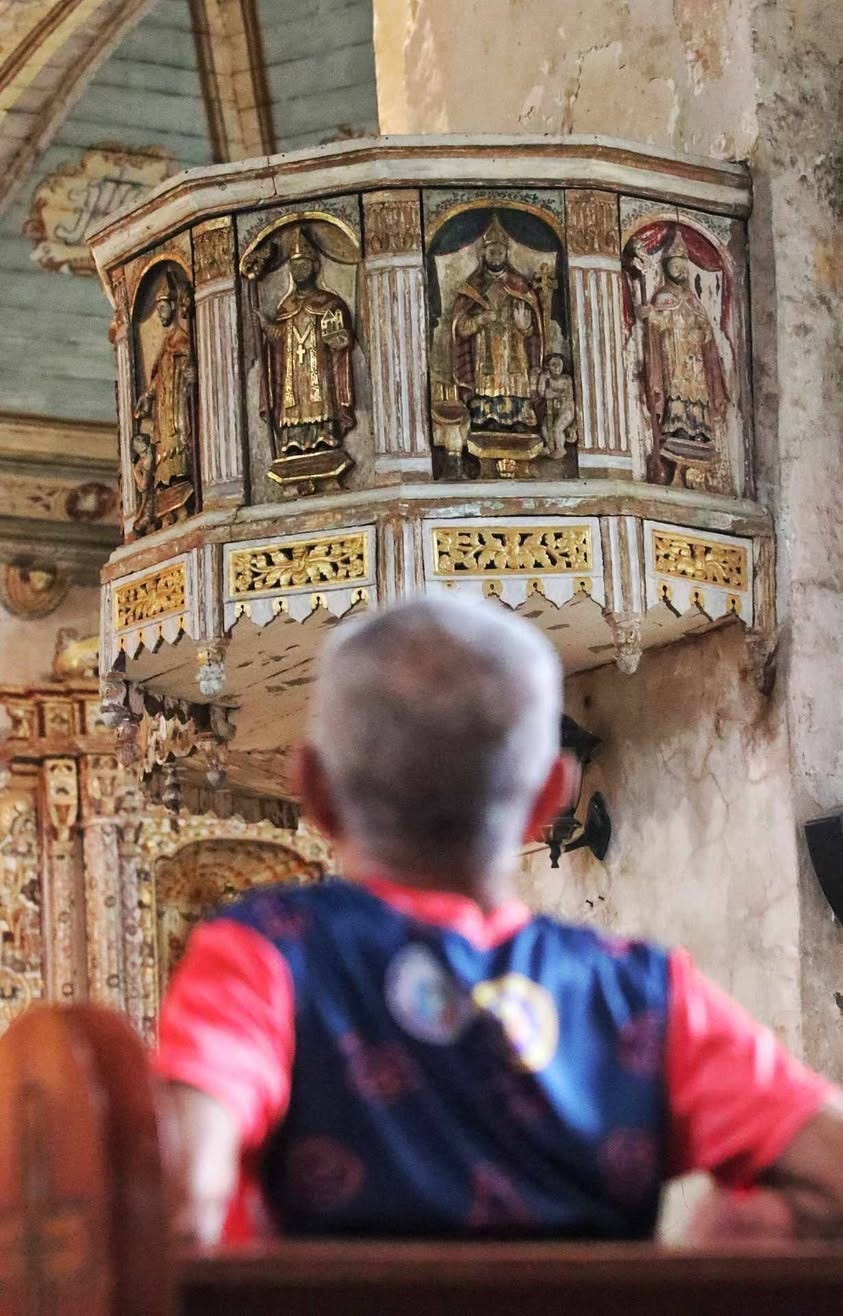
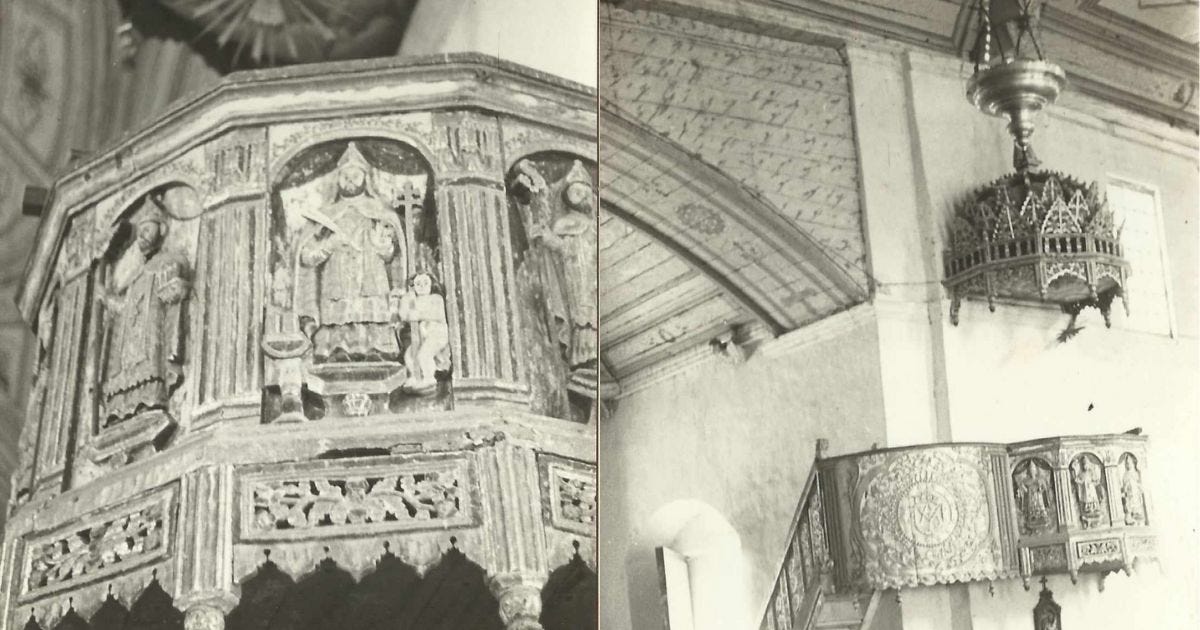
In February 2024, the National Museum of the Philippines announced its acquisition of four (4) 19th-century carved wooden pulpit panels depicting Augustinian saints, celebrated as a “Gift to the Nation.”1 The announcement was brief and festive, until heritage advocates and local community members identified the panels as parts of the missing pulpit from the Archdiocesan Shrine of Patrocinio de Maria Santisima, otherwise known as the “Boljoon Church,” in Cebu, which had allegedly been stolen in the 1980s. After months of dispute among the National Museum, the Archdiocese of Cebu, and other stakeholders, the panels were returned to Boljoon Church in March 2025.
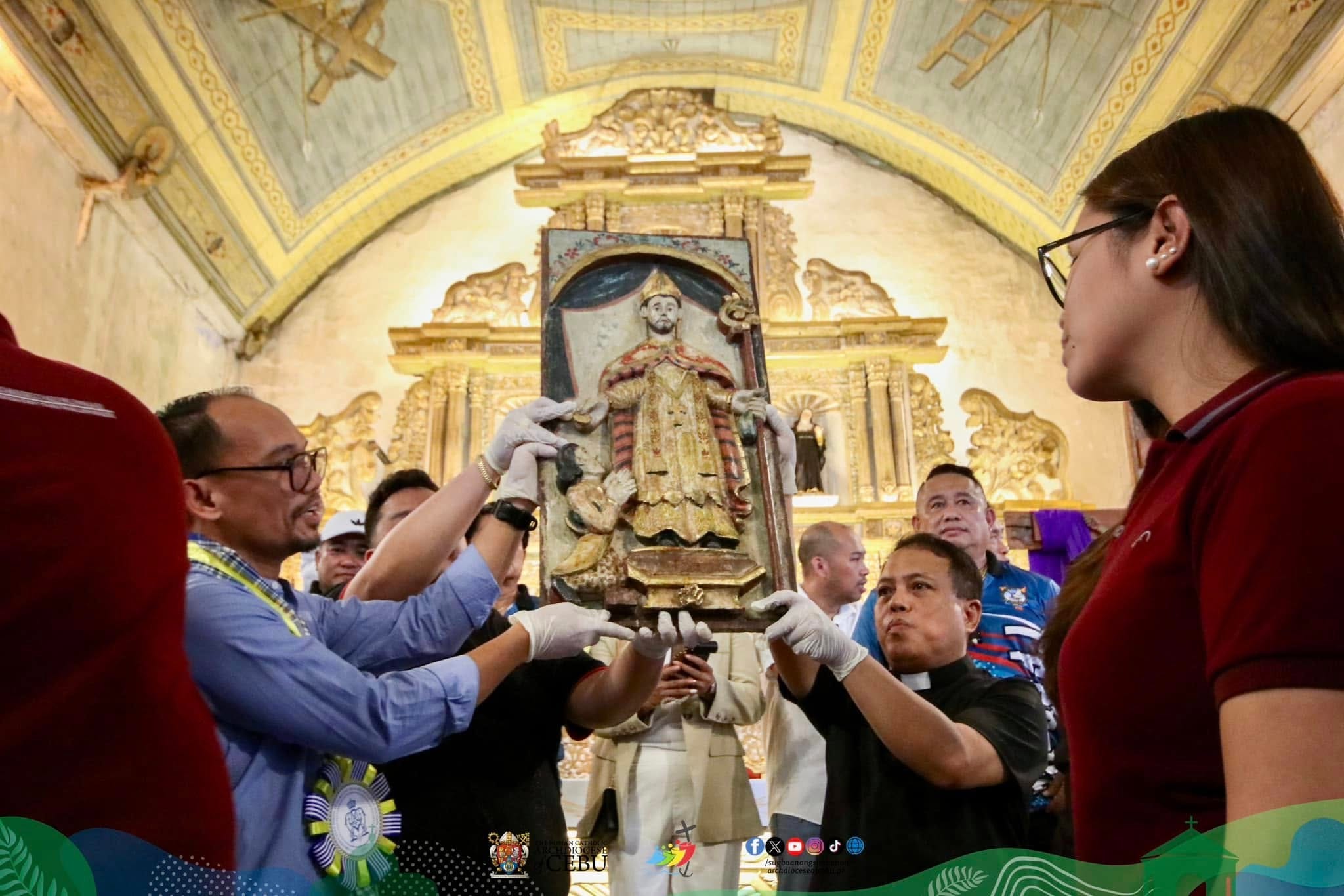
Nevertheless, its repatriation left unresolved a central and still-pressing legal question for today’s local art market: How could ecclesiastical cultural property,2 once held in trust for the faithful, circulate for decades under the appearance of lawful acquisition?
The Church
To understand the legal position of the local auction house, one must begin, perhaps logically, with the Church itself. Under Philippine law, the Roman Catholic Church holds title to its movable cultural property through the corporation sole, a legal concept under the Revised Corporation Code that explicitly established for religious denominations.3 Thus, every archdiocese and diocese in the Philippines is incorporated as a corporation sole, with the archbishop or bishop holding diocesan property not as part of his personal assets, but as a trustee for the church community.4
Being a trustee, he may not freely alienate ecclesiastical objects placed under his care as though these were his own personal belongings. His authority is constrained externally, by the regulatory clearances under Republic Act No. 10066, as amended by Republic Act No. 11961; and internally, by the canonical authorization requirements under the Code of Canon Law. In this regard, Canon Law requires the prior consent of the competent ecclesiastical authority, meaning for objects of particular artistic or historical value, the permission of the Holy See is needed before any valid alienation of ecclesiastical goods may take place. 5
Once ecclesiastical ownership is established, however, it is the object’s legal status, not merely the identity of its owner, that governs the obligations imposed on every market actor who handles it. Republic Act No. 10066, as amended, established a graded hierarchy of cultural property, ranging from National Cultural Treasures (Grade I), to Important Cultural Properties (Grade II), to all other registered cultural property (Grade III).6 As the Boljoon Church was declared a National Cultural Treasure in 2001,7 its pulpit panels are therefore subject to the highest level of scrutiny. Accordingly, before any sale, the appropriate cultural agency must first be given the right of first refusal under Section 9; prior clearance must be secured under Section 11; and any dealer handling the object must comply with the licensing and inventory requirements under Section 10.8 Failure to comply shall not merely lead to an administrative defect, but under Section 49, such a transaction may amount to illicit trafficking, thus exposing the dealer to significant fines, imprisonment, and the automatic revocation of its license.9
The local auction house
When a local auction house accepts a movable property on consignment, the legal framework of that transaction is governed by the provisions on agency: the consignor is the principal; the auction house is the agent; the object consigned is the subject matter. The procedure is, ordinarily, to find a buyer, conduct the auction, collect the price, and remit the proceeds. For this reason, the auction house never takes title, as the consignor remains the owner, that is until the hammer falls.
However, under the doctrine of nemo dat quod non habet, meaning no one can transfer what one does not possess, the agent derives no authority from the principal that the principal did not possess in the first place. Thus, where the consignor has no valid title because the object was stolen from the Church, or because the person acting on behalf of the Church lacked the canonical and civil law authority to alienate it, neither the auction house not the buyer can acquire valid title through the transaction. An auction house that sells an object in behalf of a consignor without verifying the consignor’s authority to do so may be in breach of its obligations as an agent and may incur personal liability as a result.10
The National Commission for Culture and the Arts (NCCA) Revised Guidelines Governing the Licensing of Dealers of Movable Cultural Properties impose a clear duty on auction houses and licensed dealers handling cultural property that: before accepting, listing, or selling an object, they must obtain verifiable provenance documents and, where necessary, secure certification from an NCCA-designated expert.11 The law therefore does not allow dealers to remain passive, or simply avoid knowingly joining illegal transactions. It requires them to investigate first and determine whether the object can lawfully be sold at all. This matters because the predictable defense of “good faith” collapses where the dealer failed to exercise the diligence required of a bonus pater familias. An auction house that accepted an ecclesiastical object without checking the Philippine Registry of Heritage, without demanding provenance records, or without consulting the proper cultural agency cannot be said to have acted as a prudent dealer.12 Its failure to ask the necessary questions before the sale is not good faith, but rather, utmost negligence.
That negligence must not be treated lightly or brushed aside, because it goes directly to the heart of the ownership issue itself. The “good faith” contemplated under Article 559 of the Civil Code is not merely a buyer’s subjective idea that the transaction appeared legitimate; however, at its foundation, it is the rationality of relying on the legitimacy of the sale in the first place. Where the auction house failed to perform the diligence required by law, the reliability of the local auction house collapses: the statutory clearances were absent, the right of first refusal was bypassed, and the licensing requirements were never satisfied. What the buyer relied on, then, was not a lawfully conducted public sale, but merely the appearance of one. When that distinction becomes clear the real issue is no longer simply whether the local auction house may be held liable, but whether the sale itself produced any legal effect at all.
The legal obligations and remedies
If a public sale violates statutory provisions, the local auction house faces serious legal consequences. Under Republic Act No. 10066, as amended, auction houses are not mere facilitators; they are responsible for verifying provenance and securing the necessary regulatory clearances before any sale. Failure thereof may trigger criminal liability under Section 49 of the same law, as well as liability under the Anti-Fencing Law, where the auction house handled unlawfully acquired movable property under circumstances that should have prompted further inquiry.13
The exposure of the local auction house does not end there, as civil accountability follows just as fast. Since an agent cannot transfer rights greater than what the principal possesses, an auction house may be held personally liable to the buyer for the return of the purchase price and damages once the Church successfully reclaims its property. To preserve the defense of “good faith,” the law demands the objective diligence of a bonus pater familias.14 Ultimately, the only real defense for a licensed dealer is documented due diligence: consulting heritage registries, demanding provenance records, and seeking expect verification before the hammer falls, not after litigation begins.
Conclusion
In 2009, Pope Benedict XVI asked a question that gets to the heart of this issue: “What is capable of restoring enthusiasm and confidence, what can encourage the human spirit to rediscover its path, to raise its eyes to the horizon, to dream of a life worthy of its vocation—if not beauty?”15 But as philosopher Roger Scruton pointed out, beauty is not just something we look at from a distance; it is a value that demands our attention and responsibility.16 Ecclesiastical art does not just happen to be in a church—it belongs there. These properties are held in trust for the people who pray before them and for the future generations of that community. When these are stolen, or sold off as mere collectibles, we lose more than just property. We break that trust and erase the memory of the community.
The Boljoon pulpit panels illustrate this reality: stolen in the 1980s and returned only in 2025, these 19th-century Augustinian panels remained in the shadows for decades despite existing legal protections. Philippine law, specifically the Civil Code and the Republic Act No. 10066, as amended, provides the necessary mechanisms to hold accountable those who have acted as heritage gatekeepers. This should not be interpreted as a hindrance to the local art market, but rather as a layer of protection ensuring that licensed dealers safeguard beauty instead of profiting from its loss, and finally end the silence that has surrounded the protection of our Philippine heritage for far too long.
This article is based on Ms. Ynion’s Juris Doctor thesis, which she recently defended in April 2026, entitled Legal Rights and Remedies for Local Auction Houses of Ecclesiastical Movable Cultural Heritage in the Philippines.
National Museum of the Philippines, “A Gift to the Nation,” Facebook post, February 14, 2024, https://www.facebook.com/nationalmuseumofthephilippines/posts/pfbid0LV6QN4L2xw2dtSZAmZB1XK5W1BpW9Y8SM78VYN2RayG1GTS1Mj6FE7LSdZnhfuVzl (accessed April 7, 2026)
“Ecclesiastical cultural property,” as used in this paper, refers only to movable goods owned by a public ecclesiastical juridic person (e.g., diocese, archdiocese, or parish incorporated as a corporation sole) that are simultaneously recognized as cultural property under Republic Act No. 10066, as amended by Republic Act No. 11961. These are properties that carry three (3) concurrent characteristics: ecclesiastical ownership, movability in accordance with the civil law, and classification under the applicable cultural heritage framework. The category includes movable religious artworks, antiquities, liturgical objects, and similar objects of historical, artistic, or cultural significance permanently dedicated to the Church’s religious mission and held in trust for the faithful, not for private use or commercial circulation.
Revised Corporation Code of the Philippines, Republic Act No. 11232 (2019), sec. 108.
Revised Corporation Code of the Philippines, Republic Act No. 11232 (2019), sec. 111.
Code of Canon Law (1983), cc. 1291-1292.
Republic Act No. 11961 (2023), amending Republic Act No. 10066, sec. 4.
National Museum of the Philippines, “The Patrocinio de Maria Church in Boljoon, Cebu,” November 11, 2021, https://www.nationalmuseum.gov.ph/2021/11/11/the-patrocinio-de-maria-church-in-boljoon-cebu/ (accessed April 7, 2026).
Republic Act No. 11961 (2023), amending Republic Act No. 10066, secs. 9-11.
Republic Act No. 11961 (2023), amending Republic Act No. 10066, sec. 49.
Civil Code of the Philippines, Republic Act. No. 386 (1949), art. 1897.
National Commission for Culture and the Arts (NCCA), Guidelines Governing the Licensing of Dealers of Movable Cultural Properties.
National Commission for Culture and the Arts (NCCA), Philippine Registry of Heritage (PRH) Guidelines; NCCA, Guidelines Governing the Licensing of Dealers of Movable Cultural Properties.
Republic Act No. 11961, sec. 49; Anti-Fencing law of 1979, Presidential Decree No. 1612 (1979), sec. 5.
“Bonus pater familias” refers to a “good father of a family,” that is, the ordinary prudent person whose conduct serves as the civil law standard of diligence; Civil Code of the Philippines, Republic Act. No. 386 (1949), art. 559.
Benedict XVI, “Address at the Meeting with Artists, Sistine Chapel,” November 21 2009, https://www.vatican.va/content/benedict-xvi/en/speeches/2009/november/documents/hf_ben-xvi_spe_20091121_artisti.html.
Roger Scruton, Beauty (Oxford: Oxford University Press, 2009), 1-5.