


Michelle Sianghio graduated from the Master of Science in Industrial Economics program in 2018. During her years at UA&P, she served as the President of the University Student Government and was active in organizations such as the Business Economics Association and The Bosun.
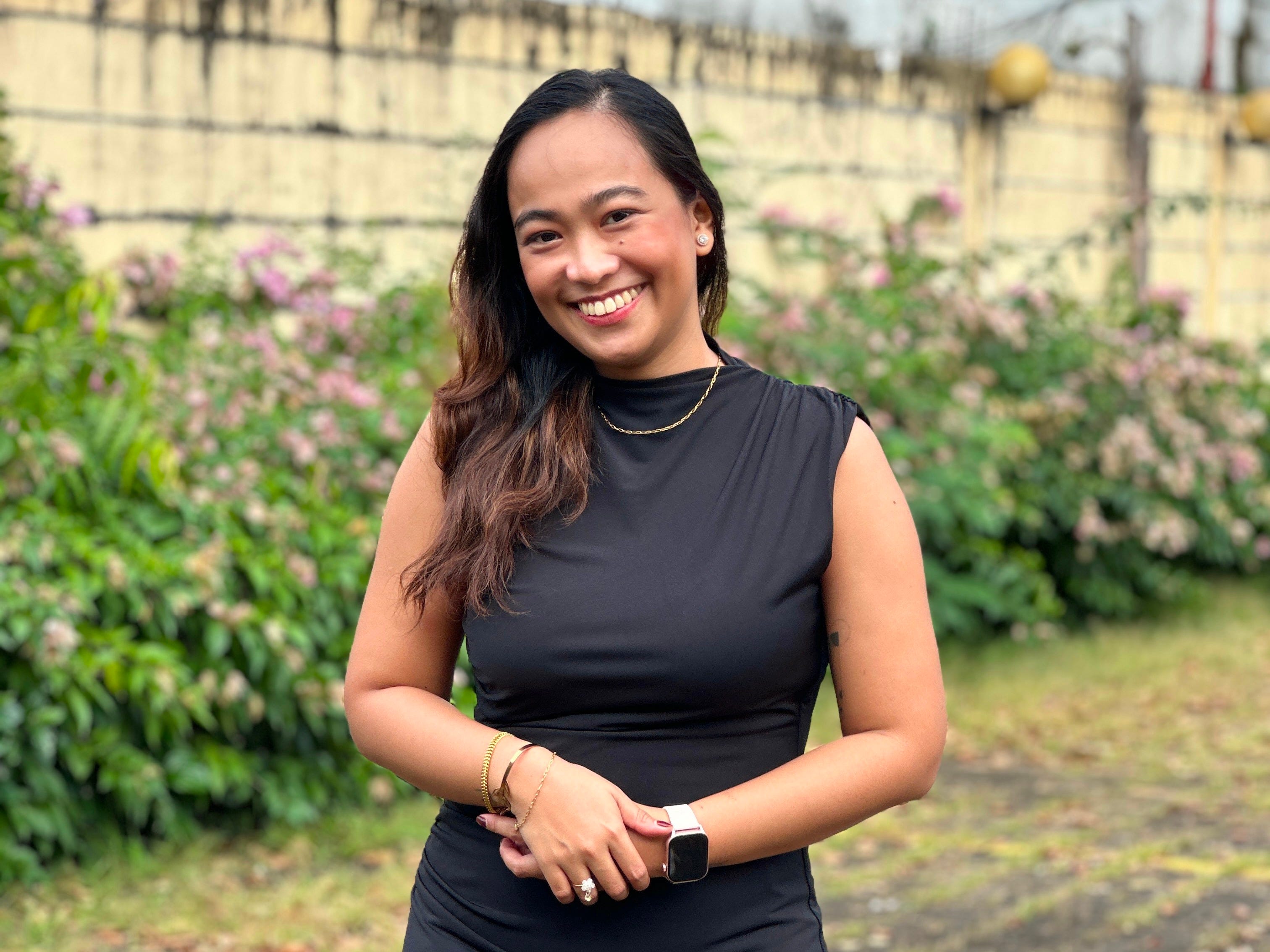
A scholar and childhood cancer survivor, Sianghio entered UA&P with a strong sense of resilience and responsibility. Years after graduation, however, life led her through unexpected challenges that transformed how she understood success, leadership, and purpose. Looking back on her journey—from student leader to alumna navigating a very different season of life—she reflects on the lessons that have remained constant and the truths she continues to seek.
Learning to lead beyond titles
Tanya Rafanan: During your time at UA&P, how did your experiences as a cancer survivor and a scholar influence the kind of student and leader you became?
Michelle Sianghio: Growing up as a cancer survivor taught me resilience very early in life. By the time I entered UA&P, I had already learned what it meant to face difficulties and keep moving forward. Because of that, I never wanted people to see me as someone who needed special treatment. If anything, I wanted to contribute more than what was expected of me.
Being a scholar also gave me a strong sense of responsibility. I felt grateful to my family and to the university for giving me the opportunity to study there, so I always wanted to make the most of it.
When I became USG President, I initially thought leadership meant making things happen, solving problems, and having all the answers. But as I worked with students and the administration, I realized leadership is really about helping other people grow and succeed in their own way. That changed the way I understood what it means to serve.
The lasting influence of liberal education
Tanya: How did UA&P shape who you are today?
Michelle: One of the things that made me proud to be a Dragon was UA&P’s liberal education. At the time, I didn’t fully realize how important it would become. It wasn’t simply about preparing us for a profession. It challenged us to search for truth, to think deeply, and to ask what makes a life meaningful.
After graduation, I naturally focused on achievements, career goals, and building the future I wanted. But when life became difficult, I realized those foundations had stayed with me. The lessons I learned in UA&P reminded me that life is about something much bigger than personal success. They continue to guide me even today.
A lesson that never leaves
Tanya: What is one lesson from UA&P that has stayed with you?
Michelle: Seeking truth.
As a student, seeking truth often means being intellectually curious—learning new things, exploring ideas, and preparing for your future. But later in life, it becomes much more personal.
For me, it now means constantly asking: Is this really good? Is this meaningful? Am I still living intentionally? Is this still worth pursuing?
Those questions never really leave you. Once you’ve learned to seek truth, you begin to look at every stage of your life through that lens.
Tanya: After everything you’ve experienced, do you think the truth you’re searching for has changed?
Michelle: I think it’s still the same truth, but it appears differently now.
When I graduated, I thought I had everything I wanted. I was building my career, accomplishing my goals, and I believed that was what contentment looked like. I was searching for fulfillment through the things I was achieving.
Then, life changed.
When everything I had built was suddenly stripped away, I realized that contentment wasn’t what I thought it was. It wasn’t found in achievements or titles anymore. Instead, it became much simpler. It became the people who stayed beside me, the relationships I could depend on, and knowing that even in my current situation, there were still things worth waking up for and people worth loving.
Looking back, I realize that money, medals, promotions, and achievements can sometimes become distractions. Before, I thought they were the destination. Now, I see them as only part of the journey.
What remains are the people you’ve loved, the relationships you’ve built, the stories you’ve shared, and the lives you’ve touched.
So I don’t think the truth itself has changed. I think my understanding of it has deepened. The truth I’m seeking today is still about living a meaningful life—but now I understand that meaning looks very different depending on the season you’re in.
Redefining success
Tanya: Looking back on your years after graduation, what has been the greatest challenge you’ve encountered?
Michelle: Ironically, it wasn’t surviving cancer.
As a child, I always had my family beside me. My mom and the people around me carried me through those difficult years. But adulthood is different. You’re expected to build your own life. You’re establishing your career, becoming independent, making plans, and dreaming about the future.
Then suddenly, everything stopped.
When my prosthetic leg developed complications, I became bedridden. Many of the things I had taken for granted—working, going out, living independently—became difficult or even impossible. That was the greatest challenge I’ve faced. More than the physical limitations, it forced me to question the way I had been measuring my own worth.
Before, success meant achievements. It meant reaching goals, earning promotions, accomplishing everything I had planned for myself. There’s nothing inherently wrong with those things, but without realizing it, they became the standard by which I judged whether I was valuable. When I could no longer pursue them, there were moments when I genuinely believed I had failed. But slowly, I realized success isn’t something that disappears just because your circumstances change.
Today, I believe success means remaining faithful to your purpose even when life no longer looks the way you expected. It means continuing to grow despite your limitations, and finding ways to love and serve even if you can no longer do the things you once could.
One of the greatest surprises during this season was discovering how many people continued to show up for me. Friends reached out. People helped without being asked. They reminded me that relationships built through genuine care endure even when you have nothing tangible left to offer. That changed the way I understood success.
Tanya: How did being bedridden change your understanding of productivity?
Michelle: For most of my life, productivity meant accomplishing something. As long as I was working, achieving, or moving toward another goal, I felt valuable.
But when you’re bedridden, those external measures disappear. You can’t produce in the same way anymore. At first, that’s frightening because you begin asking yourself, If I can’t do anything, what am I worth?
It took a long time for me to realize that productivity and value are not the same thing.
Even in this season, I can still encourage people. I can still strengthen relationships. I can still share my story in ways that give others hope. Those things may never appear on a résumé, but they matter just as much.
Now I believe success isn’t measured by how much you accomplish. It’s measured by whether you continue living your purpose despite whatever circumstances life gives you.
Leadership, reimagined
Tanya: Earlier, you mentioned that leadership eventually became about helping others grow. Looking back now, years after serving as USG President, do you think your understanding of leadership has changed?
Michelle: Definitely.
When I was a student leader, I thought leadership was about making decisions, solving problems, and representing the student body well. I worked on receiving information, processing it, and communicating it to students. At the time, I thought that was what good leadership looked like.
Looking back, I think there were things I could have done differently.
Experience has taught me that leadership isn’t primarily about managing situations. It’s about influencing people in a way that genuinely helps them grow.
Now, whenever I talk to someone—whether it’s a colleague, a friend, or even someone I’ve just met—I always ask myself one question: Did I add value to that person’s life today?
That has become my measure of leadership.
People don’t all need the same thing. Some need encouragement. Others need someone to challenge them. Others simply need someone willing to listen. Leadership requires the humility to recognize that serving people means adjusting yourself to what they need rather than expecting everyone else to adjust to you.
That’s why I often describe leadership as creating ripples. A single drop of water seems insignificant, but once it falls, the ripples continue moving outward long after the moment itself has passed.
I think leadership works the same way. One conversation, one act of kindness, one word of encouragement—those small moments may end up affecting far more people than we’ll ever know.
That’s the kind of leader I hope to become now. Not someone remembered for a title, but someone who quietly left people better than she found them.
What she is most proud of
Tanya: Looking back on your journey from college until now, what are you most proud of?
Michelle: I’m proud that I still find ways to keep going.
Awards, titles, and achievements can all disappear, but resilience stays with you.
I’m grateful that I’ve been able to encourage other cancer survivors, persons with disabilities, and people who feel stuck in their own struggles. If my experiences can remind someone that they are not alone, then I’m proud of that.
More than anything else, I’m proud that I’ve learned to smile even through difficult seasons.
What inspires her now
Tanya: What inspires you today?
Michelle: I’m inspired by growth.
Even in difficult seasons, I believe there is still something more that I can do and someone more that I can serve. Challenges are not the final chapter of our lives.
If sharing my experiences helps another person realize that life can still be meaningful despite hardship, then those experiences become worthwhile. I think our struggles can become a source of hope for other people, and that’s what inspires me every day.
A message to students
Tanya: Finally, what message would you like to share with UA&P students who may be facing challenges of their own?
Michelle: There are three things I always remind myself of.
First, the most meaningful chapters of our lives are often the ones we never would have chosen for ourselves. The unexpected seasons are the ones that teach us the deepest lessons.
Second, never stop seeking truth. Whether you’re pursuing a career, building a family, or discovering your purpose, keep asking yourself whether the life you’re building is truly meaningful and worth living.
Finally, remember that your purpose can survive any detour. Circumstances may change. Plans may change. Even your abilities may change. But your capacity to serve, to grow, and to make a difference remains.
Purpose is always greater than the path we originally imagined for ourselves.