


By Dr. Teresa Carale
Vice Dean, School of Sciences, Technology, and Engineering
Every year, Technovation Week is organized to celebrate the foundation of the School of Sciences, Engineering and Technology. The penultimate event this year was a talk entitled “New Energy Technologies: Shaping the Future of the Energy Mix” delivered by ACEN President & CEO Eric Francia, a UA&P alumnus and member of the UA&P Board of Trustees. In his presentation, Mr. Francia outlined ACEN’s rapid transformation into a leading renewable energy platform in the Asia Pacific region. Initially heavily invested in coal, gas, LNG and diesel, ACEN aggressively divested its thermal assets starting in 2016 to scale renewables across the region. Today, the company boasts 7.5 GW of attributable renewable capacity across key markets, led by the Philippines (3,056 MW), India (1,667 MW), Australia (1,319 MW), and Vietnam & Lao PDR (1,015 MW).
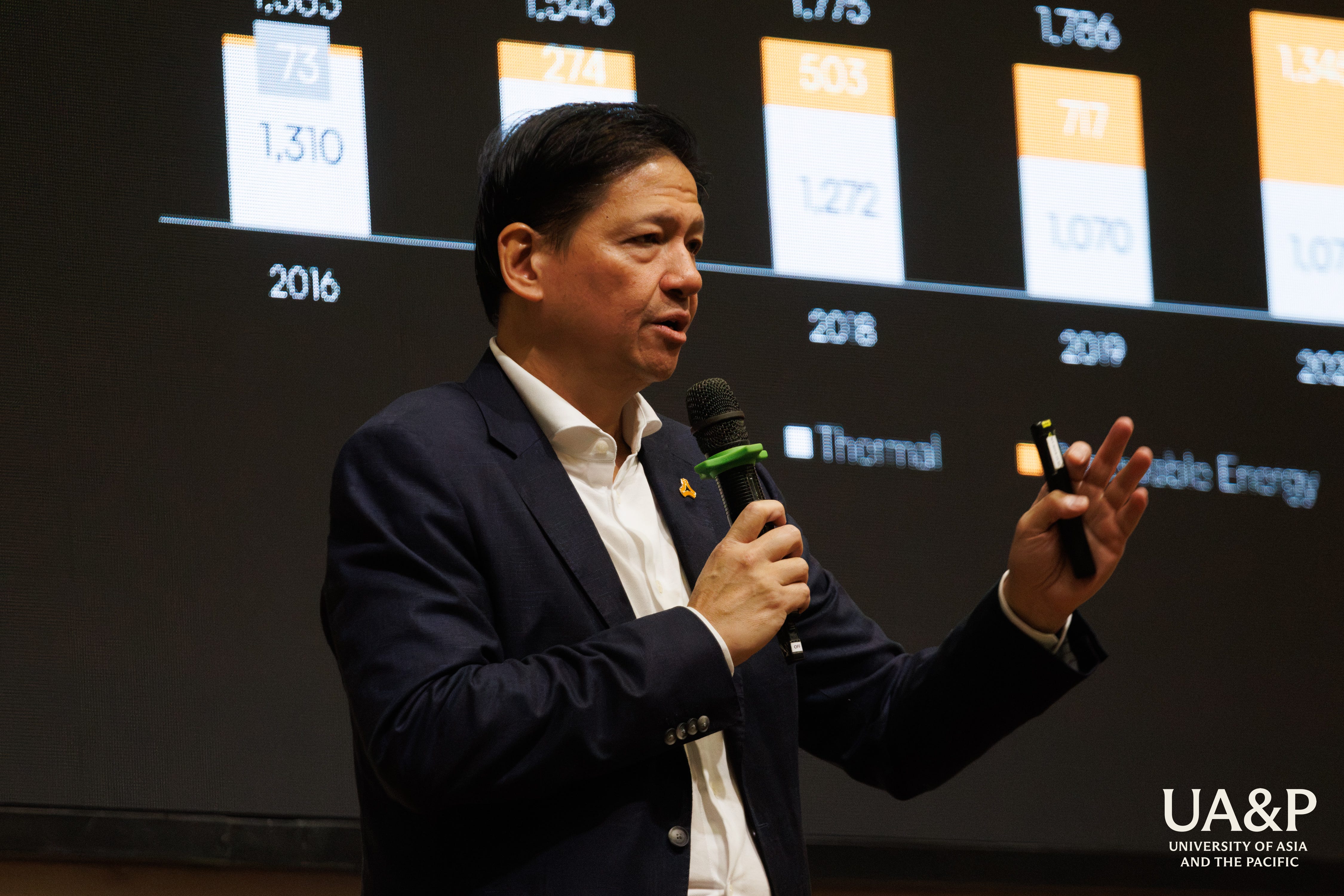
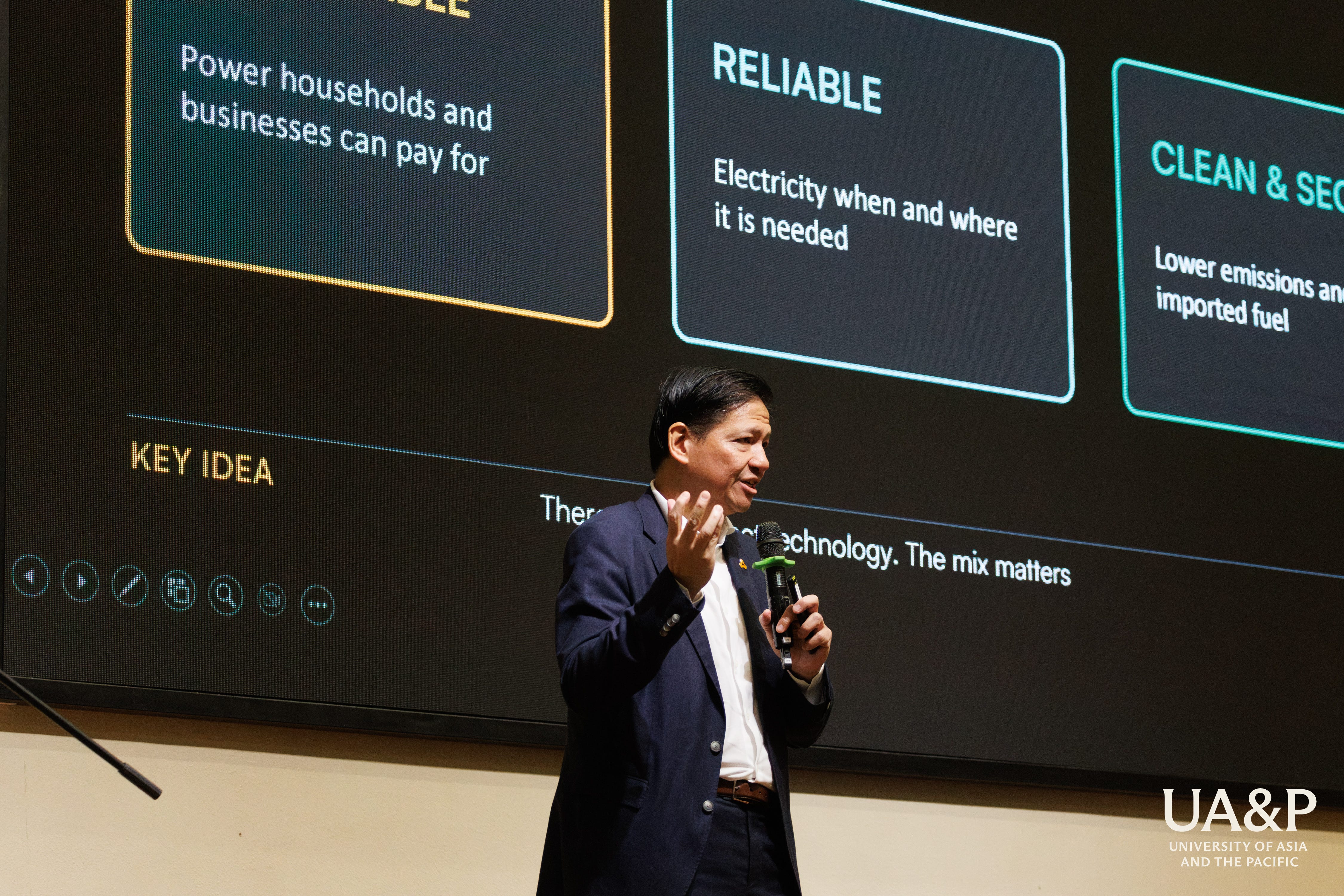
Mr. Francia discussed the “Energy Trilemma”— balancing competing priorities of affordability, reliability, and clean, secure supply. He emphasized the need for a diversified power mix because no single energy source excels in all three areas. Coal-fired plants provide dependable power but carry significant emissions and financing barriers. Gas/LNG provide flexible generation but are subject to imported fuel price volatility. Diesel plants can be built in remote islands but entail high operating costs and pollution. On the other hand, renewable technologies provide clean energy that range from firm geothermal power (limited sites) to hydro (subject to drought and can carry negative societal impact) to intermittent generation using wind and solar, the last being low cost and quick to scale, but only available at certain hours of the day.
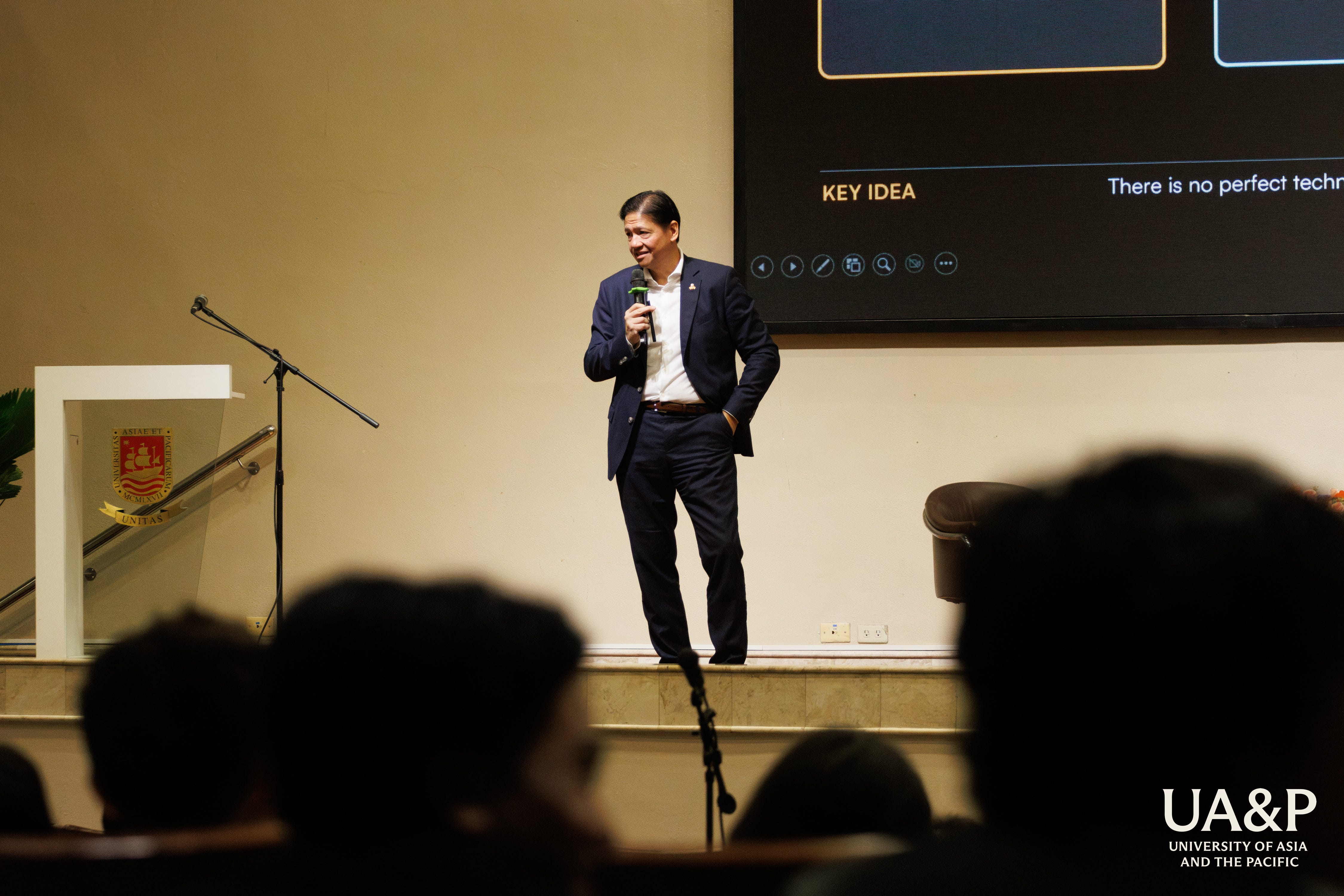
Mr. Francia underscored the vital role of energy storage such as fast-responding Battery Energy Storage Systems (BESS) to enable surplus charging during the day and discharging power during peak evening hours. He also discussed emerging long-term frontiers like Small Modular (nuclear) Reactors (SMRs) and decentralized rooftop microgrids.
To summarize, Mr. Francia argued that the optimal power system cannot be built by evaluating individual power plants in isolation. Instead, a cohesive portfolio that pairs low-cost variable energy with firm supply, grid flexibility, and robust transmission infrastructure is needed.
A lively Q&A showcased the multidisciplinary interest in energy. Mr. Francia fielded questions from students of various programs, including civil engineering, industrial engineering, data science, law and psychology.