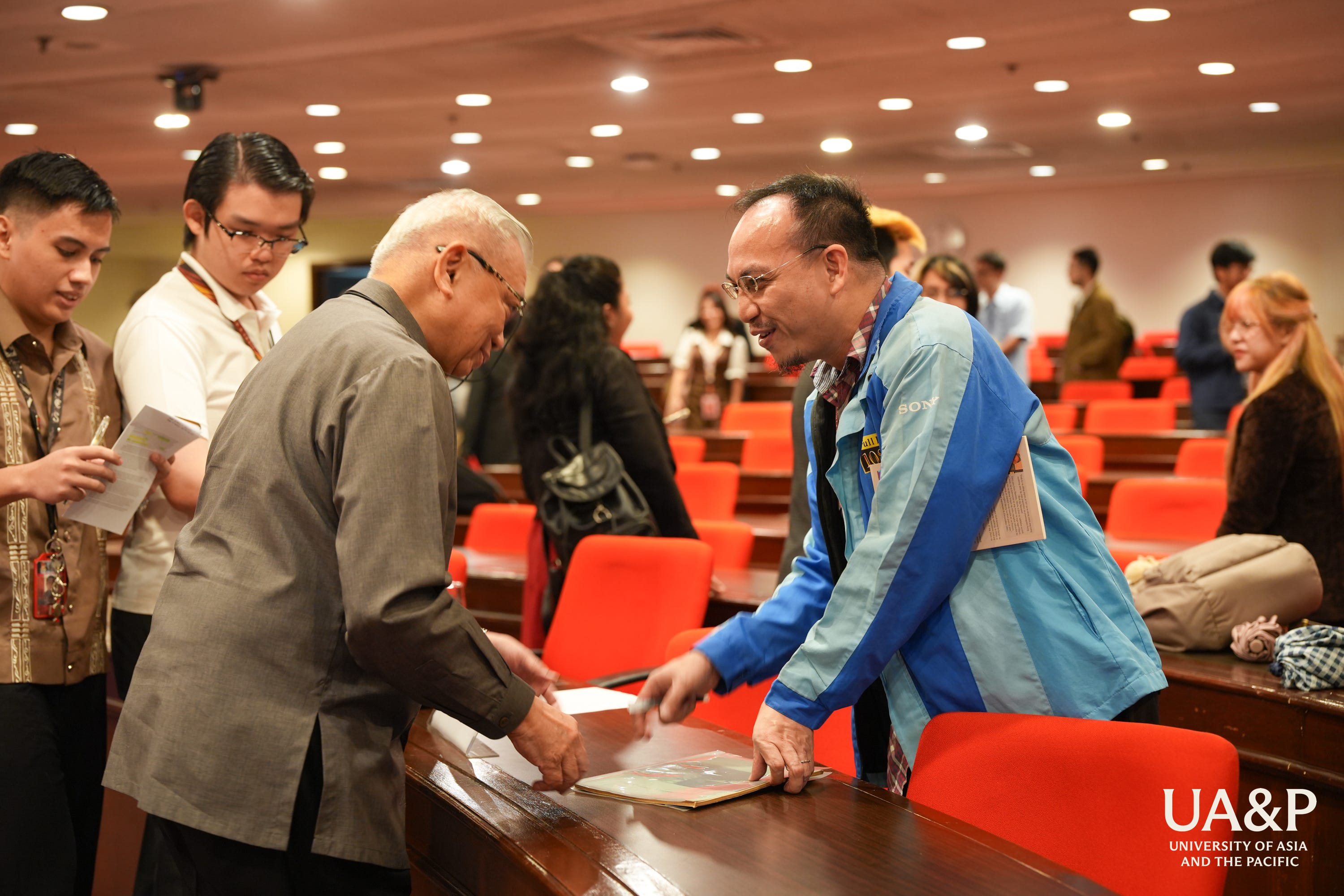
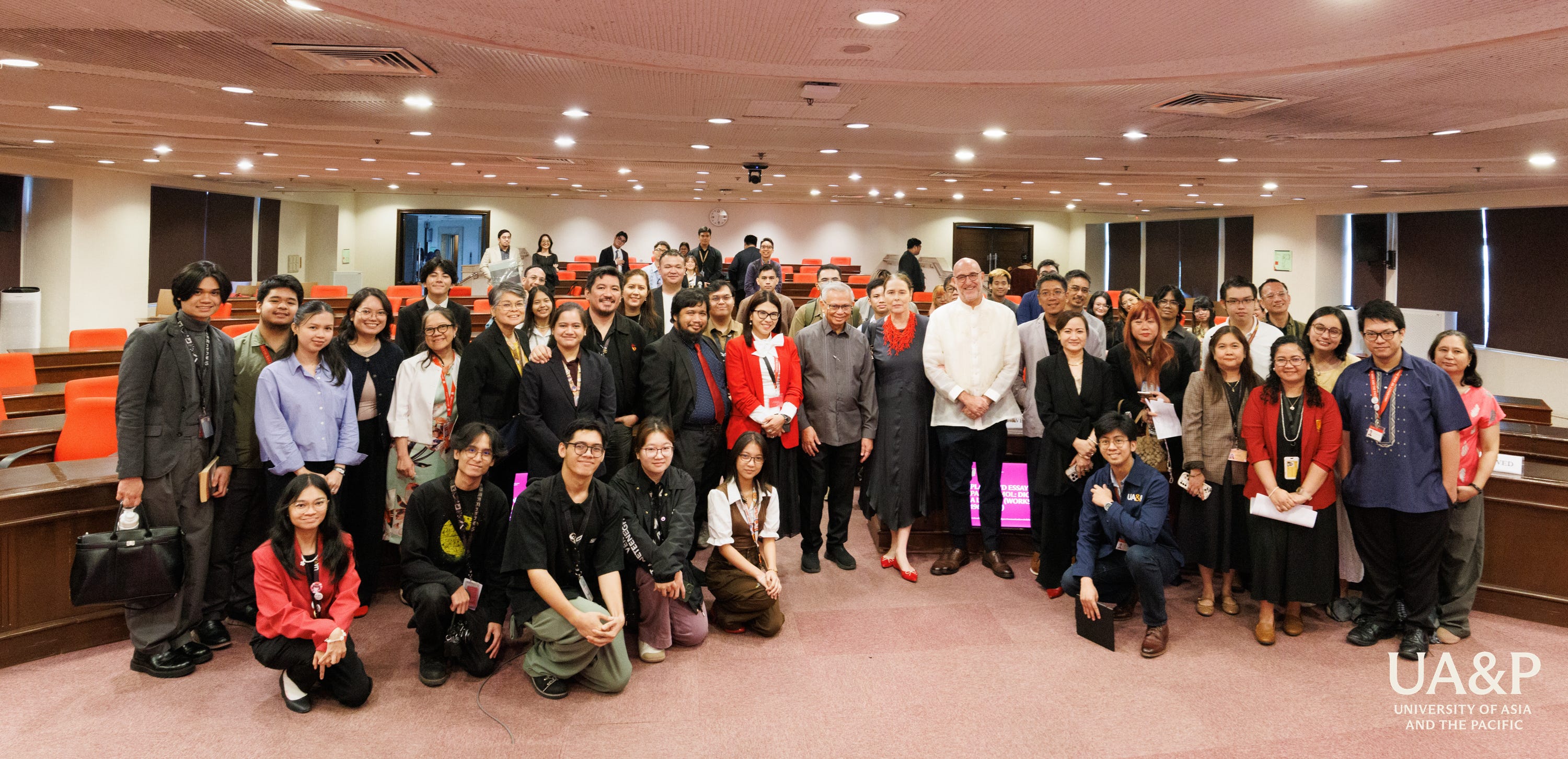
On October 14, 2026, the College of Arts and Sciences (CAS) hosted a special program titled Plays and Essays of Paul Dumol: Digitizing a Legacy at the PLDT Hall. The program celebrated the digitization of the literary works of Dr. Paul Dumol, Professor Emeritus and one of the college’s esteemed faculty members.
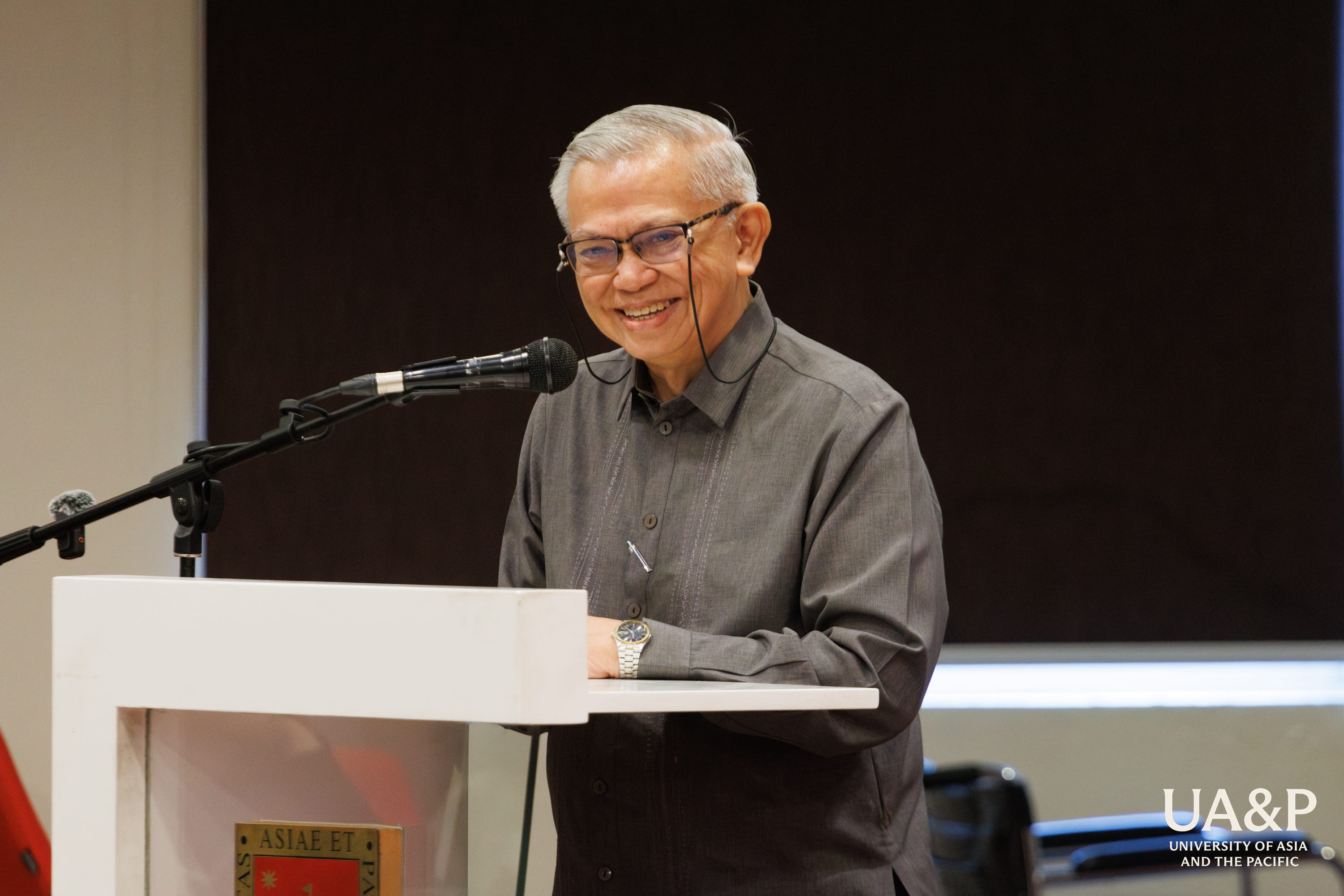
The program formally began with opening remarks delivered by Dr. Sophia Marco, who drew attention to this milestone in Dumol’s career. A website portal was designed as a gateway to his life’s work, including his essays, plays, lectures, publications, and ongoing projects. It offers students, educators, researchers, and avid history and literature enthusiasts another avenue to engage more deeply with his ideas and contributions. Its contents include synopses of the fifteen plays he has written, representative essays on the national narrative and identity of the Filipino, and literary and philosophical essays on Dante and Beauty.
Following the initial walkthrough of the newly unveiled website, Dr. Svetlana Antropova, a researcher in Philippine cultural heritage at the Universidad Villanueva, delivered a short lecture on the pedagogical value of one of Dumol’s critically acclaimed plays, Ang Paglilitis ni Mang Serapio. There, Antropova stressed the power of theatre in educating the youth. For her, Dumol’s play demonstrated precisely the individual capacity to move from passive reception to active interpretation and creation. She noted: “There is no single solution [in theatre]. And precisely because there is no single solution, the student must interpret. This is where creativity becomes inseparable from critical thinking.”
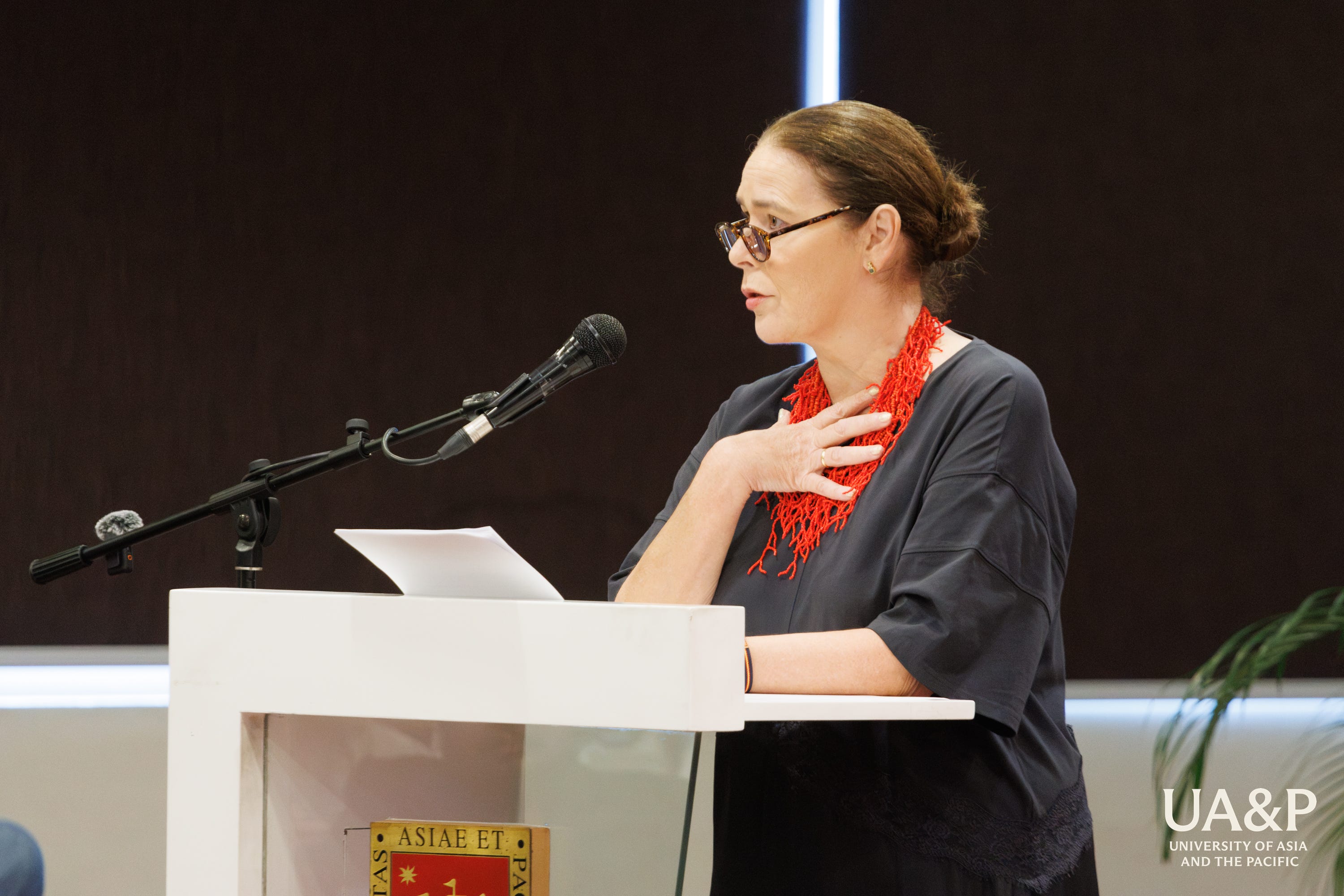
She further pointed out that the play’s discursive approach to communicating its themes on injustice and poverty facilitates learning to its highest degree.
“A student can learn a definition of marginalization. But Ang Paglilitis gives marginalization a human face. A student can discuss poverty as a social problem. But in this play, poverty becomes inseparable from dignity, love, humiliation, survival, and power. Theatre turns abstraction into experience.”
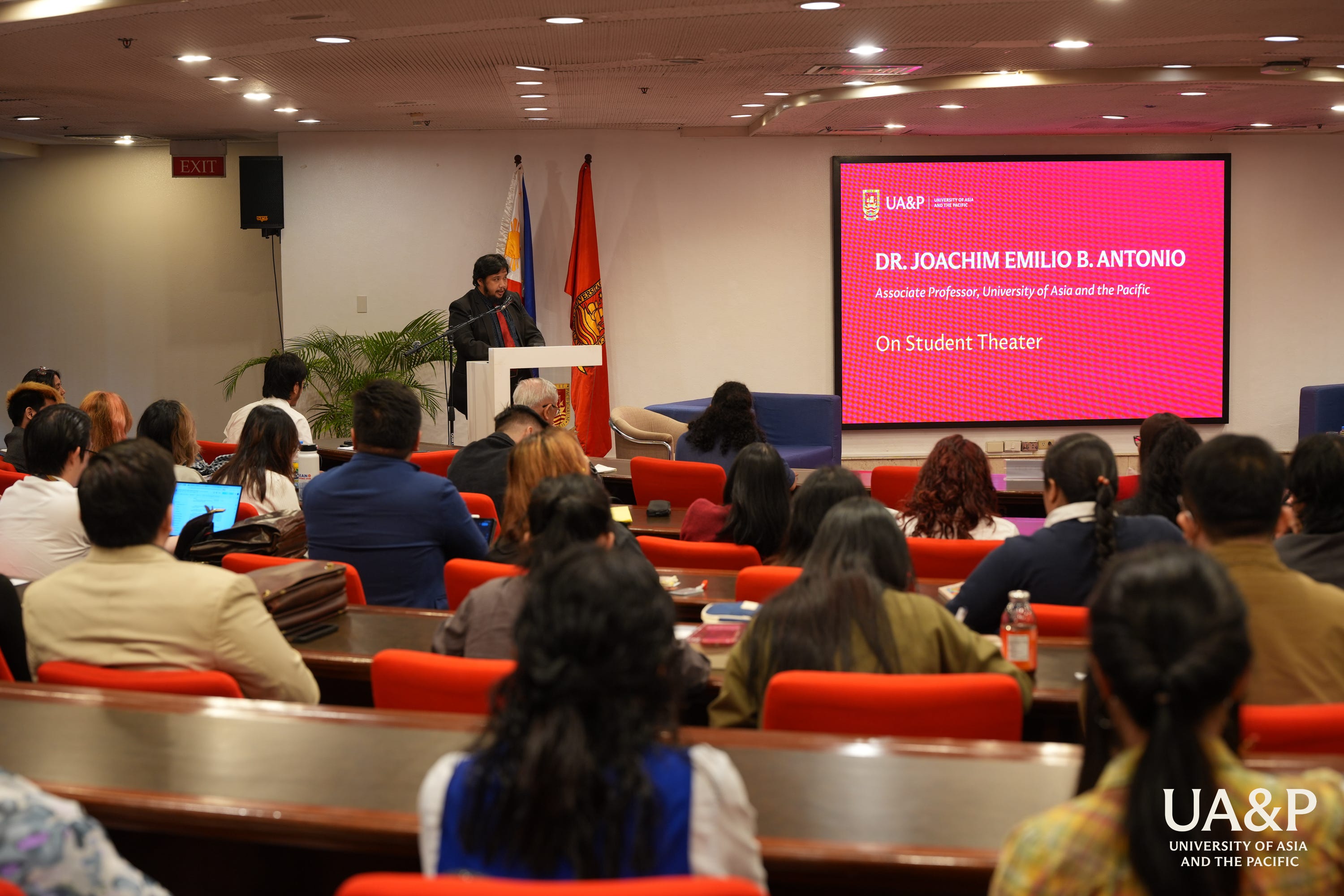
Dr. Joachim Emilio Antonio then followed with his lecture On Student Theatre Art. Drawing upon student-led productions of Dumol’s Ang Paglilitis ni Mang Serapio, Antonio remarked how these reproductions cultivate a sense of community between the student and academic institution. For him, the purpose of student theatre serves not as mere self-expression, but rather as an opportunity to see art as integral to the formation of one’s character.
“In the end, any theatrical production in the context of an academic institution should have the learning and growth of its students in mind. The importance of aesthetics is primarily to educate the students’ taste and craftsmanship. Fame and acclaim of the production will be a byproduct, not a goal.”
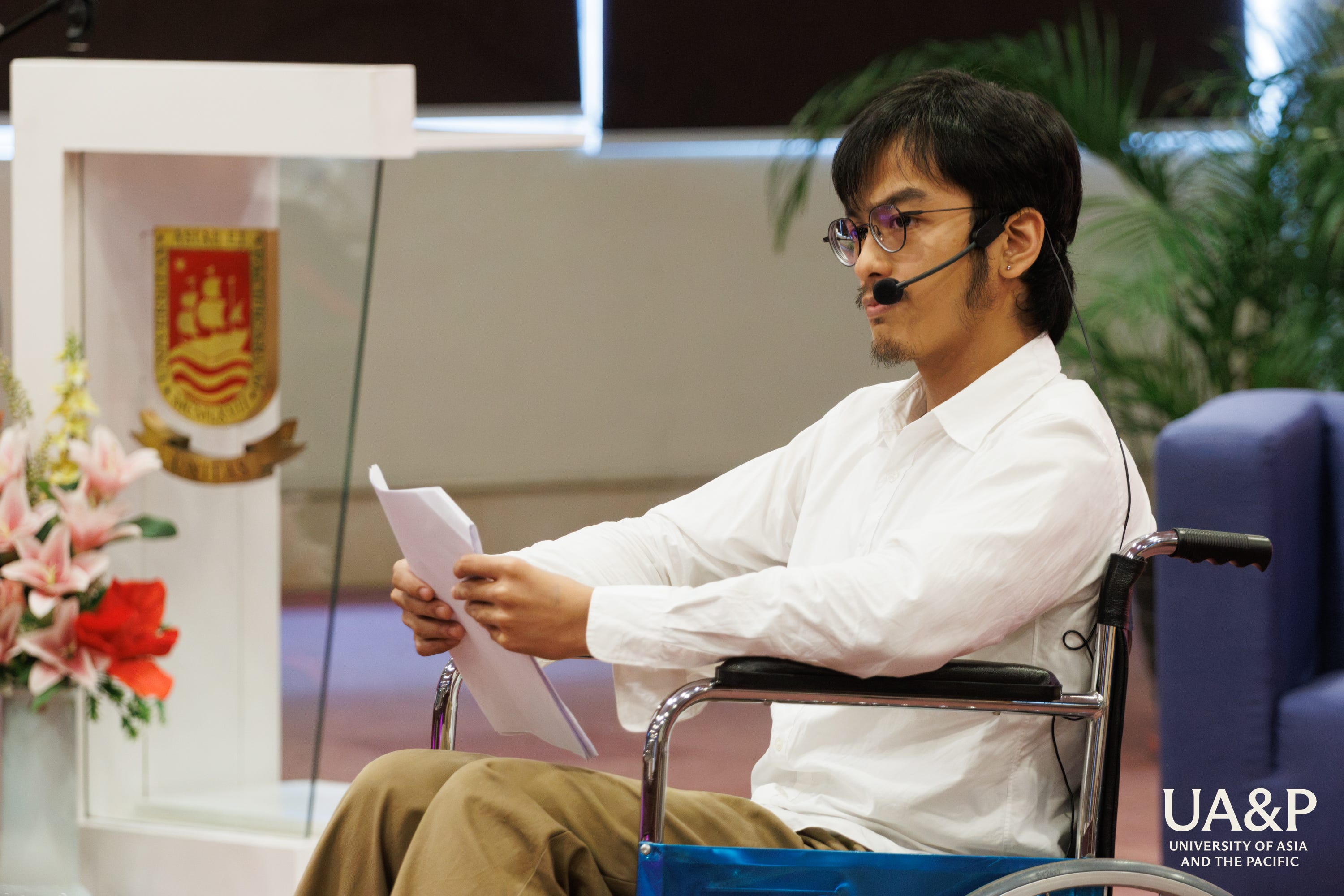
After the lecture, an interpretative reading of one of Dumol’s literary monologues, titled Pulê, was performed by 4th-year Humanities student Mr. Francis Tabago. The dramatic monologue followed Apolinario Mabini’s voice through his failed negotiations with American forces, his exile to Guam, and his tortured interrogation of the Philippine revolution’s meaning.
Audiences were then allowed to interact with a closing panel including Dumol himself, Antropova, Antonio, and Tabago. Dumol shared his insights regarding the unique role of writing literature within today’s context, stressing that: “Plays and essays are not vanity projects if the writers are serious about them. […] You won’t be able to write if you do not live your life first. That’s the problem of today: we’re really forgetting our writers.”


After the panel segment, CAS Dean Dr. Philip Peckson gave his closing remarks. He reminded students and faculty alike of literature’s invisible yet invaluable role in forming growth and human character, and what steps the college is taking to continue the legacy of this role, starting with the plays and essays of Paul Dumol.
“Serapio is part of the canon in Philippine literature, but you can’t buy a book with the works of Paul Dumol. […] What I think we are doing here today is to try to catch the wind. I am referring, of course, to tradition. […] And what we are doing is casting ourselves into that stream, so that the youngest of this audience may remember.”