


Some songs are meant to end. Three minutes, maybe four. A final chorus, one last note, then silence.
But sometimes, a song gets left behind.
It stays inside an old notebook in the corner of a room, untouched because life gets too busy. The chords become harder to remember. The lyrics that once came so easily begin to feel unfamiliar. Days become months, months become years, until one day, you find yourself returning to the same song you once promised you would finish.
For Rain and River, that song is KasLoy.
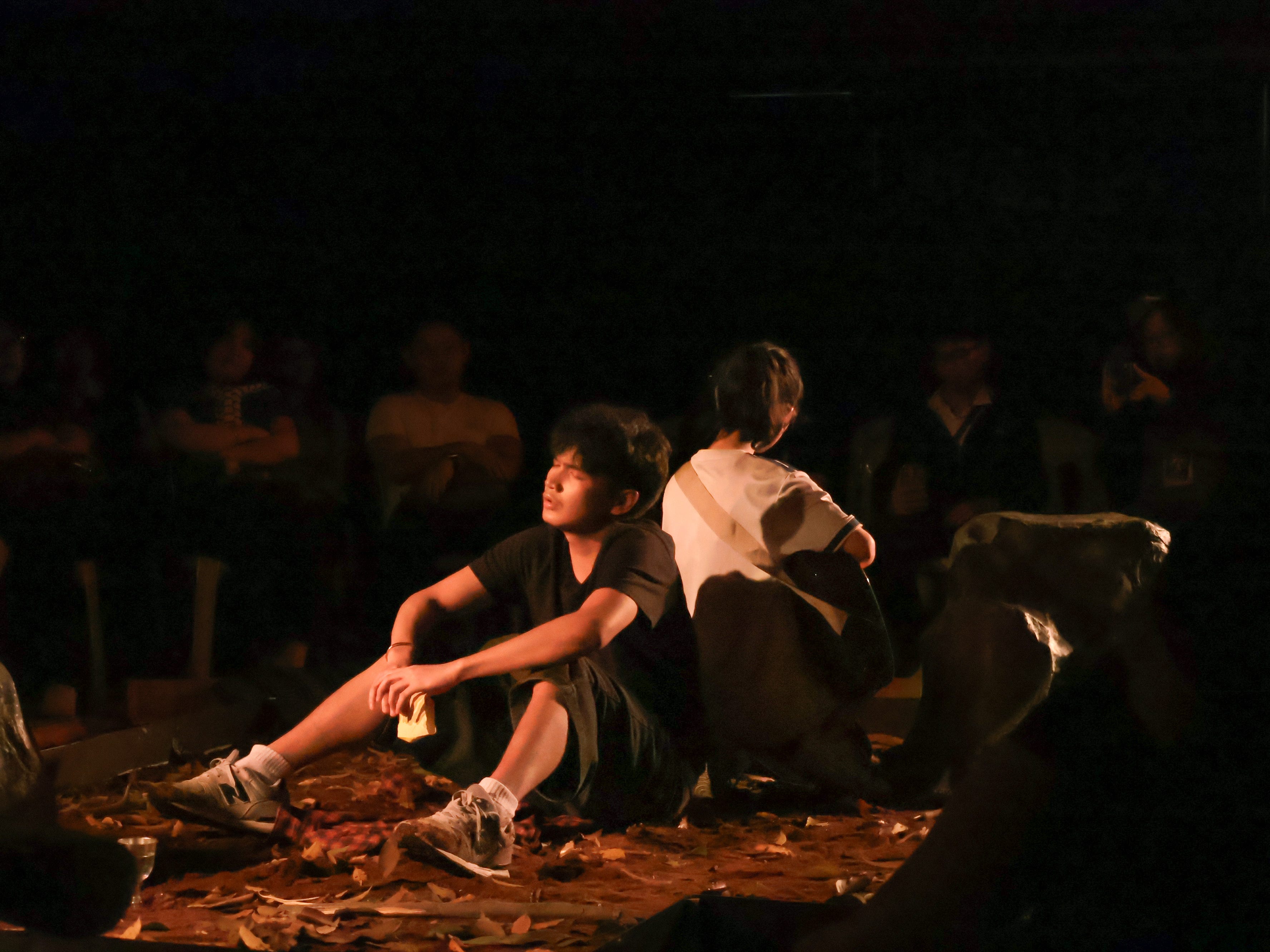
Dulaang Rock Opera Company’s (Dulaang ROC) KasLoy: Bukas Itutuloy, written by John Custer and directed by Ricci Ferrera, follows two friends who meet at a mountain peak with guitars in hand and a song they have been trying to complete for years. The play moves between their past, present, and future as they revisit the memories that shaped their friendship and everything that has changed since they first began writing the song.
At first, KasLoy feels deceptively light.
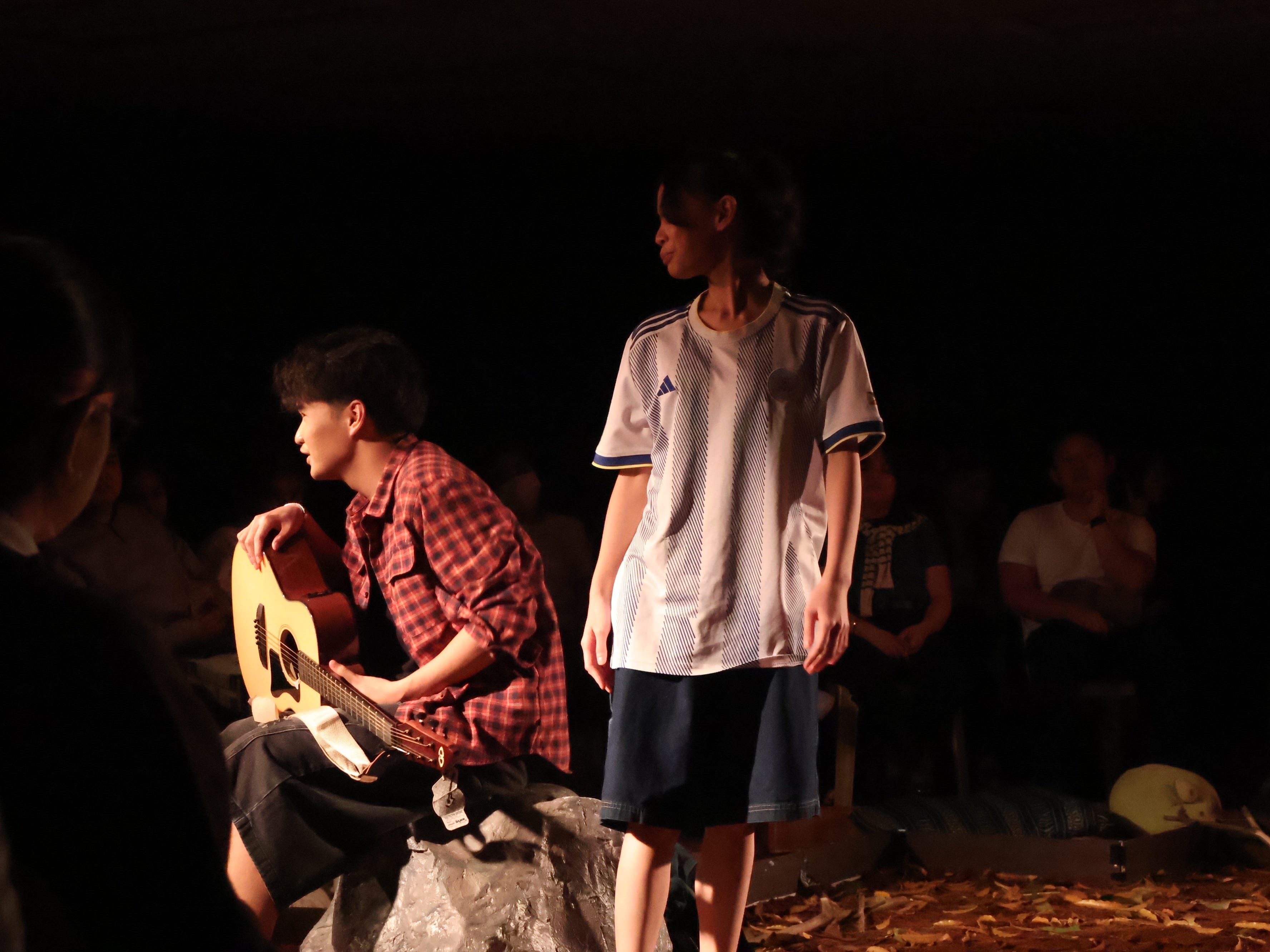
Rain, played by Manuel Casapao, arrives at the mountain carrying an oversized bag for a picnic. River, played by Airyn Jace Santiago, greets him with a birthday surprise. What follows is a string of teasing, complaints, jokes, and arguments over food and lyrics. Rain has gone all out with the picnic setup, inspired by one he saw online, but after everything is unpacked and the food is gone, all that is left are sandwiches and water.
These small exchanges establish the friendship before the play asks us to understand its weight.
Rain and River use small, shruggable interactions to show that they know each other. They interrupt one another, remember old jokes, and bring up embarrassing habits. River can imitate Rain’s old voice asking to make a song together, while Rain can immediately answer with the same irritation he had years ago. When the two return to KasLoy, even their unfinished lyrics become part of their familiar rhythm.
Instead of simply telling the audience that these two have been friends for years, the production lets their history surface through their dialogue and manner. Their friendship feels lived-in because the audience is allowed to see the little things that have accumulated between them over time.
And then, almost quietly, the jokes begin to mean something more.
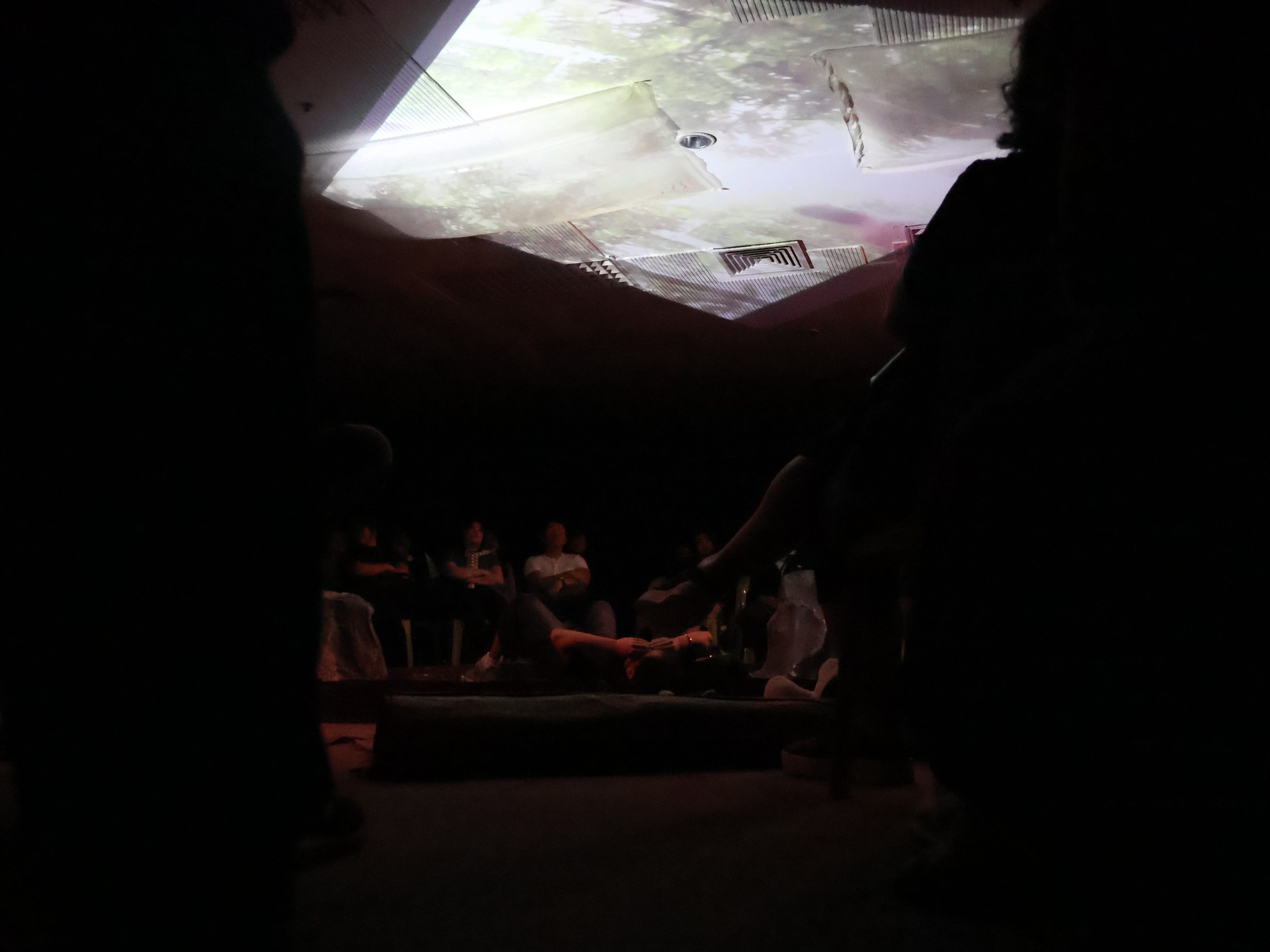
The mountain is more than the setting where the play happens. It is a place Rain and River have returned to in different parts of their lives. Over the course of the play, the mountain becomes a witness to their friendship, holding memories of birthdays, conversations, arguments, and moments when the outside world felt too heavy.
The production need not change the setting of the mountain to show that time has passed. The place remains familiar, while the people who come back to it do not. They return with different stories, different plans, and different versions of themselves.
The play moves through these memories through conversation, silence, and especially music. A familiar guitar introduction brings Rain and River back to the song they started years ago. Lyrics are repeated, changed, challenged, and built upon. What begins as something playful between two friends slowly becomes a record of everything that has happened since they first wrote it.
Even the title captures this idea.
KasLoy plays on “Bukas Itutuloy,” turning tomorrow into something active rather than distant. It is not simply a promise that something will happen someday. It is a decision to continue. That idea keeps returning throughout the song, especially as Rain becomes determined to finish it before leaving for another country.
This is where the play’s message begins to unfold.
KasLoy is not really about finishing a song.
It is about what happens when life interrupts the things we thought we had more time for.
Rain and River’s conversations gradually reveal how much can change when we assume that things will eventually return to normal. Their lives have moved in different directions. Their plans have changed. The pandemic has left losses that neither of them can simply undo. Yet they still return to the same mountain, the same friendship, and the same unfinished song.
There is something painful about that repetition.
The mountain, the song, and the memories are still there.
But the people who return to them have changed.
For me, that was where KasLoy began to feel less like a story happening onstage and more like a feeling I recognized outside of it. There is a particular kind of grief in returning to something familiar and realizing that familiarity does not mean permanence. A classroom can look the same while the people who once sat in it have moved on. A restaurant can still serve the same food while the person you used to eat with is no longer beside you. Even a song can remain unchanged while the person who first sang it with you has become part of a memory.
The production gives these ideas room to settle instead of rushing toward them.
Its pacing is one aspect that may require patience from its audience. KasLoy lets conversations linger, pauses remain, and memories surface gradually. There are moments when the story feels deliberately slow, but that rhythm ultimately fits the subject it is exploring. Memory rarely arrives in perfect order. One joke can bring back an entire afternoon. One place can remind you of someone. One unfinished sentence can suddenly mean something years later.
The play understands this through its music.
The song does not simply appear as an interlude between scenes. It develops alongside the relationship. A lyric that sounds playful in one moment can carry a different weight when repeated later. The audience hears the same melody but slowly understands more of what sits behind it. By allowing the song to grow with the story, ROC makes music feel less like decoration and more like a record of what Rain and River have shared.
The performances benefit from that same restraint. The protagonists’ actors are given space to establish Rain and River as friends before asking the audience to sit with the heavier parts of their relationship. Their humor gives the emotional moments somewhere to come from, making the shift feel earned rather than sudden.
And perhaps that is why the ordinary parts of their friendship matter so much.
It is not the grand moments that first convince us that Rain and River care about each other. It is Rain bringing too much food. River complaining about it. Their constant teasing. Their arguments over lyrics. The fact that they keep returning to the same mountain.
The production lets these ordinary moments accumulate until the audience understands that this is what friendship often looks like: not a collection of dramatic declarations, but years of small memories that become meaningful precisely because they seemed insignificant when they happened.
That is also what makes the play’s grief feel familiar.
Watching KasLoy, I found myself thinking about my own unfinished things. Not necessarily songs, but conversations, plans, places, and versions of myself that I thought I would have more time to return to.
The play does not tell us that we should remain in the past. Instead, it asks what it means to continue while still acknowledging what came before. The past can remain part of us without becoming the place where we stay.
We spend so much of our lives waiting for the next thing to begin. But perhaps tomorrow does not ask us to become someone entirely new. Perhaps it only asks us to take what mattered with us and take the next step.
That is what KasLoy left me with. After watching Rain and River return to the same mountain, the same memories, and the same unfinished song, I found myself thinking about all the things I have been putting off for “someday.”
Maybe someday does not have to remain someday. Maybe all we have to do is take one foot forward and begin.
Bukas, itutuloy.
Dulaang Rock Opera Company’s KasLoy: Bukas Itutuloy runs at Telengtan Hall, ACB (Apex Communications Building), from October 1–3 and 9 at 8:00 PM, and October 10 at 3:00 PM and 8:00 PM. For anyone who has ever returned to an old place, an old memory, or an unfinished part of themselves, KasLoy is a story worth sitting with.
