


By Tanya Reverie Rafanan
Associate Editor, Universitas
There is something so uniquely powerful about a play that refuses to remain the same.
Throughout the years, Paul Dumol’s Ang Paglilitis Kay Mang Serapio has been staged in countless ways. Some productions portray the characters as ordinary beggars trapped in poverty. Others place them in modern settings, dressed in suits and surrounded by structures of power. Yet despite these differences in presentation, the play always returns to the same unsettling truth. It forces audiences to confront an uncomfortable possibility: that some societies preserve order not by protecting humanity, but by punishing the very things that make us human.
That freedom of interpretation is what makes Ang Paglilitis Kay Mang Serapio such a lasting piece of theater. Dumol’s script leaves enough space for every production to reshape its world while preserving its emotional core. Dulaang ROC’s production embraced that freedom completely, and in doing so, created a vibrant, thrilling, and ambitious version of the play unlike anything. With the play approaching its 60th anniversary, the production chose not to simply restage a work; instead, they transformed it into a grotesque circus overflowing with spectacle, suspense, movement, and emotion while still preserving the painful humanity at the center of the story.
The play began days before the actual show dates. The ensemble roamed around the USC, begging people to “scan the QR code” and waving their posters around. On the show dates themselves, before the audience even entered Telengtan Hall, cast members dressed as circus performers and beggars wandered around the campus selling popcorn, asking for money, and holding conversations with students. The line between performer and spectator disappeared before the play had even begun. It was immersive, uncomfortable, and strangely effective.
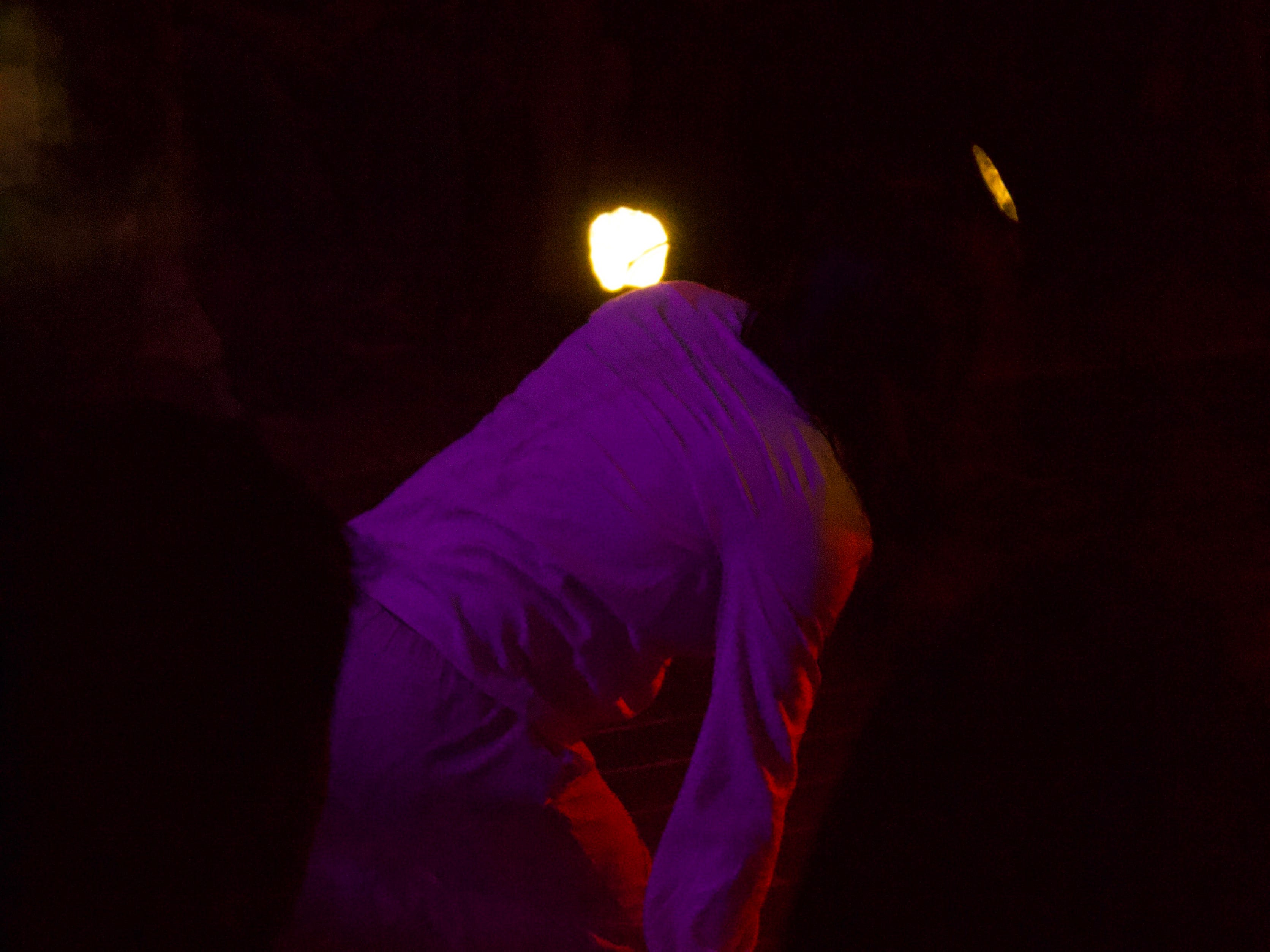
Inside the theater, the circus atmosphere only intensified. Telengtan Hall was transformed into a grotesque carnival world filled with tattered costumes, exaggerated performances, and unsettling energy. At the center stood the Federación bloc, constantly illuminated by a harsh white spotlight that demanded the audience’s attention. The Hukom appeared as a giant floating head reminiscent of the Wizard in The Wizard of Oz, specifically the way the Wizard first presents himself to Dorothy through an overwhelming projection of power meant to intimidate and astonish, hiding the fact that there is no true “magician” behind the illusion. According to co-director Patty Villacorta, this design choice emphasizes authority as something theatrical and constructed rather than human. This framing turns the Hukom into a symbol of the system itself, making power feel both distant and inescapable.
What made the production stand out was its willingness to go beyond what is usually done with the play. Many productions lean heavily into realism, framing the story primarily as a conflict among the poor, wearing rags, barong tagalog, or even suits. This interpretation chose spectacle instead. The Federación members became playful and terrifying versions of themselves, using choreography, movement, props, and reenactments to bring the story to life physically.
The creativity behind these choices was evident in every scene. Rather than simply reciting the script or narrating events to the audience, the actors physically reenacted them onstage, transforming dialogue into vivid visual storytelling. When the different classifications of beggars were introduced, members of the ensemble climbed onto blocks and exaggerated their movements to embody each type being described. The Tatlong Saksi constantly moved together like a flock; their exaggerated expressions and synchronized movements making them feel almost cartoonish rather than fully human. Even the quieter scenes carried visual meaning. A slow dance between two performers gradually became an image of separation and struggle as others attempted to pull them apart. Through movement, choreography, and staging, the production gave physical shape to the ideas within the script instead of simply explaining them. The production understood one of the play’s greatest strengths: its ability to balance absurdity and horror at the same time.
Among the cast, Jared Jezoar Pacheco as Unang Tagapagtanong delivered one of the evening’s most unforgettable performances. With a blank stare and chilling stillness, he commanded the stage every time he spoke. His words felt sharp and deeply personal, carrying a weight that lingered long after each scene ended. There were moments when the silence he created felt more frightening than shouting itself.
Meanwhile, Yhanna Salonga and Faith Mendoza, as Ikalawang Tagapagtanong, brought a completely different energy that perfectly complemented the rigidity of the first Tagapagtanong. Their performances injected humor, movement, and unpredictability into the production without weakening its emotional impact. Their playful presence made the darker moments feel even more devastating.
As Mang Serapio, Jorge Empinado and Iggy Arevalo delivered emotionally raw performances that made the character’s suffering painfully human. Beneath the absurdity and spectacle of the Federación, they grounded the production with genuine vulnerability, making the audience sympathize deeply with Mang Serapio’s grief, desperation, and helplessness.
Jacob Gutierrez, as the Barker, also stood out through his interactions with the audience before the play even began, creating a sense of unease long before the trial itself unfolded. By the end of the production, his presence helped complete the play’s cyclical nature, reinforcing the idea that the Federación’s cruelty was not an isolated event but an endless, repetitive system.
From the main cast to the ensemble, every performer brought a vibrant energy that complemented one another perfectly. No performance felt out of place. Together, they created a world that was chaotic, theatrical, and horrifyingly alive.
What is beautiful about a well-executed play is that it goes beyond the script and beyond what is normally done. From the very beginning, it was clear that every single person involved in the production cared deeply about the story they were telling. From the actors and directors to the technical crew and production team, the play was filled with an unmistakable love for theater and for the craft itself.
That passion could be seen in every ambitious choice the production made. They transformed a play often treated as a classroom text into something immersive, magical, and emotionally overwhelming. They did not simply present the audience with a world, but pulled the audience into it.
In many ways, Dulaang ROC’s Ang Paglilitis Kay Mang Serapio fulfilled exactly what Paul Dumol’s work demands: reinvention, boldness, and humanity. They trusted the material enough to reshape it into something entirely their own while still preserving the heart of the original play.
Long after the curtain call, as the cast returned to mingle with the audience, echoes of the trial still lingered. The system resets as easily as it ends, through those who have seen it all and still choose to look away.
It now leaves audiences with only one question: Handa ka na ba sa susunod na paglilitis?