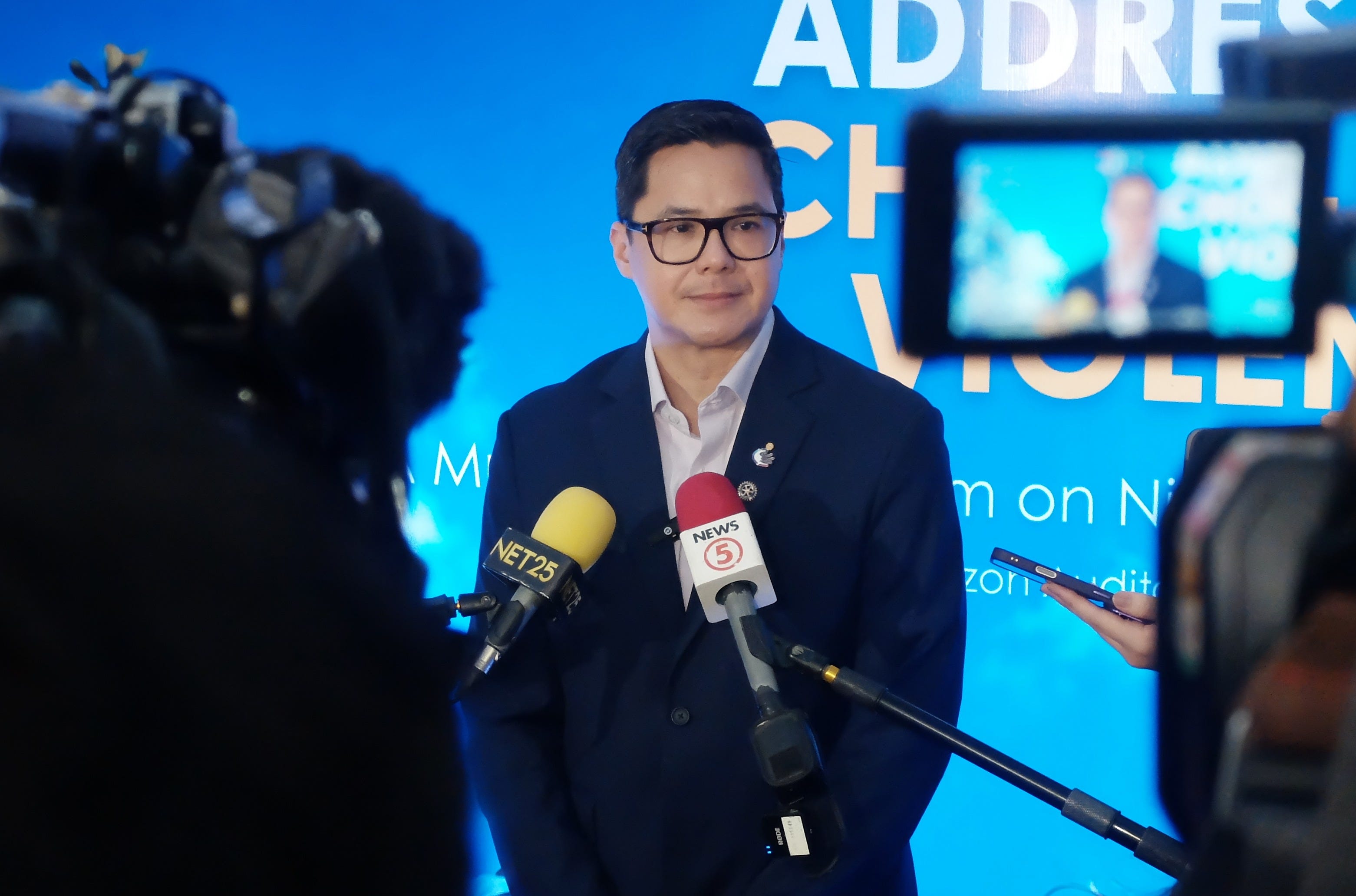
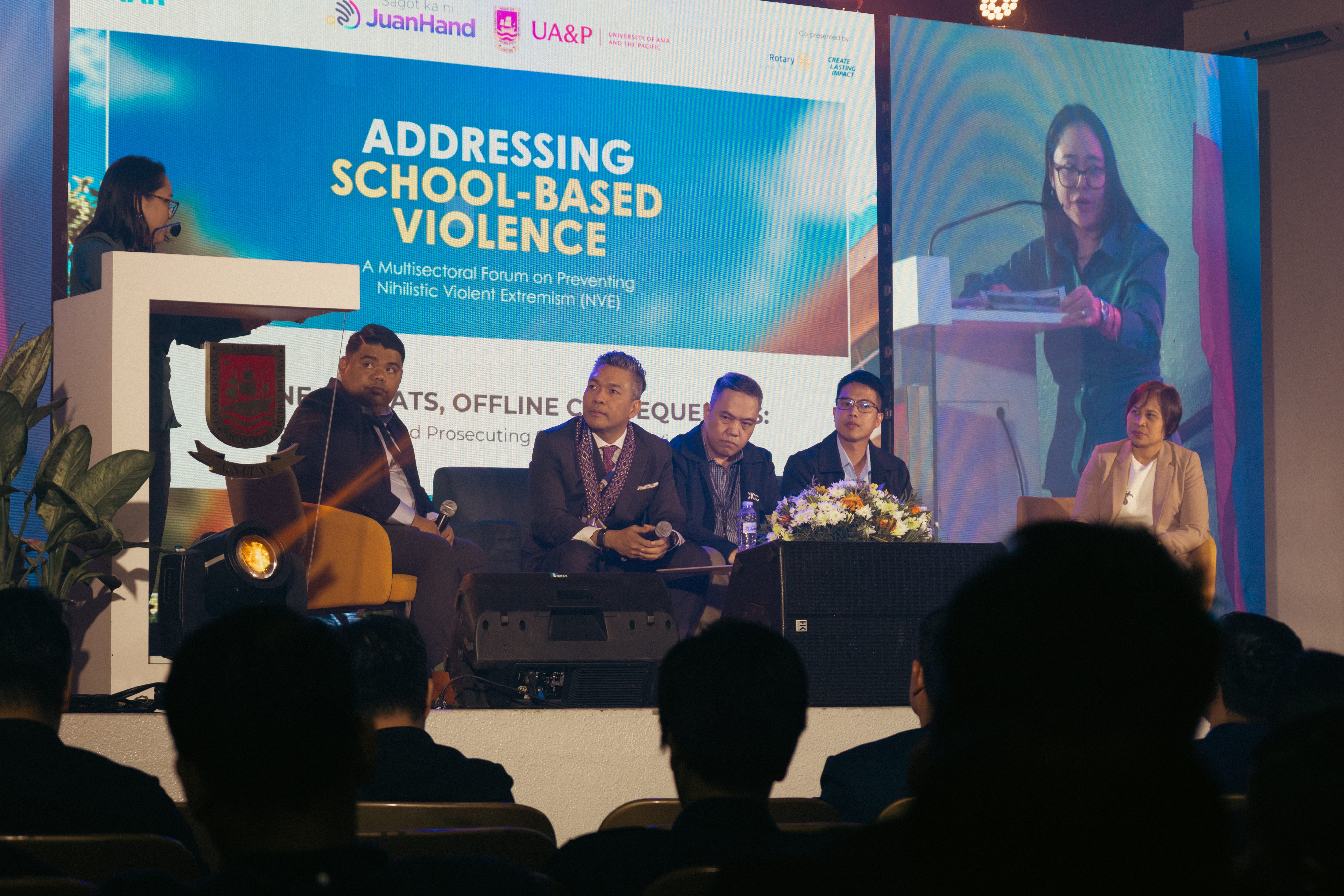
The University of Asia and the Pacific (UA&P), in partnership with JuanHand, held Addressing School-Based Violence: A Multisectoral Forum on Preventing Nihilistic Violent Extremism (NVE) on November 6, 2026, at the Dizon Auditorium.

The open forum brought together key government officials and experts from the education sector, law enforcement, and civil society to discuss the growing incidence of violence within school campuses, along with their pledged commitments to upholding the safety of children and schools. Among the representatives were Department of Education (DepEd) Secretary Juan Edgardo “Sonny” M. Angara, Interior and Local Government (DILG) Secretary Juanito Victor “Jonvic” C. Remulla, Presidential Communications Office Undersecretary Atty. Claire Castro, WeFund Lending Corp. (JuanHand) President and CEO Francisco Roberto “Coco” D.C. Mauricio.
The program formally began with opening remarks delivered by UA&P President Atty. John Philip R. Yeung, who emphasized the special task of educational institutions and family homes in the formation of the learner. He defined formation as: “putting a person in a stable position so that they may choose what is good. A formed person is one who does good not because he wants to do good, but because he is in fact a good person.”
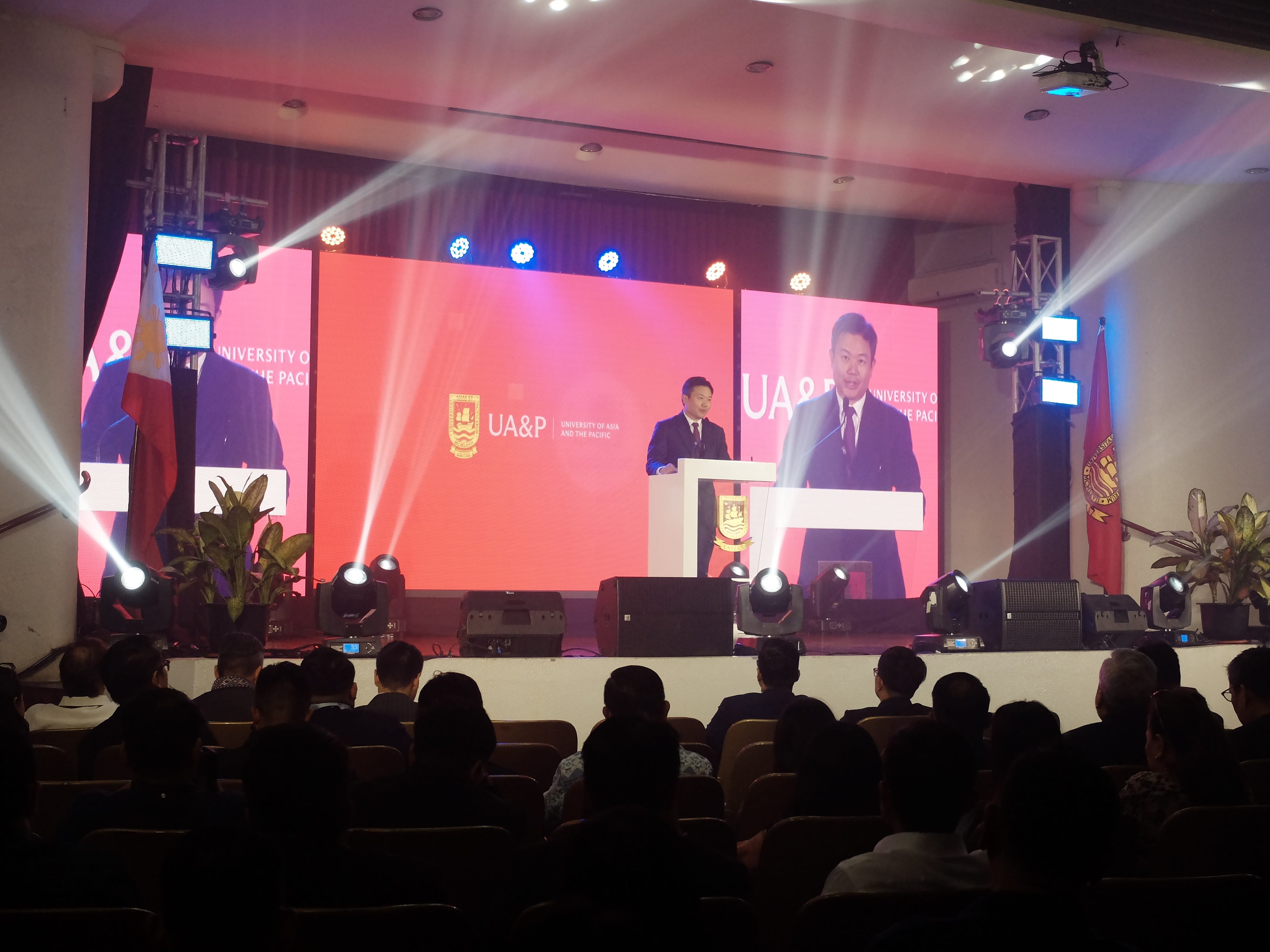
Yeung also stressed the need for a “play-based childhood” instead of a “phone-based childhood,” stating that the solution begins in character formation, followed by the security measures implemented on campuses. As per his commitment to safer schools, he pledged the well-being of UA&P’s students with the university’s long-standing commitment to forming well-rounded individuals, namely via its ongoing campuswide digital detox measures and the recent dress code policy implementation.
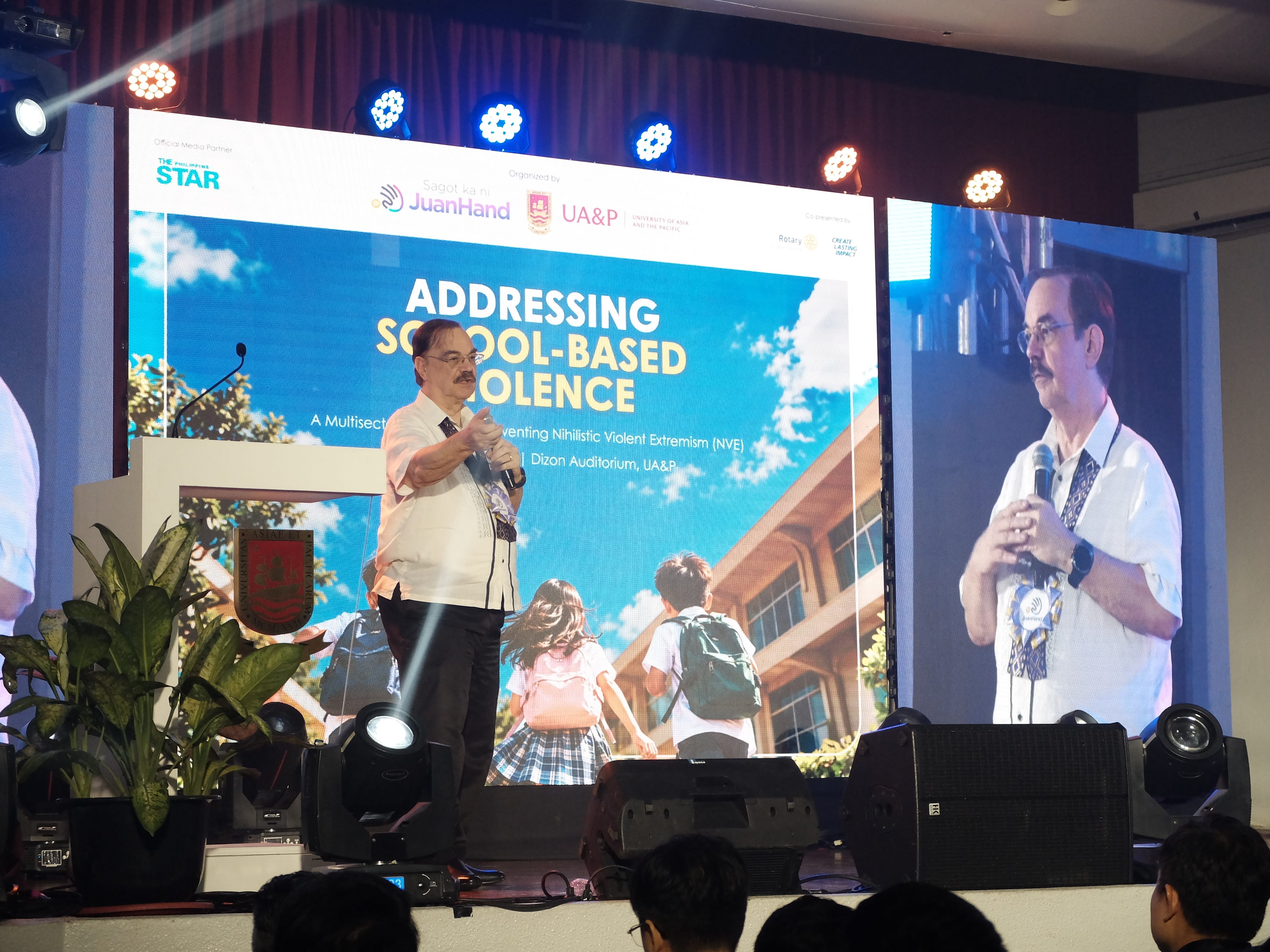
Following the program opening, leading cybersecurity expert Mr. Brian A. Borysevich delivered a keynote lecture on the global & local contexts, contributing factors, and a working definition of Nihilistic Violent Extremism (NVE) as a network of predators who befriend children online and coerce them into performing dangerous acts. Borysevich also noted that it is not the prevalence, but rather the method of nihilistic thinking that is new; social media and digital platforms such as Roblox, Minecraft, Gorebox, and Discord become avenues of contact for desensitizing students to gore, which eventually leads to the staging of violent, often fatal school-based attacks on these platforms.
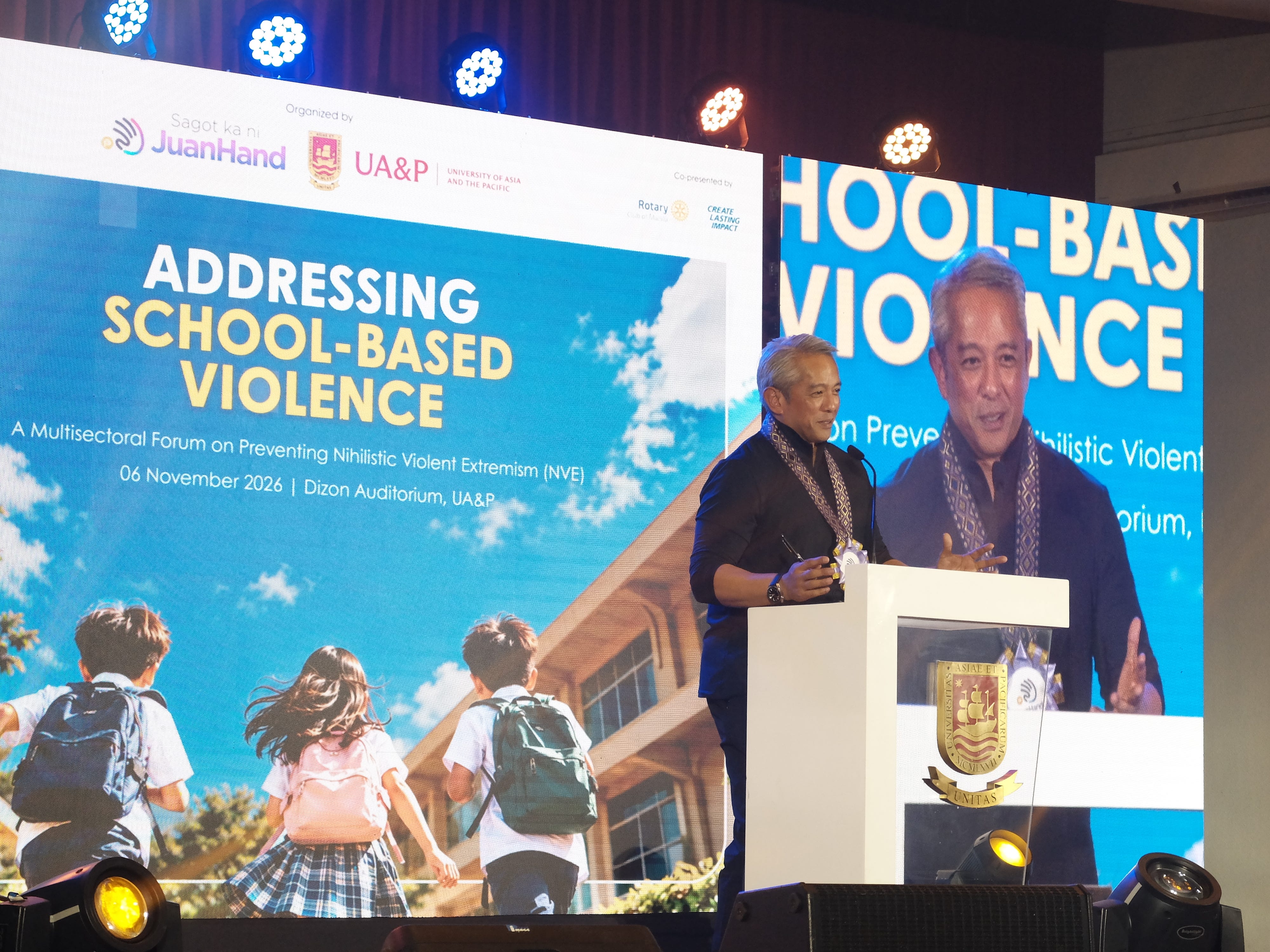
Following the context-setting session, DILG Secretary Remulla delivered a keynote address, during which he discussed ongoing commitments in local government policy and the nuances in implementing these policies. Motions to lower the criminal age of responsibility remain tentative, and hard solutions to ban social media brand Meta prove highly impractical. For his ongoing commitment to school safety and the learner’s well-being, however, Remulla pledged coordinated action within his sector.
Remulla also stressed the nuance faith and religion play in addressing school-based violence. Such factors remain inalienable from the Filipino nation, according to him. He stated:
“It [NVE] is not a crisis of technology, but a crisis of faith. Our faith has to be stronger; our schools have to be reinforced; our families have to get together. […] We need God, faith, and the community.”
A panel discussion followed, focusing on tracing the thread of accountability in addressing school-based violence. The panel brought together representatives from various sectors, including Department of Justice (DoJ) Undersecretary Atty. Norman E. Dato, Philippine National Police (PNP) representatives Col. Onnil P. Dela Peña and Cap. Vincent Joshua Garcia, legal expert Ms. Maria Laguarda, and digital campaigner Mr. Ronald Gustilo. Each panelist offered their respective commitments regarding the matter. The PNP highlighted their cyber-resilience program for students, while Gustilo and Laguarda underscored the need for digital platforms such as Meta and TikTok to embody a “safety by design” concept through active collaboration with local authorities. The discussion culminated in a verdict by Undersecretary Dato: students and children should be rehabilitated. “The penalty,” they all agreed, “should be restorative, not punitive.”
After a brief Q&A segment with the panel and audience, a digital portal was hosted for attendees of the event to gather in solidarity. Special guests, government officials, speakers, and stakeholders scanned a QR code flashed on the screen and wrote their answers to the prompt: “What’s one word you can commit to in today’s forum?” More than 180 entries were submitted by attendees, solidifying the shared commitment by attendees of the open forum. Among the various entries were words such as “discipline,” “vigilance,” and “integrity.”
Following the special activity, Education Secretary Juan Edgardo “Sonny” M. Angara gave his keynote address to the audience. He highlighted the positive uses and applications of social media platforms while also raising legitimate concerns and proven cases of extreme addiction to these digital platforms. In his address, he underscored the need to build stronger communities amongst the youth and adult population. “We gatekeep our kids; we’re so overly physically protective, but what about on the internet?” he asked.
In light of this call to action, a second panel was held with the aim to discuss the emerging signs of NVE among children and youth, as well as possible community-based interventions. The panel was moderated by host and legal commentator of Bilyonaryo News Channel, Atty. Karen Jimeno, and consisted of Education Director Atty. Razzel Anne T. Requesto, child rights expert Janice Tamil, Social Welfare and Development Director Elvis R. Quotalig, and Content Creator and Parenting Mentor Mariel Kliatchko. The panel successfully determined early signs of absenteeism and self-isolation within children, and proposed possible solutions to these behavioral changes. Kliatchko, a mother of five children, said regarding the matter: “More than interrogation, you need conversation and communication. [You have to] understand the reason behind the behavioral change. Understand before you label.”
Kliatchko gave further comments regarding the commitment a parent has to their child and the inseparable bond shared between them.
“The connection isn’t cut once the umbilical cord is cut. […] Sana hindi na lang tayo maging magulang kung hindi naman kaya pala! Sit down with your child, and talk with them.”
Other proposed interventions during the panel included the curricular re-implementation of the Good Morals and Right Conduct (GMRC) subject in schools and co-curricular youth formation activities proposed by Atty. Requesto. Tamil praised these developments, but added that it is also necessary to consult the youth as well when implementing these activities. Quotalig agreed on these practical steps for advising children and parents alike on the pressing issue of school-based violence. He also added, “It boils down to proper parenting. Parents should become a protective environment and safe space, […] maging ilaw at haligi ng tahanan. [They should] be intentional when it comes to reinforcing our core values.”
After a brief Q&A segment with the audience and panel, Jimeno synthesized the discussion and brought key insights and recommendations from the open forum. She concluded with a collective reflection:
“Ultimately, child protection is not the responsibility of schools alone; it is a shared commitment that calls for clearer responsibilities and shared action between all sectors of society. Every child deserves the assurance that the environment in which they learn is free from violence. May not this forum mark the end of a discussion on violence, but a renewed commitment to protecting the child.”
To formally close the afternoon forum, President and CEO of JuanHand Francisco Roberto “Coco” D.C. Mauricio gave his closing remarks. He noted that while “this is the first multisectoral forum on Nihilistic Violent Extremism, it won’t be the last.” He ended the forum with a shared commitment to continue robust, in-depth discussions in solidarity with multiple sectors.